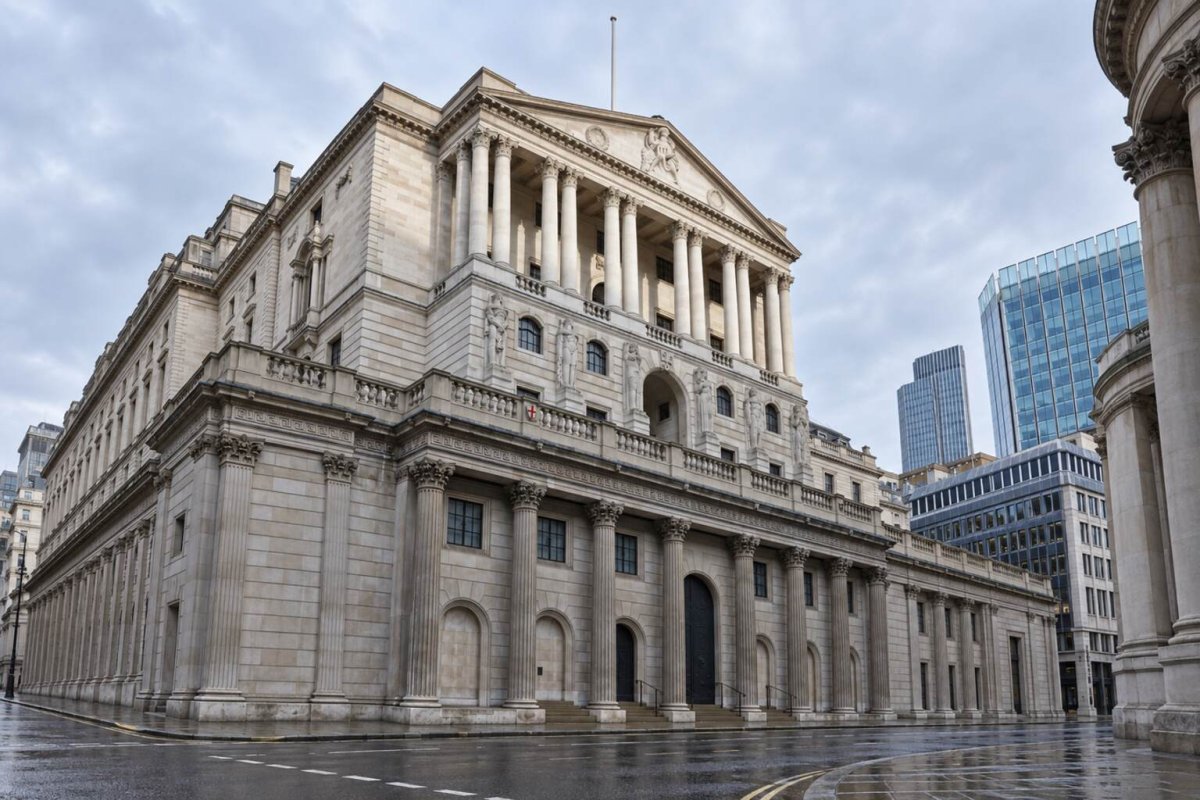
The Bank of England (BoE) opted to maintain its key interest rate at 3.75% during Thursday's policy meeting, a decision that was widely anticipated by market participants. The vote split saw six members of the Monetary Policy Committee (MPC) favor holding, while three dissenting members, including Megan Greene, Catherine Mann, and Huw Pill, argued for a 25-basis-point increase to 4%. This mirrors the division seen at the previous meeting in July.
More significantly, the committee reached a unanimous agreement on a long-term strategy for reducing its substantial gilt holdings. The BoE will unwind the remaining £368 billion of gilts held for monetary policy purposes by the end of 2034. This marks a clear commitment to a gradual and predictable reduction of its balance sheet, a process often referred to as quantitative tightening (QT).
According to the minutes from the September MPC meeting, the plan entails an average annual reduction of £46 billion. This will be achieved through a combination of approximately £20 billion in active gilt sales each year, with the remainder coming from bonds maturing naturally. Importantly, a separate block of £120 billion in long-dated gilts will be retained to support current and future banknote issuance, meaning it is excluded from the £368 billion targeted for QT.
The initial market reaction to the announcement was subdued. Sterling experienced a modest decline against the US dollar, slipping from around 1.3405 just before the noon release to 1.3392 within the first minute, a drop of roughly 0.1%. The currency remained just above Wednesday's reference close of 1.3385. This muted movement underscores that while the rate decision was expected, the detailed timetable for gilt sales was a new piece of information.
Inflation Outlook Revised Upward
Despite the hold on rates, the BoE's staff revised their near-term inflation projections higher. They now expect consumer price inflation (CPI) to reach approximately 3.75% in the fourth quarter of 2026 and to slightly exceed 4% in the first quarter of 2027. This is a notable upward adjustment from the July forecast, which had projected fourth-quarter inflation at 3.2%.
The upward revision comes on the heels of official data released Wednesday showing that headline CPI rose to 3.1% in August, up from 2.9% in July. The primary driver was motor fuels, with petrol prices increasing by 9.1 pence per litre and diesel by 14.2 pence during August. As a result, motor fuel prices are now 23% higher than a year earlier, according to the Office for National Statistics. Services inflation remained steady at 3.4%, and core CPI held at 2.6%.
The majority of MPC members who voted to hold cited economic slack, restrained cost pass-through, and the already restrictive level of interest rates as key reasons for their stance. Conversely, the minority argued that persistent energy and food price pressures make an early rate increase less costly than allowing inflation expectations to become entrenched.
Implications for Gilt Markets
The new gilt reduction plan is a crucial development for fixed-income investors. The BoE's Asset Purchase Facility currently holds £488 billion in gilts, down from a peak of £895 billion in February 2022. Over the past year, the stock has been reduced by £70 billion, including £21 billion in active sales. The new plan averages £46 billion in annual reductions, with active sales remaining roughly unchanged at £20 billion and the rest coming from maturities.
This distinction is important because a smaller total runoff figure does not mean the BoE is stepping back from auctions; rather, it indicates that fewer bonds will mature in certain years. The fixed £20 billion annual sales program provides greater supply predictability, while the end-2034 commitment removes the annual uncertainty regarding whether the stock would eventually be run down to zero.
However, even predictable sales add duration to a market already absorbing heavy government issuance. The MPC's response is that a pre-announced, steady program should limit disruption and allow Bank Rate to remain the primary policy tool. This claim will be tested through auction demand and long-gilt term premiums, rather than by Thursday's modest currency movement alone.
Looking Ahead
For mortgage borrowers and bank investors, the unchanged 3.75% rate maintains the immediate cash-flow baseline. The next key policy dates are November 5, which includes a full Monetary Policy Report, and December 17. A narrower 5–4 hold or an explicit signal that higher fuel costs are feeding into 2027 wage expectations would carry more weight for the next rate decision than another month of energy-driven headline inflation alone. The BoE's calendar provides the dates for these potential shifts.