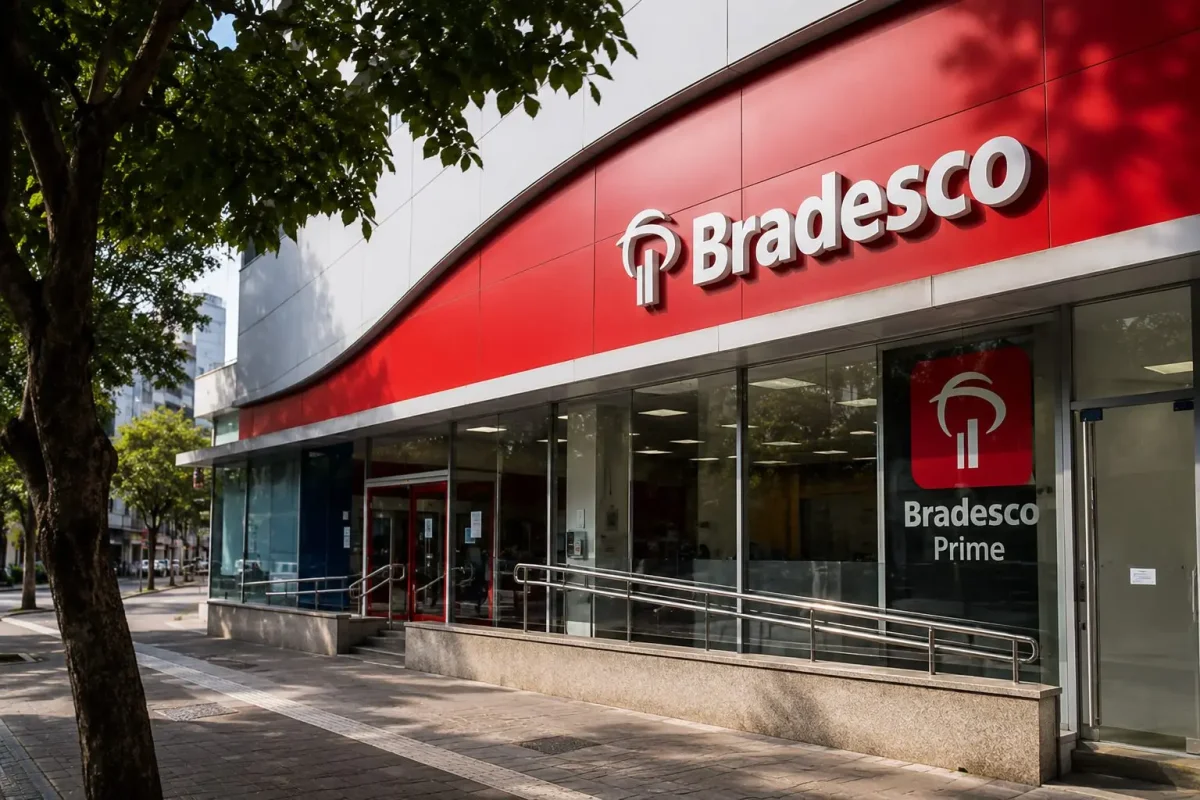
Banco Bradesco S.A. (NYSE:BBD; BVMF:BBDC4) experienced a divergence between its U.S. and Brazilian listings on Tuesday, as currency movements provided a significant boost to its American Depositary Receipt (ADR). The ADR closed up 0.55% at $3.63 in New York, while the bank's preferred shares (BBDC4) fell 0.75% to R$18.63 in São Paulo. This created a 1.30-point gap between the two markets, with the dollar's weakness against the real being the primary driver.
Currency Impact and Market Dynamics
The U.S. dollar slid 1.12% to R$5.073, following weaker-than-expected U.S. inflation data. This depreciation directly influenced the ADR's performance, as it represents foreign shares traded in dollars. An analysis of the day's moves shows that the currency swing accounted for approximately 68% of the ADR's gain. Using Tuesday's exchange rate change alongside BBDC4's local loss yields an estimated dollar return of about 0.37%, which translates to roughly 0.18 points of the ADR's move. The remaining portion likely stems from timing differences, liquidity factors, or other listing effects, rather than a fundamental revaluation of the bank's equity.
Trading Volume and Relative Performance
Trading activity surged amid the divergence. BBDC4 saw 53.13 million shares change hands, a 78% increase from its average volume of 29.86 million. Similarly, BBD's ADR volume reached 42.46 million, about 35% above its norm. Despite the higher volume, Bradesco's preferred stock underperformed the Ibovespa, which gained 0.51%, trailing by 1.26 points. Among its peers, Bradesco lagged in both markets. In São Paulo, Itaú Unibanco (ITUB4) added 0.25% and Santander Brasil (SANB11) fell just 0.11%, while in New York, their ADRs posted gains of 0.94% and 0.75%, respectively. Bradesco ended 1.00 point behind Itaú and 0.64 point behind Santander Brasil locally, and its ADR trailed by 0.39 and 0.20 points, respectively.
Insider Transactions and External Factors
A minor insider selling filing emerged but had negligible impact. A Form 6-K posted Monday revealed that board members and their families sold 101,339 non-voting shares in June, while top executives sold 128,725 shares and bought just 57. The total of 230,064 shares sold was worth about R$4.11 million, representing only 0.43% of Tuesday's BBDC4 volume. Controller and treasury stakes remained unchanged, suggesting the sales were not a market driver.
The broader catalyst came from U.S. economic data. Consumer prices fell 0.4% in June, with the year-over-year increase slowing to 3.5%, below the 3.8% estimate. This eased expectations for further Federal Reserve rate hikes. Chicago Fed President Austan Goolsbee called the data "surprisingly favorable" but emphasized the need for more evidence. The macro relief provided a temporary lift to ADR valuations.
Earnings Preview and Future Risks
Bradesco is scheduled to report second-quarter results after the close on August 5, with a quiet period beginning July 22. An earnings webcast is set for August 6. For now, traders are monitoring the cross-listing gap as a signal, but it offers little insight into credit costs, margins, or operating profit. The currency boost may prove short-lived. Oil prices remained above $85 amid U.S.-Iran tensions, keeping inflation concerns alive. Uto Shinohara, senior investment strategist at Mesirow Currency Management, noted that the "broader inflation outlook remains uncertain." If the dollar strengthens, BBD could lose its translation advantage, even if local shares stay flat.
In summary, Bradesco's ADR gain in New York does not reflect underlying strength in the local stock, which fell on higher volume and underperformed both the index and peers. The ADR's rise was largely a currency phenomenon. With earnings due in August, the market awaits concrete evidence of operational improvement.
