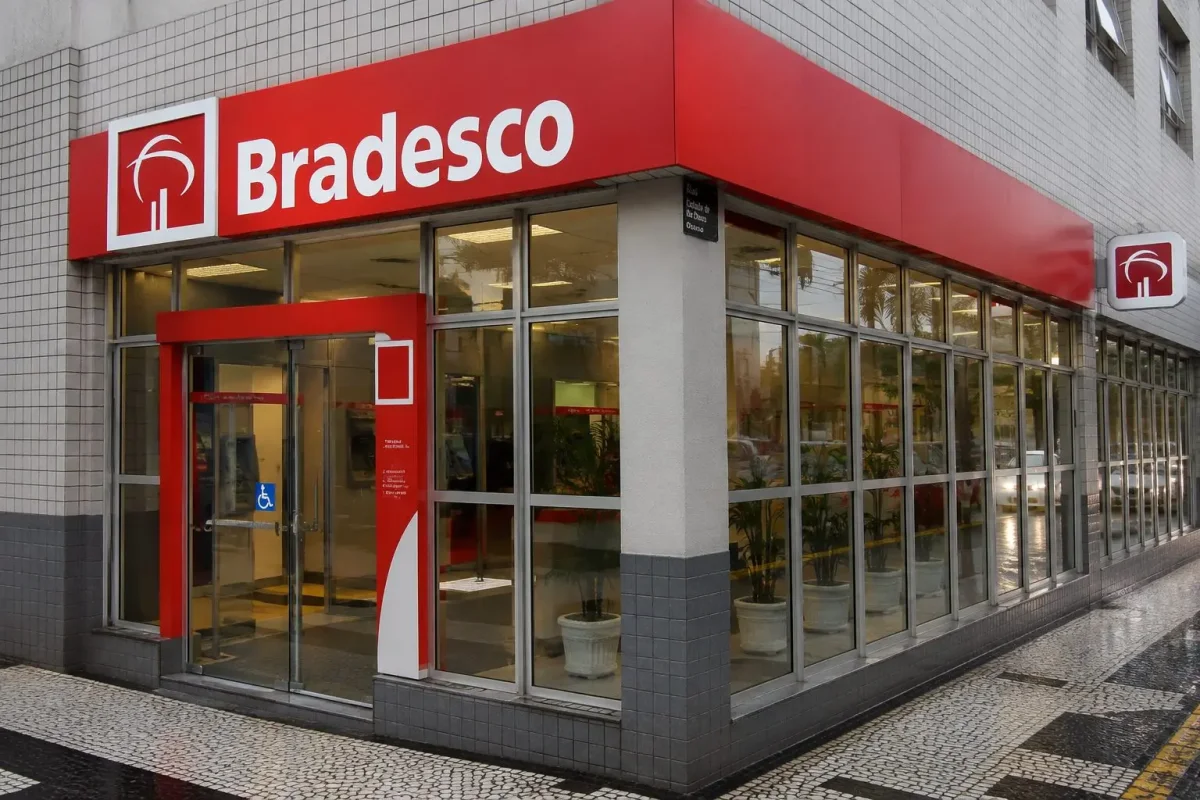
São Paulo, August 8, 2026 – Banco Bradesco's preferred shares ended Friday's session at R$17.31, a 1.9% discount to the R$17.64 subscription price of its ongoing rights offering. The decline underscores investor concerns about accelerating credit costs, which have offset the bank's solid earnings momentum.
The stock has fallen 6.1% since July 31, compared with a 3.1% drop in Brazil's Ibovespa index over the same period. Bradesco's underperformance of three percentage points reflects a market that remains wary of the bank's asset quality trajectory, even as its second-quarter results showed robust profit expansion.
Credit Provisions Outpace Revenue Growth
Bradesco's recurring profit for the second quarter reached R$7.05 billion, a 16.2% year-over-year increase, marking the tenth consecutive quarter of profit growth. However, expanded provisions for loan losses surged 22.6% to R$9.985 billion, significantly outpacing the 13.8% growth in client net interest income, which totaled R$20.199 billion. This 8.8 percentage point gap between provision growth and NII growth has become a focal point for investors.
Client net interest income after provisions rose just 6.2% to R$10.214 billion, highlighting the drag from higher credit charges. The bank's loan book expanded 11.6% to R$1.137 trillion, exceeding the upper end of its full-year guidance by 1.1 percentage points. Management maintains its 8.5%-10.5% growth forecast, suggesting a potential slowdown in lending activity in the coming months.
Capital Raise and Dilution Concerns
The rights offering, which can raise up to R$10 billion, represents approximately 5.8% of Bradesco's market capitalization as of Friday. If fully subscribed, it would boost the bank's pro-forma common-equity tier 1 ratio by about 0.9 percentage point from 12.7%. Controllers have committed to subscribe up to R$8 billion of the offering.
Investors who do not participate face dilution of up to 3.4%. Rights are tradable until September 1 and exercisable until September 4. The fact that the cash market price has fallen below the subscription price suggests that investors seeking new exposure may find it cheaper to buy shares directly rather than exercise their rights, though this assessment does not account for the rights' separate market value or time value.
Operational Metrics Show Mixed Picture
Bradesco's return on average equity stood at 16.2%, with an efficiency ratio of 46.5%. However, loan-loss coverage dropped to 152.3% from 177.8% a year earlier. Loans in arrears over 90 days rose to 4.3%, up 0.2 percentage point year-over-year.
Rafael Reis from BB Investimentos described the quarter as "another important advance" in restoring profitability, maintaining a Buy rating and raising his price target to R$24 by end-2027. However, other analysts struck a more cautious tone, with Goldman Sachs maintaining a Neutral rating and a 12-month target of R$18.97, citing softer reserve coverage.
Peer Comparison Highlights Trade-Off
Bradesco's profit growth of 16.2% outpaced Itaú Unibanco's 7.8% and Santander Brasil's decline of 17.6%. However, Bradesco also reported the sharpest increase in credit costs, with provisions up 22.6% versus 7.4% at Itaú and 6.5% at Santander. These figures are not fully comparable due to differences in accounting definitions.
The bank's CEO, Marcelo Noronha, expressed confidence in the central bank's easing cycle, noting that the recent 25 basis point cut to 14% "has driven inflation down" and that he sees "no reason" for Copom not to lower rates further, though the pace of future cuts remains uncertain.
Looking Ahead
Investors will be watching next week's results from Banco BTG Pactual and Banco do Brasil for further clues on sector-wide credit quality. The key question remains whether Bradesco's provisions will continue to outpace loan growth, which could pressure future earnings. Persistent stress among households and small businesses remains a key risk, as does a slower-than-expected easing cycle.