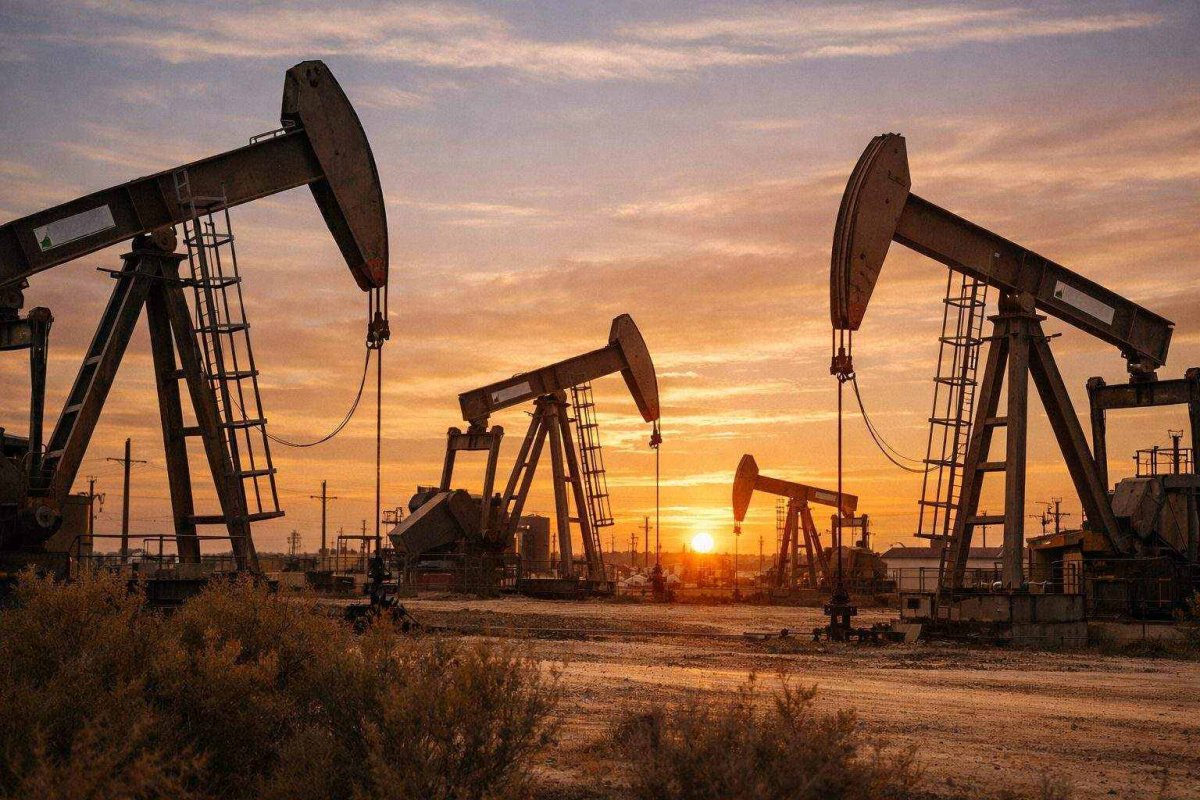
Global oil markets experienced a significant surge on Friday, with Brent crude futures closing at their highest level in nearly four years. The May delivery contract for the international benchmark settled at $112.19 per barrel, representing a substantial gain of 3.26% for the session. This price movement reflects mounting supply anxieties following official declarations from Iraq and escalating geopolitical friction in the critical Gulf region.
Force Majeure Declared as Regional Flows Plummet
The immediate catalyst was Iraq's formal declaration of force majeure on several foreign-operated oilfields. This legal provision allows companies to suspend contractual obligations due to events beyond their control, in this case linked to military disruptions. The situation has severely impacted logistics, with reports of stalled tanker movements, filled onshore storage facilities, and halted production. The Strait of Hormuz, a maritime chokepoint handling approximately one-fifth of global seaborne oil and liquefied natural gas traffic, sits at the center of these concerns.
The disruption has translated into a dramatic reduction in physical crude and condensate flows from the region. Estimates indicate a drop of roughly 12 million barrels per day, creating intense tightness in the spot market. This was vividly demonstrated by Dubai crude, a key Middle Eastern benchmark, which soared to a record high of $166.80 per barrel. In Europe, jet fuel prices breached the $220 per barrel mark. Analysts note that these physical market premiums signal a fundamentally tighter supply system than headline futures prices might suggest.
Market Structure and Substitution Demand Intensifies
The strain is evident across the oil market's structure. The price gap between West Texas Intermediate (WTI) and Brent crude widened this week to its largest point in over a decade. Traders are urgently seeking alternatives for Middle Eastern sour crude, a higher-sulfur grade that dominates exports from the region. This has driven premiums for Dubai and Oman crudes to unprecedented levels and boosted prices for similar grades like Mars Sour in the U.S. Gulf Coast.
In a stark divergence from broader equity trends, energy shares significantly outperformed. The S&P 500 Energy Index advanced 2.8% for the week. This rally occurred against a backdrop of declining global stock markets and rising bond yields, as investors grew increasingly worried that a prolonged oil supply shock could reignite inflationary pressures and complicate central bank policy.
Broader Energy Sector Impacts and LNG Warning
The repercussions extend beyond the crude market. The chief executive of QatarEnergy issued a stark warning, stating that damage to facilities at Ras Laffan could reduce liquefied natural gas shipments to Europe and Asia for up to five years. He revealed he had repeatedly urged for restraint regarding energy infrastructure prior to recent attacks. This squeeze on natural gas could spill over into oil product markets, as some industrial consumers possess the capability to switch between fuels depending on availability and price.
Potential Policy Responses and Their Limits
Potential relief measures are under discussion in Washington. Options reportedly include lifting sanctions on an estimated 140 million barrels of Iranian oil currently held on vessels offshore, authorizing another release from the U.S. Strategic Petroleum Reserve, and diplomatic efforts to reopen secure shipping lanes. The insurance market is also responding, with a U.S.-backed war-risk insurance facility prepared to cover vessels transiting the Strait of Hormuz. Concurrently, governments at the International Maritime Organization are evaluating proposals to establish a safe maritime corridor for commercial vessels and crews.
However, analysts caution that any relief may be partial and temporary. U.S. Energy Secretary Chris Wright indicated that sanctioned Iranian crude could reach Asian ports within three to four days, with broader volumes entering the market over the following 30 to 45 days. While this is faster than bringing new production online, it does not resolve the fundamental blockage at the Strait of Hormuz or reverse the production shut-ins already implemented in the Gulf.
Industry Gathers Under Pressure
The timing of these events sets a tense stage for the upcoming CERAWeek energy conference in Houston. The annual gathering of industry leaders is expected to shift focus sharply from technological themes like artificial intelligence to immediate concerns over energy security and affordability. Executives from major firms including Chevron, Shell, TotalEnergies, and Aramco are scheduled to attend. Prominent energy analyst Dan Yergin underscored the changed priorities, while Dan Pickering of Pickering Energy Partners noted that U.S. shale producers are unlikely to rapidly increase output unless sustained high prices provide a clear economic signal.