Oil prices continued their upward trajectory on Friday, with Brent crude hovering near $109 per barrel and U.S. West Texas Intermediate (WTI) just under $105, as renewed tensions between Washington and Tehran dashed hopes for a swift reopening of the Strait of Hormuz. Earlier sessions saw Brent surge over 3% and WTI jump more than 4%, according to Reuters.
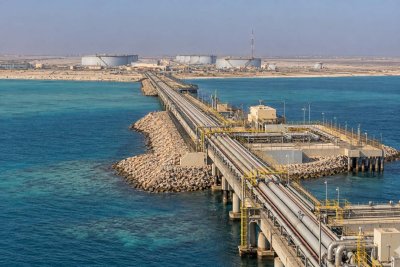
The Strait of Hormuz, a narrow waterway through which roughly 20% of global oil and liquefied natural gas shipments passed before the conflict, has become the market's primary price driver. The International Energy Agency reported that global supply dropped by 1.8 million barrels per day in April, while worldwide inventories—including oil at sea—shrank by 250 million barrels over March and April combined.
Geopolitical Stalemate
President Donald Trump warned that his patience with Iran was wearing thin, claiming he and Chinese President Xi Jinping had reached an understanding that Tehran should reopen the strait. However, China has not publicly committed to urging Iran to act. On the Iranian side, Foreign Minister Abbas Araqchi stated there is "no trust" toward the U.S., though he left the door open for talks if Washington demonstrates seriousness.
Crude prices continue to carry a risk premium—the markup traders add due to fears of supply disruptions. Vandana Hari, founder of Vanda Insights, noted that attention has snapped back to the stalemate and the closed strait, with what she described as a "tail risk of renewed military escalation."
Limited Traffic Through Hormuz
Some movement picked up on the water, but it barely eased market nerves. Iran's Revolutionary Guards reported vessel crossings at 30 between Wednesday night and Thursday, sharply down from the pre-war average of 140 daily sailings. PVM's Tamas Varga pointed out that sentiment was reacting more to the increased crossings than to actual oil supply.
U.S. Inventory Drawdown
Bulls found support from U.S. inventory data. The Energy Information Administration reported that U.S. commercial crude stocks dropped by 4.3 million barrels in the week ended May 8, landing at 452.9 million barrels. Gasoline inventories also fell, down by 4.1 million barrels, now sitting 5% below the five-year average for this period.
WTI logged a larger percentage gain than Brent, signaling that traders are eyeing domestic supply strains ahead of the summer driving season. Brent serves as the global benchmark, while WTI tracks U.S. crude priced at Cushing, Oklahoma.
Ukrainian Refinery Strikes
Worries over supply extended beyond the Gulf. According to Reuters, Ukraine has doubled strikes against Russian refineries since the year began, with drones disabling some 700,000 barrels per day of refining capacity from January through May. Saxo Bank's Ole Hansen pointed to crude's move higher, citing stalled momentum after the Trump-Xi summit and Ukraine's ongoing refinery attacks.
Prediction Markets and Outlook
Prediction markets are not betting on a quick resolution. According to Kalshi, the odds of Hormuz traffic returning to normal before Aug. 1 stood at 37%, rising to 48% for before Sept. 1, and 60% for before Oct. 1. On Polymarket, traders gave only a 6% chance that flows would be restored by the end of May.
Oil bulls face the risk of a sharp reversal if shipping traffic picks up, negotiations restart, or elevated prices further erode demand. The IEA projects global oil demand will shrink by 420,000 barrels per day in 2026, with the heaviest drop in the second quarter.
Capital Economics is flagging the possibility that Brent could shoot up to at least $140 a barrel if the strait remains shut and OECD stockpiles continue to drop at April's rate. Their most dramatic scenario envisions Brent hovering around $150 through 2027.