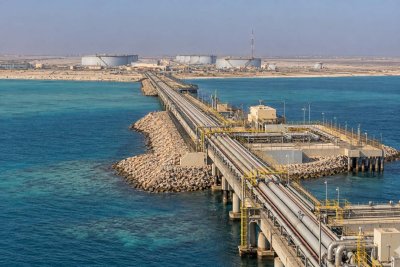
Energy stocks powered the broader market higher on Friday as crude oil prices spiked more than 3%, fueled by renewed geopolitical tensions near the critical Strait of Hormuz. Brent crude climbed to $109.19 a barrel, while West Texas Intermediate (WTI) reached $104.89, according to Reuters data.
The latest price surge follows a warning from President Donald Trump after a meeting with Chinese President Xi Jinping, in which Trump expressed waning patience with Iran. Vandana Hari of Vanda Insights noted that market attention has squarely returned to the current deadlock and the heightened risk of military confrontations near the strait, a key chokepoint for global oil shipments.
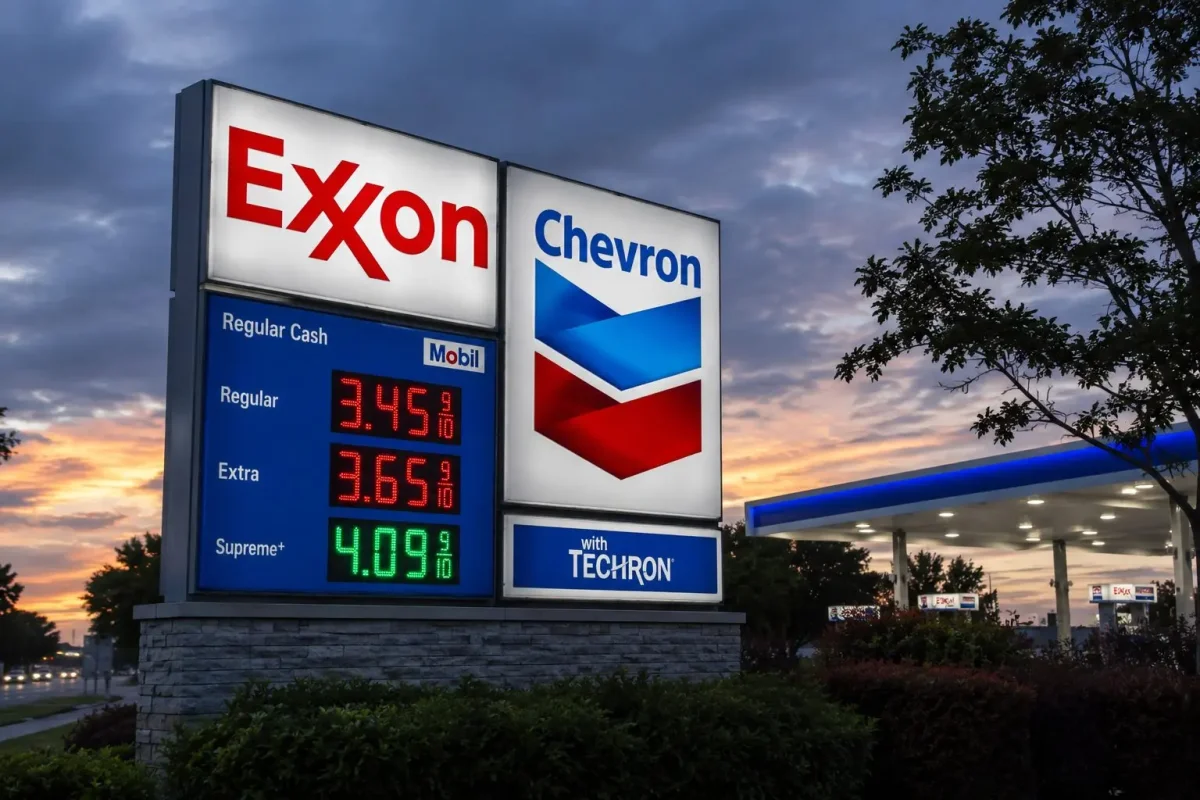
U.S. energy shares responded in kind, with the Energy Select Sector SPDR Fund (XLE) trading up 0.8% shortly after 7:30 a.m. in New York. Among the top movers, Exxon Mobil (XOM) rose 0.8%, Chevron (CVX) added 0.3%, ConocoPhillips (COP) gained 1.3%, Occidental Petroleum (OXY) advanced 1.2%, SLB (SLB) increased 0.7%, and Halliburton (HAL) was up 0.6% in early trading.
These moves are not merely a reaction to headline risk. The Energy Information Administration (EIA) reported that U.S. crude inventories fell by 4.3 million barrels to 452.9 million barrels for the week ended May 8. Gasoline stocks also declined by 4.1 million barrels, while crude exports surged by 742,000 barrels per day. Bob Yawger, head of energy futures at Mizuho, suggested these figures may signal that producers are ramping up drilling activity in response to higher prices.
On the global stage, the International Energy Agency (IEA) reported that worldwide oil supply dropped by 1.8 million barrels per day in April, reaching 95.1 million barrels per day. The agency also noted a significant drawdown in observed oil inventories: a decline of 129 million barrels in March, followed by a further 117 million barrels in April. These data points underscore the tightening supply environment.
For many investors, Exxon and Chevron remain the go-to names as the top U.S. integrated oil majors, combining production, refining, and trading operations. ConocoPhillips and Occidental offer a purer play on domestic crude; when WTI clears the $100 threshold, traders closely monitor their drilling strategies. Meanwhile, SLB and Halliburton provide a different angle: their fortunes hinge not just on today's oil price but on whether clients expect sustained strength and are willing to boost capital spending on drilling and completion services.
Prediction markets reflect a cautious outlook for a quick resolution. On Polymarket, odds of Strait of Hormuz traffic returning to normal by the end of May stood at just 6%, improving to only 30% for a return by the end of June. The platform also indicated a 63% probability that crude oil futures would reach $110 before June closes. Capital Economics warned in a note Thursday that Brent could surge past $150 a barrel and remain elevated through end-2027 if the Iran conflict spirals out of control; under a less severe scenario, they project oil at $130 a barrel by mid-year before gradually retreating.
The outlook is not set in stone. The EIA's latest forecast assumes that traffic in the Strait of Hormuz will gradually resume in June, with Brent declining to around $89 a barrel by the fourth quarter as inventory draws slow. Such a scenario would trim the risk premium currently propping up the sector. For now, Friday's breakdown is clear: Exxon and Chevron cover the broad energy trade, ConocoPhillips and Occidental are the plays for crude price sensitivity, and SLB and Halliburton signal where drilling budgets are heading. Key factors to watch include Hormuz shipping updates, the next U.S. inventory reports, and whether WTI can sustain its position above $100.