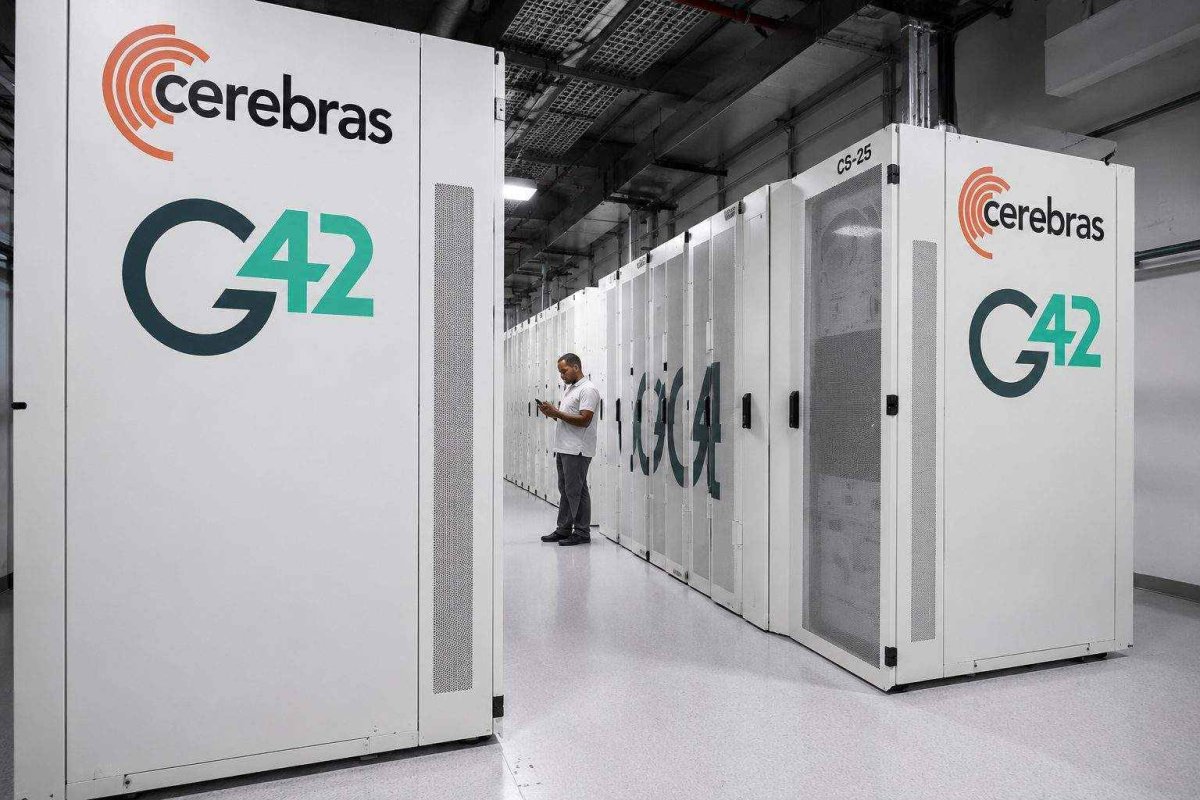
New York, May 15, 2026 – Cerebras Systems shares edged lower in early Friday trading, as market participants booked profits following the AI chipmaker's explosive Nasdaq debut a day earlier. The stock slipped roughly 4% to just under $298, pulling back from Thursday's closing price of $311.07, but still trading approximately 61% above its initial public offering price of $185.
The pullback is not tied to any fresh corporate warning. Instead, analysts and traders pointed to valuation concerns, heavy customer concentration, and questions about how much future demand from OpenAI is already reflected in the stock price. Cerebras raised $5.55 billion in its IPO, which is expected to close Friday.
Cerebras, which designs wafer-scale processors for artificial intelligence workloads, began trading on the Nasdaq Global Select Market under the ticker CBRS on May 14. The stock opened Thursday at $350, an 89% surge from the IPO price, giving the company a fully diluted valuation of approximately $106.75 billion, according to Reuters. CEO Andrew Feldman commented, “In Silicon Valley we understand just how big AI will be.” However, Renaissance Capital analyst Nicholas Smith flagged the price tag as “quite high even out to 2028.”
Friday’s dip reflects a reassessment of that valuation. Barron’s noted premarket weakness, highlighting Cerebras’s price-to-sales ratio, which is significantly higher than Nvidia’s. D.A. Davidson’s Gil Luria suggested a fairer target near the company’s backlog, implying a price of roughly $115 per share, well below current levels.
Cerebras builds massive, single-chip processors designed for AI inference, the process where trained models generate responses. The company argues that its oversized chip reduces latency and simplifies tasks that typically require clusters of Nvidia’s industry-standard graphics processing units. However, the company’s financials reveal challenges: 2025 revenue of about $510 million came with a $145.9 million operating loss, and 86% of revenue came from just two UAE-linked customers. The backlog stands at $24.6 billion, largely tied to a major OpenAI deal, but converting that to cash depends on manufacturing scale, data center construction, and sufficient power supply.
OpenAI is central to Cerebras’s story. Reuters reported last month that OpenAI agreed to pay Cerebras over $20 billion over three years for servers built with Cerebras chips, with warrants that could give OpenAI a minority stake if spending increases. While this is a bullish catalyst, it also tightens the market’s focus on how much one customer is willing to spend.
Prediction markets had already priced in much of the opening gains. After shares closed Thursday near the $60 billion-to-$70 billion market cap range, the relevant Polymarket contract for the IPO’s closing market cap paid out fully in that bracket, leaving little room for further upside on day two.
Competitive dynamics also weigh on investor sentiment. Cerebras, aiming to lure AI business from Nvidia’s GPU-based systems, faces competition from AMD in the AI accelerator market. On its debut, Cerebras’s market cap jumped to roughly $66.95 billion, but MarketWatch characterized the company as an AI inference contender while flagging manufacturing challenges and heavy customer concentration.
The initial drop appears more like a shakeout following an overcrowded trade than a sign that the AI chip story is unraveling. Traders remain willing to pay for rapid growth, OpenAI demand, and the potential to loosen Nvidia’s grip on inference. Whether Cerebras can grow fast enough to justify its valuation remains uncertain. For now, the IPO looks like a success, but not every price point since the opening bell has been a slam dunk.