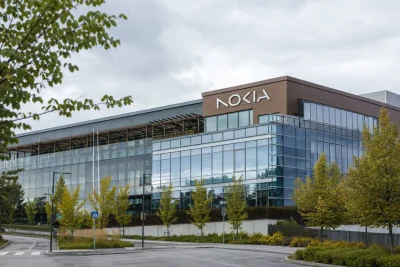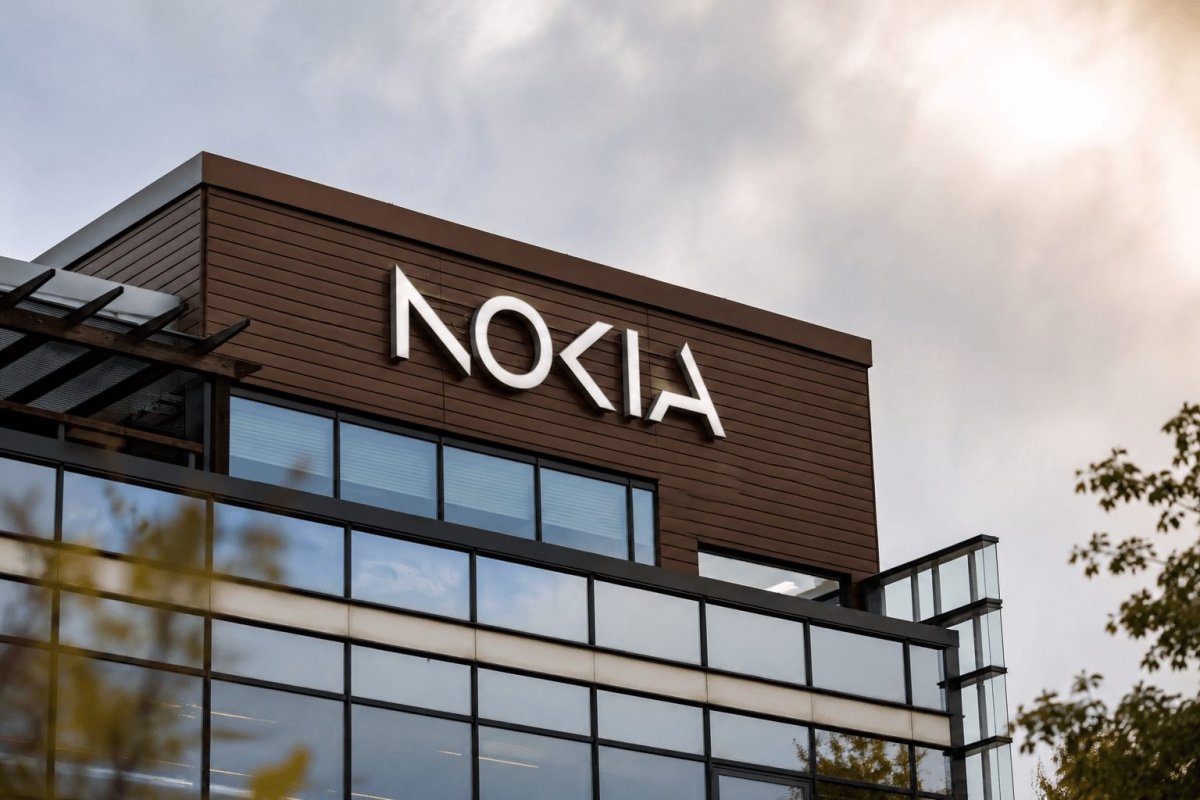
Helsinki, May 15, 2026 – Nokia Oyj's U.S.-listed shares declined approximately 5% on Friday, paring some of the gains from a recent AI-fueled rally. The stock closed at $13.74, down from the prior session's $14.46, as investors took profits following a surge sparked by Cisco's robust AI infrastructure orders.
The pullback comes after Cisco reported that AI infrastructure orders from hyperscalers have reached $5.3 billion in its current fiscal year, with an updated full-year forecast of $9 billion, up from $5 billion. This news had driven a broad rally in networking stocks, including Nokia, which jumped over 7% on Thursday.
AI Demand Driving Networking Sector
Nokia is positioning itself to benefit from the growing demand for AI data center infrastructure, including fiber, routing, and optical transport hardware. The company reported a 54% increase in first-quarter comparable operating profit, reaching 281 million euros, beating analysts' expectations of 250 million euros. Net sales tied to AI and cloud customers surged 49%.
Nokia raised its forecast for annual AI and cloud addressable-market growth to 27% for 2025–2028, up from an earlier projection of 16%. CEO Justin Hotard noted that Nokia is pacing "somewhat above" the midpoint of its full-year comparable operating profit guidance, which ranges from 2.0 billion to 2.5 billion euros.
Management Shakeup and Strategic Shift
Nokia announced the appointment of Siemens executive Emma Falck as president of Mobile Infrastructure, effective September 1. Falck will join the group leadership team and report directly to CEO Hotard. This move is part of Nokia's broader transformation toward becoming "AI-native by design" as the industry evolves into 5G Advanced and 6G.
Nokia also introduced agentic AI for fixed broadband networks, leveraging insights from over 600 million broadband lines deployed globally. Sandy Motley, president of fixed networks, stated that the system provides technicians and engineers with extensive broadband experience to enhance network management.
Competitive Landscape and Risks
Competition remains intense in the networking space. Cisco's strong AI orders underscore the shift of AI budgets toward networking gear, while Ciena competes in optical equipment and Ericsson vies with Nokia in mobile infrastructure. Nokia's acquisition of U.S.-based Infinera has elevated its position among the world's leading producers of optical transport systems.
However, risks persist. Cisco's decision to cut nearly 4,000 jobs to redirect funds into AI highlights cost pressures across the sector. For Nokia, if hyperscaler orders fail to offset slowing demand from telecom carriers, or if the mobile infrastructure leadership transition falters, the stock's recent gains could be vulnerable.
Ryan Lee, senior vice president of product and strategy at Direxion, commented that Cisco's shift signals "hyperscaler capex spilling downstream," proving that AI investment extends beyond chips to networking infrastructure. This bullish view supports the case for Nokia, but investors should watch for execution risks and shifts in AI spending.