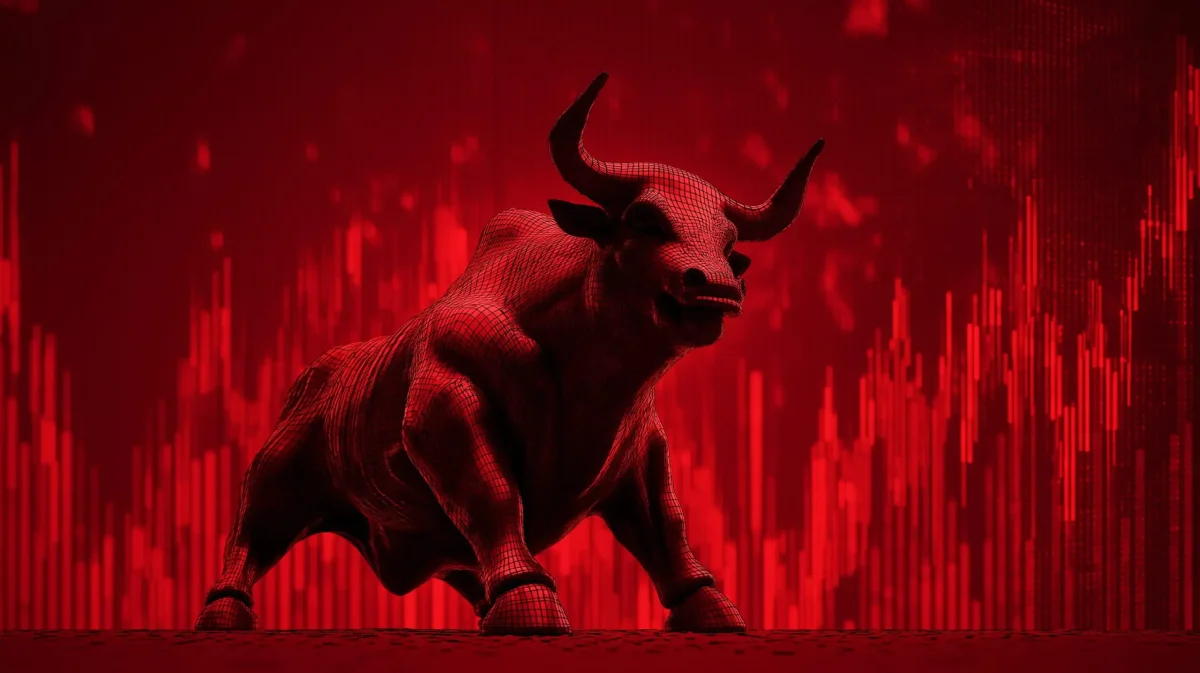
Wall Street experienced a notable anomaly overnight as the Hindenburg Omen, a rare technical indicator often associated with potential market downturns, was triggered simultaneously on both the New York Stock Exchange and the Nasdaq. This signal, named after the infamous 1937 airship disaster, occurs when a significant number of stocks reach new 52-week highs while an equally large number hit new lows, suggesting underlying market fragility despite apparent strength.
Currently, the market is being driven by a narrow rally in technology shares, particularly those tied to artificial intelligence, while sectors such as healthcare and telecommunications lag behind. Despite the ominous signal and relatively low consumer confidence readings, the S&P 500 managed to close at a fresh all-time high. AMP economist My Bui commented on the indicator's mixed historical track record, noting that it has predicted many crashes that never materialized, though current odds of a correction are considered above average.
Alumis (ALMS) Faces Revenue Decline but Shows Resilience
Alumis (ALMS) reported a sharp drop in first-quarter revenue to US$1.74 million from US$17.39 million a year earlier, while its net loss narrowed to US$93.05 million. Despite the revenue plunge, the stock has shown surprising resilience, posting a 7-day return of 3.66% and a 30-day return of 7.60%, though it is down 7.20% over the past 90 days. The company's price-to-book (P/B) ratio of 10.4 times is above the broader U.S. pharmaceuticals sector average of 2.4 but below its selected peer group average of 17.3, reflecting market confidence in Alumis's pipeline and assets. With a market capitalization of US$3.16 billion, investors are weighing the substantial net loss against potential future rewards amid clinical-stage uncertainties in healthcare AI and automation.
Futures Dip as Trump-Xi Summit Concludes
U.S. stock futures edged lower on Thursday as President Trump's meeting with Chinese President Xi Jinping in Beijing neared its end. Dow Jones futures slipped 0.2%, S&P 500 futures dropped 0.3%, and Nasdaq 100 futures declined 0.5%. The day saw the Dow return to the 50,000 mark, while the S&P 500 and Nasdaq reached new highs, fueled by optimism around the AI sector and strong earnings from Applied Materials and Figma. New business deals were announced during the summit, including for Boeing and Nvidia, though diplomatic tensions over Taiwan and Iran remain unresolved. Meanwhile, oil prices climbed amid disruptions in the Strait of Hormuz, with Brent crude nearing $107 a barrel, intensifying inflation concerns ahead of the U.S. midterm elections.
AEM Overtakes DBS as Top Traded Stock on Singapore Exchange
Advanced semiconductor firm AEM surpassed DBS as the most traded stock on the Singapore Exchange on May 15, with S$47.3 million in shares traded by 9:40 a.m., compared to DBS's S$45.6 million. AEM shares hit a high of S$10.68 before retreating to S$9.72. The surge is linked to strong demand for AI-linked chips and AEM's partnership with ASE Technology, the world's largest semiconductor assembly and test service provider. Other tech firms like CSE Global and Frencken also saw significant trading activity amid broader tech sector gains. Despite geopolitical worries from the Middle East conflict, Singapore's tech sector and exports remain resilient, suggesting the rally could persist through year-end, according to analysts.
India's Stock Market Growth Highlighted by NSE CEO
National Stock Exchange of India CEO Ashish Kumar Chauhan emphasized the stock market's crucial role in India's economic expansion during a program at Vignan's University. He noted a leap in investor numbers from 1-1.5 million in 1994 to nearly 130 million today. Market capitalization has ballooned to around Rs 470 lakh crore, positioning India as the world's fourth-largest stock market behind the US, China, and Japan. Chauhan announced plans for an NSE Skill Development Centre at Vignan's University to train students in trading and equity research. He also highlighted NSE Emerge, a platform aiding startups in raising equity capital. The event stressed the importance of financial literacy among students beyond academic qualifications.
Indian Indices Rise Amid Energy Price Hikes
India's stock market opened higher on Friday, with the S&P BSE Sensex climbing 292.55 points to 75,691.27 and the NSE Nifty50 up 83.70 points to 23,773.30. This uplift follows a 789-point surge in the Sensex the previous day, largely due to short covering by foreign institutional investors (FIIs). The government raised petrol and diesel prices by Rs 3 per litre, and CNG by Rs 2 per kg, aiming to manage inflation without sharp spikes. Market dynamics revealed strong gains in stocks reporting good Q4 results, while those with poor results faced steep declines. IT stocks showed ongoing weakness, whereas pharmaceutical shares remained resilient, reflecting investor sentiment amid current economic challenges.
Cerebras IPO Surges 68%, Reaching Billion Market Value
Cerebras Systems priced its IPO at $185 per share, raising $5.55 billion and hitting a $40 billion market value at pricing. The stock surged 68% to close near $311, lifting its valuation to about $67 billion. The AI chipmaker, which sells wafer-scale processors to OpenAI, Amazon, and Meta, reported $510 million revenue in 2025, growing 76% year-over-year. Cerebras faces competition from Nvidia but remains smaller, with a $67 billion market cap versus Nvidia's $5.7 trillion. Investors will watch its ability to convert hyperscaler partnerships into long-term revenue amid high R&D spending and customer concentration risks.