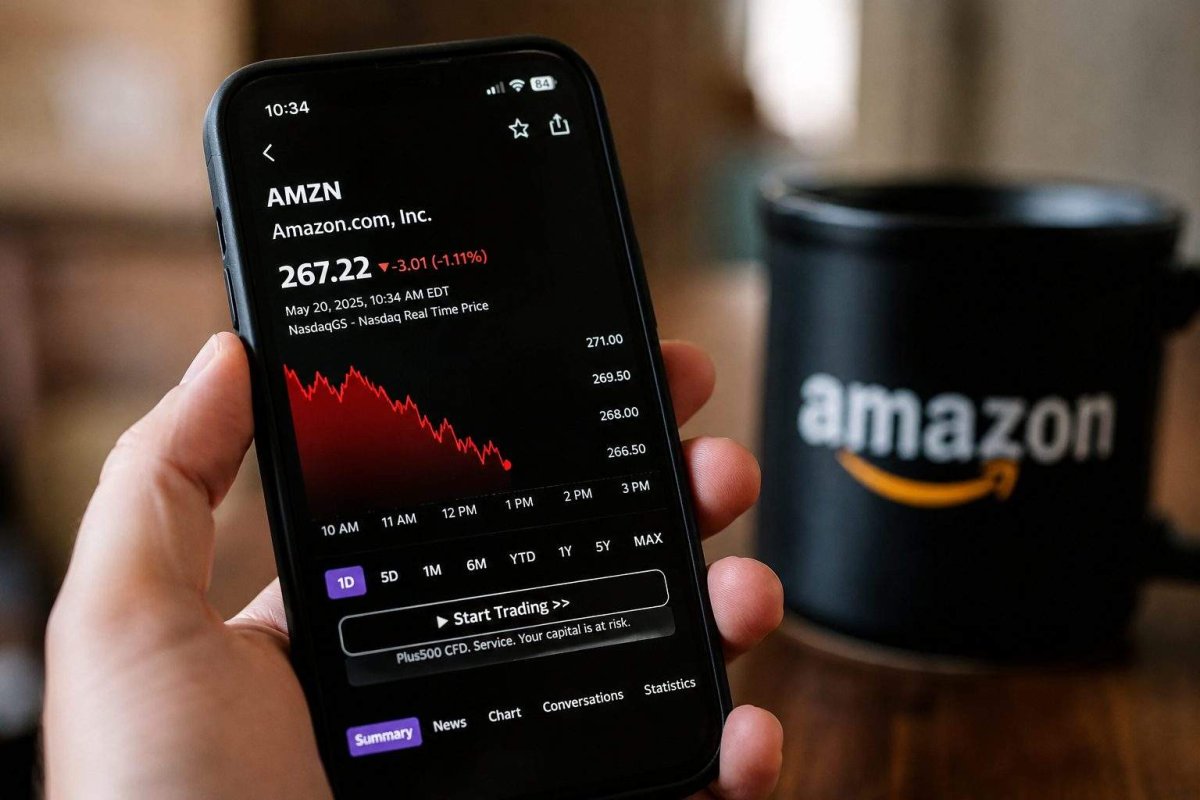
Amazon.com shares declined on Thursday, moving in the opposite direction of a broader technology rally that pushed the S&P 500 and Nasdaq to new all-time highs. The e-commerce and cloud computing giant fell 1.1% to $267.22, trading in a range between $266.71 and $270.58 on volume of about 31.3 million shares.
Investors largely shrugged off the company's latest announcements regarding faster delivery and new artificial intelligence products, instead keeping their focus on Amazon's escalating capital expenditures. The company's first-quarter results, released earlier, showed revenue rising 17% to $181.5 billion, but free cash flow plunged sharply to $1.2 billion from $25.9 billion a year earlier, driven by heavy investment in property and equipment for AI infrastructure.
The market's reaction stood in stark contrast to the broader tech sector, which saw strong gains. Nvidia, for example, jumped 4.4% after U.S. officials approved the sale of H200 chips to China. "You have to be in it to win it," said Robert Pavlik, senior portfolio manager at Dakota Wealth, commenting on the overall advance.
Amazon's cloud unit, Amazon Web Services, continued to be a bright spot. AWS sales surged 28% to $37.6 billion, and operating income reached $23.9 billion. CEO Andy Jassy noted that AWS's growth rate was the fastest in 15 quarters. However, the market appeared to be pricing in concerns that the payoff from AI investments may take longer than expected, especially with interest rates likely to remain elevated. Prediction markets on Polymarket gave a 98% probability that the Federal Reserve would hold rates steady at its June 17 meeting, while Kalshi's economics board showed a 97% chance for a rate hold.
On the retail side, Amazon announced this week that its Amazon Now service, offering 30-minute delivery for groceries and essentials, is now available to millions of U.S. customers, with plans to expand to tens of millions more by year-end. Udit Madan, Amazon's senior vice president of Worldwide Operations, described the offering as delivering "in 30 minutes or less." Analysts, however, cautioned that making ultra-fast delivery profitable at scale remains a significant challenge. "Companies can get into trouble when they start overpromising speed," Gartner's Brad Jashinsky told the Associated Press.
Despite the stock's decline, many analysts remain bullish. On May 12, TD Cowen's John Blackledge reiterated a Strong Buy rating with a $350 price target. Stifel's Mark Kelley maintained a $319 target as of May 1. The bullish case rests on the belief that Amazon's heavy spending on AI and cloud infrastructure will ultimately fuel the next wave of growth, similar to the expansion of AWS in prior years.
The bear case, however, points to rising competition from Microsoft and Alphabet, both of which are also pouring billions into AI and cloud. In retail logistics, Amazon faces intensifying pressure from Walmart and various delivery apps. Faster shipping also means higher costs and narrower margins. If AI demand softens or operating costs—such as fuel and delivery expenses—continue to climb, Amazon's stock could remain under pressure relative to peers with more immediate AI leverage.
For now, investors are waiting for more convincing evidence that Amazon's massive investments will translate into sustainable revenue growth. The company is growing, but the critical question remains: at what cost?