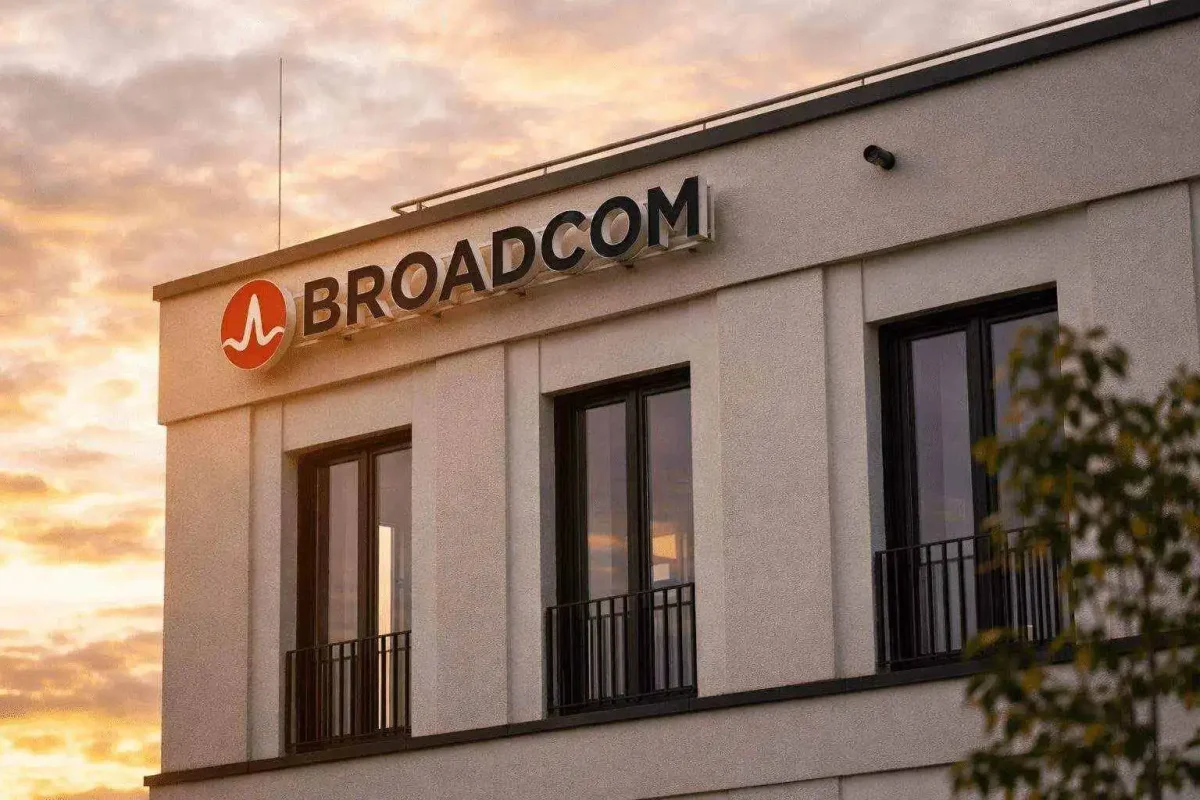
Shares of semiconductor designer Broadcom experienced a notable uptick in late trading on Tuesday, propelled by a significant new artificial intelligence chip agreement with technology giant Meta Platforms. The multi-year partnership, centered on Meta's custom MTIA (Meta Training and Inference Accelerator) chips, represents a substantial commitment and underscores the intensifying demand for specialized AI infrastructure.
Conversely, language-learning platform Duolingo saw its stock price retreat by approximately 2.2%. The decline reflects ongoing investor apprehension regarding the company's decelerating growth trajectory and its recent issuance of earnings forecasts that fell short of Wall Street's expectations. This divergence highlights a broader market trend where capital is flowing toward firms with tangible, long-term AI infrastructure contracts, while companies prioritizing user growth over immediate monetization face pressure.
Meta Deal Adds to Broadcom's AI Momentum
The newly announced partnership with Meta is structured as a multi-phase engagement extending through 2029. The initial commitment involves over 1 gigawatt of custom silicon capacity, with plans for a broader, multi-gigawatt expansion as Meta significantly scales its AI data-center operations. Broadcom CEO Hock Tan characterized the MTIA deployment as merely "the beginning" of a multi-generation roadmap for the collaboration.
Meta CEO Mark Zuckerberg emphasized the anticipated benefits of "greater performance and efficiency" from the custom chip design. This agreement follows closely on the heels of other major AI chip deals secured by Broadcom. On April 6, the company announced partnerships with both Google, to collaborate on future generations of Tensor Processing Units (TPUs) through 2031, and with AI firm Anthropic. Anthropic's commitment, described by its CFO as the company's "most significant compute commitment to date," involves several gigawatts of advanced TPU capacity starting in 2027.
Financial Performance and Market Context
These strategic wins build upon Broadcom's already formidable financial performance in the AI sector. In its most recent quarterly report in March, the company disclosed that AI-related revenue surged 106% year-over-year to $8.4 billion, with a projection of $10.7 billion for the current quarter. Its infrastructure software division contributed an additional $6.8 billion in revenue. Analyst Gil Luria of D.A. Davidson highlighted visibility for demand extending through 2027, pointing to "significant growth in demand." While Nvidia maintains its leadership in AI accelerators, Broadcom is carving out a dominant position in the custom chip segment as hyperscale cloud providers diversify their supplier base.
The market's bullish sentiment toward Broadcom was evident earlier in the week. On Monday, investment research firm Zacks named Broadcom its "Bull of the Day," citing robust AI demand. This was followed by a report on Tuesday noting that Goldman Sachs reaffirmed its Buy rating on the stock following the Google and Anthropic deal announcements. The positive sentiment contributed to a 2% gain for the Nasdaq Composite index on Tuesday.
Duolingo's Strategic Shift Weighs on Shares
Duolingo's challenges present a contrasting narrative. In February, the company provided a first-quarter bookings outlook of roughly $301.5 million, which trailed analyst forecasts. For the full fiscal year, Duolingo set a bookings guidance range between $1.27 billion and $1.30 billion, again coming in below Wall Street's targets. Management attributed this softer near-term profitability to a deliberate strategy of broadening access to its AI features and enhancing the free user experience to prioritize long-term user growth.
CEO Luis von Ahn stated the company is "deliberately prioritizing user growth" and refining its free learner offering, acknowledging this approach may temporarily slow financial growth. Investors are awaiting the company's first-quarter results, scheduled for release on May 4, for further insight into the impact of this strategic shift.
Looking Ahead
The current market dichotomy is not necessarily permanent. Broadcom now faces the execution challenge of delivering on its voluminous commitments to Meta, Google, and Anthropic—translating promises into real chip shipments amid fierce competition for AI infrastructure spending. Duolingo, for its part, is betting that its investment in new AI features and an improved free tier will ultimately revive user growth and convert those users into paying subscribers.
For now, however, Wall Street's reward mechanism is clear: it is favoring companies with demonstrated scale, locked-in long-term contracts, and clear visibility into future revenue streams, while showing less patience for growth stories where monetization is deferred.