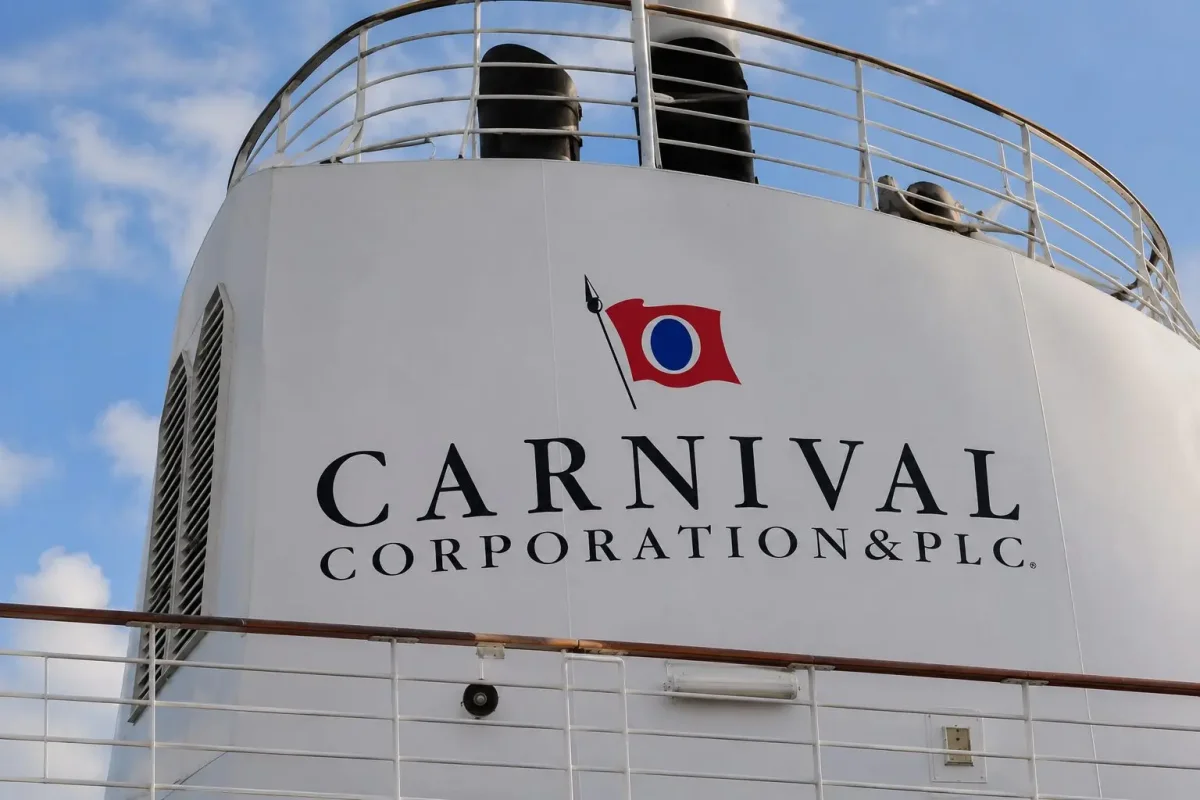
Carnival Corporation Ltd. saw its shares decline 5.5% to $28.54 in late morning trading on Tuesday, June 23, 2026, reversing some recent gains. The stock opened at $27.50 and touched a low of $27.02, with over 22 million shares changing hands. Despite reporting record quarterly numbers, investors focused on a softer-than-expected profit outlook, which overshadowed the positive results.
Guidance Misses Expectations
The Miami-based cruise giant forecast third-quarter adjusted earnings of approximately $1.35 per share, falling short of the $1.42 per share consensus estimate compiled by LSEG. Second-quarter revenue came in at $6.66 billion, slightly below the $6.69 billion analysts had anticipated. The company attributed the weaker guidance to rising fuel costs and ongoing geopolitical tensions, which have dampened booking momentum in the Mediterranean region.
Record Revenue and Earnings
Despite the market's disappointment, Carnival reported record second-quarter revenue of $6.7 billion, with net income reaching $537 million. Adjusted net income stood at $569 million, and customer deposits hit $9.0 billion. CEO Josh Weinstein highlighted that the company is "93 percent booked for the year" despite what he called "extreme geopolitical headwinds" and a nearly 30% increase in fuel costs. The company now expects constant-currency net yields to rise approximately 1.75% for the full year, with adjusted EBITDA forecast at roughly $7.11 billion and adjusted diluted earnings per share of about $2.22.
Market Context and Analyst Concerns
Net yields, a key metric that measures cruise revenue per available berth day minus certain costs, came under scrutiny. On the earnings call, CFO David Bernstein emphasized "exceptional cost discipline," but Stifel analyst Steven Wieczynski questioned what had changed since March, when management reduced its yield outlook by 100 basis points. Weinstein acknowledged that the Mediterranean region "is taking it most on the chin," while the Caribbean continues to "chug along." The broader market also saw declines, with the SPDR S&P 500 ETF losing about 1.2%. Among peers, Royal Caribbean dropped around 1.1%, while Norwegian Cruise Line ticked up 0.3%.
Share Buyback and Risk Factors
Carnival is actively repurchasing shares, and executives noted that the yield drag is primarily linked to the Middle East conflict rather than a broad decline in consumer demand. Management believes that a regional disruption tends to recover more quickly than a downturn in overall consumer spending. However, downside risks remain significant. A further spike in marine fuel prices, new issues in European travel, or softer consumer spending could pressure yields and margins. Additionally, a Texas investigation into Carnival's April data breach, which affected about 6 million people including 800,060 in Texas, adds legal and reputational uncertainty.
Investor Sentiment
While Carnival's record quarter underscores strong demand, the market is not giving the company much credit. Investors are demanding proof that the second half of the year will hold up. Bookings remain solid, but the lowered yield outlook is weighing on sentiment. The stock's performance reflects a cautious view as the cruise industry navigates a complex environment of rising costs and geopolitical challenges.