Oracle Corporation (NYSE: ORCL) shares extended their recovery on Tuesday, climbing another 3.0% to $146.15, building on Monday's 9.2% surge. The two-day rebound of roughly 12.5% follows a sharp selloff, but beneath the equity rally, credit investors remain deeply concerned about the company's aggressive expansion into artificial intelligence infrastructure.
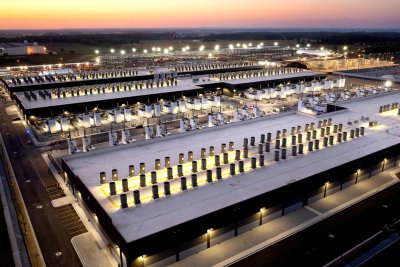
The core issue: Oracle has accumulated $260 billion in uncommenced lease obligations tied to AI data centers and GPU capacity. These commitments, which are not yet reflected on the balance sheet, represent approximately 61% of Oracle's current market capitalization of $425.6 billion. For comparison, Microsoft's lease exposure is under 9% of its market value, while Meta Platforms sits at 22.8%.
Credit Markets Flash Warning Signs
While equity investors have bid up Oracle shares, the credit market tells a different story. Oracle's five-year credit-default swaps have jumped to 215 basis points, an 18-year high, compared to roughly 80 basis points for key peers. The company's bonds are trading at yields between 7% and 8%, significantly higher than the 2.5%–3.5% range for Alphabet and Amazon. This divergence between stock performance and credit metrics suggests that debt investors are less convinced about Oracle's ability to generate sufficient cash flow to service its mounting obligations.
S&P Global Ratings downgraded Oracle to BBB- in July, just one notch above junk status. Analyst Andrew Chang noted that a further downgrade could occur if leverage sustains above 4.5 times. Oracle's reported debt stands at $129.5 billion, roughly 4.3 times EBITDA, while its debt plus recognized leases reaches approximately 5.7 times. In contrast, Alphabet, Amazon, Microsoft, and Meta all maintain debt-to-EBITDA ratios below 1.0.
Growth Story Remains Intact, But Cash Flow Strains
Despite the leverage concerns, Oracle's operational growth remains robust. Fiscal 2026 revenue climbed 17% to $67.4 billion, with cloud infrastructure revenue surging 77%. The company's remaining performance obligations (RPO) totaled $638 billion, nearly 2.5 times its uncommitted lease obligations, providing a substantial revenue backlog. Almost half of this backlog is tied to OpenAI, a key customer.
However, cash conversion is under pressure. Operating cash flow came in at $32 billion, but free cash flow was negative $23.7 billion. Oracle plans capital expenditures of up to $95 billion for fiscal 2027, which will further strain liquidity. The company has some insulation: customers have already paid for or contributed approximately $75 billion in hardware, reducing the need for upfront GPU investments.
Market Context and Peer Comparison
Tuesday's broader tech rally lifted the Nasdaq 2.69% and the S&P 500 1.90%, but Oracle's 3.0% gain slightly outperformed. The stock has recovered about 21.8% from its July 28 closing price of $119.96, yet the rebound has not fully addressed the underlying funding gap. Investors are now focused on conversion—turning RPOs into cash—rather than demand, which remains strong.
Oracle's lease obligations, spanning 15 to 19 years, are not immediately added to debt but limit financial flexibility. The company's use of leverage sets it apart from hyperscaler rivals, making it more vulnerable to funding cost increases if data-center launches are delayed or AI demand softens.
With no investor-relations events scheduled for the coming week, market participants will watch for rating updates, bond spread movements, or announcements on data-center financing as the next catalysts.