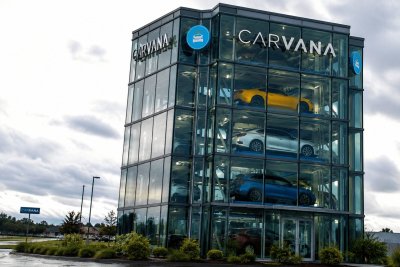
Carvana Co. (NYSE: CVNA) saw its stock price climb approximately 10% in after-hours trading on Wednesday after the online used-car retailer disclosed first-quarter financial results that surpassed Wall Street expectations. The company posted record quarterly revenue of $6.432 billion, a 52% increase from $4.23 billion in the same period last year, and well ahead of the $6.12 billion analysts had anticipated.
Net income for the three months ended March 31 reached $405 million, or $1.69 per diluted Class A share, up from $373 million, or $1.59 per share, a year earlier. The bottom-line performance was driven by robust demand for pre-owned vehicles as consumers continued to seek more affordable alternatives to new cars, which remain near an average price of $50,000.
Sales Volumes and Revenue Breakdown
Retail vehicle sales totaled 187,393 units in the quarter, a 40% year-over-year increase, marking the sixth consecutive quarter with at least 40% retail unit growth, according to founder and CEO Ernie Garcia. Revenue from retail vehicle sales jumped to $4.83 billion from $2.98 billion a year ago. Wholesale sales climbed to $1.08 billion, while revenue from other segments, including finance and related products, contributed $526 million.
Garcia emphasized that Carvana's integrated platform is designed to make the used-car trading experience "easier, faster, more efficient, and more fun," a strategy that has fueled the company's growth trajectory.
Margin Pressures and Cost Trends
Despite the top-line beat, Carvana's profitability metrics showed some strain. Adjusted EBITDA margin slipped to 10.4% from 11.5% in the prior-year quarter. Gross profit per retail unit also declined to $6,783 from $6,938. Reuters attributed the margin compression to higher vehicle reconditioning costs and softer shipping fees. Carvana pointed to internal improvements, including upgraded labor training and the deployment of AI-driven tools, which the company said are already contributing to operational efficiency this quarter.
Adjusted EBITDA, which excludes certain items, came in at $672 million, reflecting the company's ability to generate cash flow even as margins tightened.
Outlook and Competitive Landscape
Carvana management reiterated its full-year guidance for strong growth in both retail units sold and adjusted EBITDA, and forecast sequential gains in both metrics for the second quarter, potentially setting new company records if the operating environment remains stable.
The U.S. used-car market remains highly fragmented, with Carvana facing competition from traditional players like CarMax (NYSE: KMX) and online platforms such as CarGurus (Nasdaq: CARG) and AutoTrader, as well as automakers including Ford (NYSE: F), General Motors (NYSE: GM), and Tesla (Nasdaq: TSLA).
Risk Factors
In its filings, Carvana flagged potential headwinds from tariffs, the ongoing Iran conflict, and broader economic uncertainties. The company warned that persistent increases in gasoline prices could squeeze disposable income for lower-income buyers and raise transportation and logistics costs. However, Carvana noted that these factors did not materially impact its first-quarter results.
Morgan Stanley analyst Daniela Haigian, in a note ahead of the earnings release, advised investors to "be opportunistic on near-term volatility," citing concerns about consumer health, fuel prices, and subprime loan spreads. While she acknowledged Carvana may sustain its growth trajectory, she cautioned that an extended oil-price shock could pressure lower-income consumers and weigh on the stock's valuation.