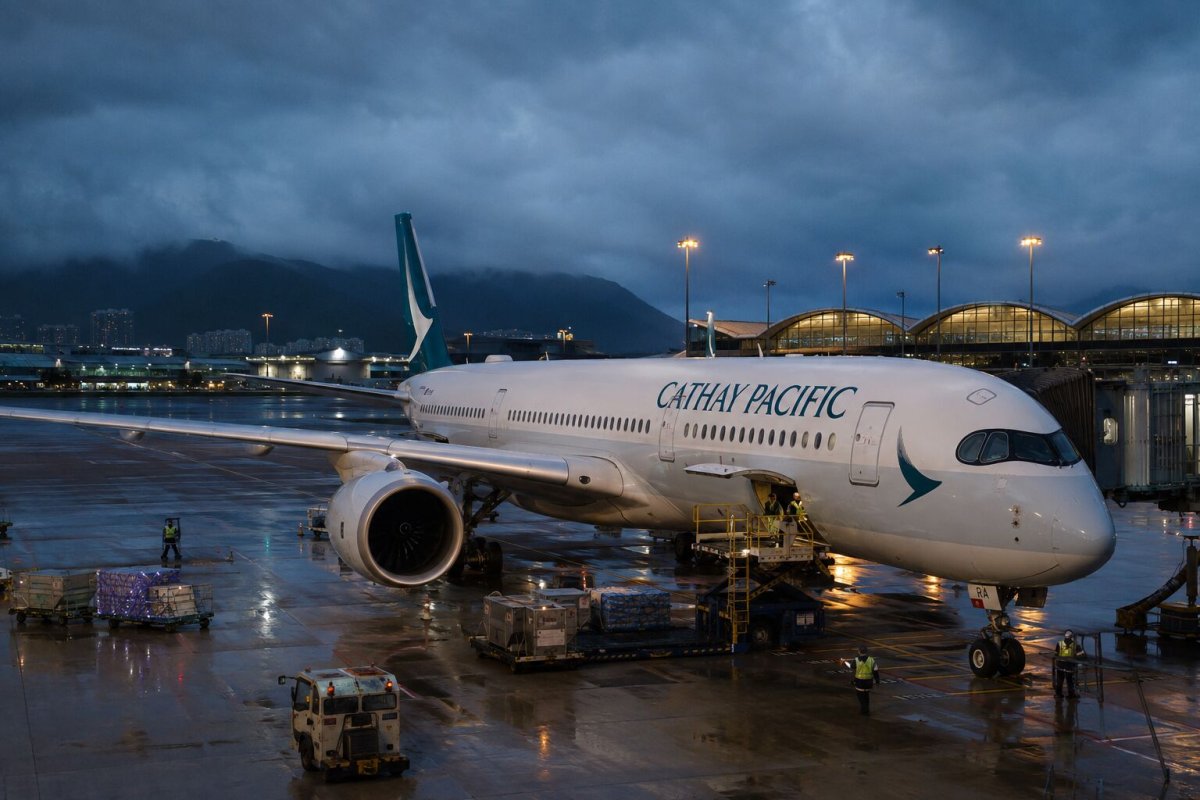
Hong Kong, September 5, 2026 – Cathay Pacific Airways (HKG:0293) has pushed back the resumption of its passenger services to Dubai and Riyadh until November 30, extending the suspension by roughly five weeks beyond its previous restart plan. Despite the continued grounding of two key Middle Eastern routes, the airline’s stock edged up 0.6% on Friday, closing at HK$14.42. The muted market reaction underscores that investors are more concerned about the escalating cost of jet fuel than the dormant routes themselves.
The carrier first halted these services in March, and the latest update—announced on September 4—cancels both routes through the end of November. Passengers holding bookings have the option to rebook, reroute, or request refunds, though Cathay has not provided an estimate of the financial impact from refunds or lost revenue. The extended closure adds to operational friction, but the company’s limited direct exposure to these specific routes has softened the blow.
Redeployment Mitigates Route Losses
Earlier this year, DBS Research noted that Cathay’s exposure to the Dubai and Riyadh routes was limited. The airline had already shifted its widebody aircraft to more lucrative destinations like London and Zurich. This strategic redeployment helps offset the revenue gap from the suspended Middle East services, but it does not eliminate the costs associated with refunds or the logistical challenges of repositioning aircraft on short notice when bookings already exist.
Cathay’s share price has shown resilience despite the news. After reaching a post-results peak of HK$15.14 on August 6, the stock dipped to HK$13.88 on September 2, only to rebound to HK$14.42 by September 4. The recovery came on the back of a sharp gain on Thursday, with trading volume reaching 31.2 million shares. The route decision is being viewed as a warning rather than a fresh earnings collapse, as fuel costs pose a far greater threat to the airline’s profitability.
Fuel Costs: The Real Risk
Chairman Guy Bradley highlighted the severity of the fuel price surge in August, noting that jet-fuel costs were “almost doubling from the first quarter to the second quarter,” driven by the ongoing Middle East conflict. This escalation has a broad impact, affecting every passenger and cargo flight, unlike the isolated route suspensions.
HSBC’s sensitivity analysis, published on September 4, illustrates the potential damage: a 5% further increase in fuel costs would reduce recurring profit from HK$11 billion to HK$10 billion, an 11% drop, and lower recurring return on equity from 19% to 17%. Cathay’s first-half attributable profit came in at HK$6.2 billion, up from HK$3.7 billion a year earlier, but that figure included HK$1 billion in non-recurring gains. The airline’s core operations contributed HK$4.9 billion.
Strong Demand Provides a Cushion
Despite the headwinds, demand has been robust. DBS analyst Jason Sum noted that “volume, load factor and yield moved higher together” across Cathay’s businesses. Passenger revenue surged 26.3% to HK$43.2 billion, while cargo revenue climbed 23.9% to HK$13.8 billion, with cargo yield up 18.1%. Technology shipments have been a key driver, and fuel surcharges have helped pass on some of the higher costs to customers.
Analysts remain cautiously optimistic. HSBC maintained a Buy rating with a HK$16.50 target price, implying 14.4% upside from Friday’s close. DBS also has a Buy rating with an HK$18 target, expecting further surcharge and fare repricing to recover more fuel expenses later this year. That target suggests a 24.8% potential gain, though neither estimate guarantees a return.
Risks and Outlook
Key risks include another spike in fuel prices that could overwhelm improving yields, potential growth in refund costs if the suspension is extended again, and the possibility that a rapid normalization in the region could unwind the transfer traffic currently flowing through Hong Kong. Investors will be watching fuel prices, booking strength, and cargo yields when the market reopens on Monday. While the suspended routes matter, the cost of flying everywhere remains the dominant concern.
