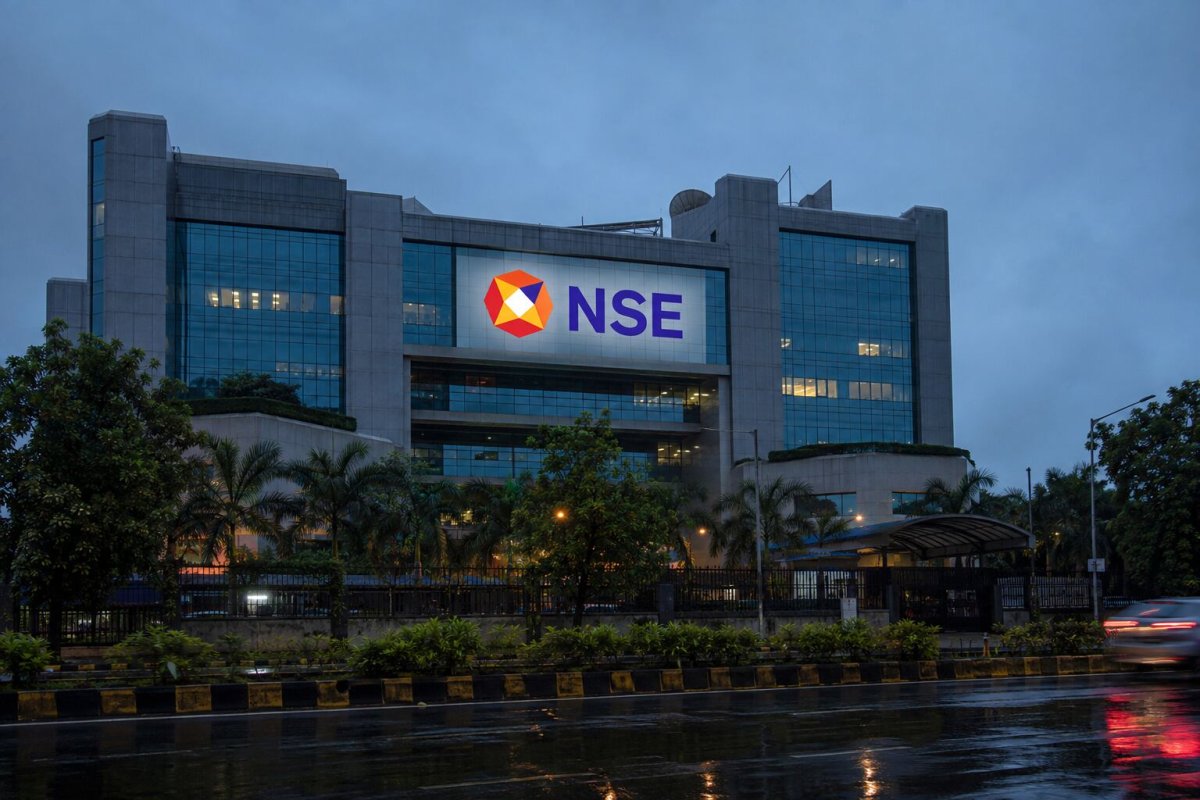
India's market regulator has given the green light to the National Stock Exchange's long-awaited initial public offering. The Securities and Exchange Board of India (SEBI) issued its final observations on September 4, clearing the way for the exchange to proceed with its listing plans. The offer will consist of up to 148,905,525 existing shares, with no fresh issue component, meaning the exchange itself will not receive any proceeds from the IPO.
Offer Structure: Pure Offer for Sale
The IPO is structured entirely as an offer for sale (OFS), where existing shareholders will sell their stakes. This distinction is crucial for investors: the funds raised will go directly to the selling shareholders, not to NSE's coffers. According to the draft prospectus filed in June, the offer represents 6.02% of NSE's paid-up equity capital. The largest seller is State Bank of India (SBI), which plans to offload up to 24.75 million shares, equivalent to 31% of its current holding in the exchange. Bank of Baroda may sell half of its stake, while other significant sellers include Canada Pension Plan Investment Board, Aranda Investments, General Insurance Corporation, and New India Assurance.
Regulatory Clearance After Years of Delay
The clearance comes nearly a decade after NSE first filed for an IPO. The regulator's decision followed the Supreme Court's disposal of SEBI's appeals related to the exchange's co-location and dark-fibre cases. In July, NSE agreed to a settlement of ₹14.91 billion, which has been provisioned in its financials. This settlement is a key factor in the company's recent earnings performance.
Financial Performance: A Mixed Picture
NSE's fiscal 2026 results, as disclosed in the offer document, show a decline in revenue and profit compared to the previous year. Operating revenue fell 3.1% to ₹166.01 billion, while reported profit dropped 15.5% to ₹103.02 billion. However, the drop in profit is largely attributable to the one-time settlement provision. On a normalized basis, the operating EBITDA margin slipped only 1.46 percentage points to 76.23%, underscoring the exchange's high profitability.
Revenue Concentration: A Key Risk
The exchange's revenue is heavily concentrated in transaction charges, which accounted for 78.65% of fiscal 2026 operating revenue. Options trading alone contributed ₹99.98 billion, or 60.22% of total revenue. This concentration links NSE's valuation to derivatives trading volumes, which have seen a slowdown. Average daily equity-options notional value fell 17.4% during the year, despite a 14.4% increase in registered investors to 129.09 million.
Valuation Expectations and Market Context
The price band for the IPO has not yet been announced, but unlisted shares have recently traded around ₹1,965, implying a potential equity value of approximately ₹4.86 trillion and an offer size of ₹292.6 billion. However, market experts caution that there may be limited discount to capture. Harshal Dasani of INVasset PMS noted, "There is no discount left to capture." Public buyers may prefer to wait for the final pricing and benefit from listed liquidity.
The listing will provide a direct comparison with BSE Ltd, the other major Indian exchange, which closed Friday at ₹3,411, up 3.17%. BSE trades at nearly 49.6 times reported earnings, while NSE is expected to command a premium given its larger trading scale and deeper derivatives franchise. However, NSE's concentration risk is notable: its ten largest trading members generated 46.78% of fiscal 2026 operating revenue.
What to Watch Next
Investors should closely monitor the updated prospectus and the formal price band, as well as details on selling-holder allocations and lock-up periods. The official timeline for the IPO is yet to be announced, though bankers have reportedly discussed a September schedule. While the IPO offers a rare opportunity to invest in India's dominant trading venue, it does not provide growth capital to the exchange. At the right price, this distinction may be immaterial, but at an ambitious valuation, it could become the deal's central weakness.
