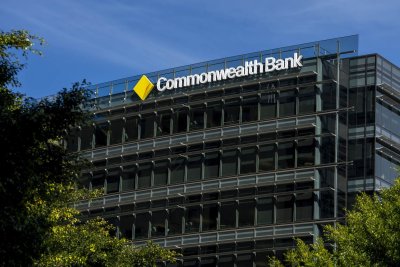
Commonwealth Bank of Australia (ASX:CBA) heads into Thursday's trading session with a market value that is roughly A$92 billion higher than what it would be if valued at the average multiple of its three largest domestic competitors. This premium, calculated based on Wednesday's closing prices, underscores the high expectations pinned on the bank's upcoming full-year results and final dividend announcement on August 12.
In Wednesday's trading, CBA was the only one of Australia's Big Four banks to post a gain, edging up 0.41% to A$170.00. In contrast, National Australia Bank Ltd (ASX:NAB) fell 1.11%, Westpac Banking Corp (ASX:WBC) slipped 0.16%, and ANZ Group Holdings Ltd (ASX:ANZ) dropped 0.44%. The equal-weighted mix of the other three majors declined by an average of 0.57%, meaning CBA outperformed them by nearly a full percentage point.
The valuation gap is stark. CBA trades at a trailing price-to-earnings (P/E) ratio of 27.51, which is 47.7% above the equal-weighted average of 18.63 for NAB, Westpac, and ANZ. Its dividend yield of 2.91% is 1.48 percentage points below the group average of 4.39%. If CBA were valued at the peer multiple, its share price would be approximately A$115.13, implying a market capitalization of around A$192.7 billion — a far cry from its actual A$284.5 billion market cap.
To justify the current A$170 share price using the peer average P/E, CBA would need to generate earnings per share (EPS) of about A$9.13, a 47.7% increase from its trailing EPS of A$6.18. Achieving this within three years would require annualized EPS growth of roughly 13.9%. This is a tall order given that the bank's cash net profit after tax for the March quarter was A$2.7 billion, only slightly above the prior year's A$2.6 billion and about 2% below some analyst estimates.
CBA's dominant position in the Australian mortgage market — with a 25% share — provides some justification for its premium. Mortgages account for approximately 60% of total credit books among the Big Four, giving CBA significant scale and stability. However, this reliance on domestic housing also exposes the bank to risks if the housing market slows. Morgan Stanley has projected that Australian mortgage growth could decelerate to around 3%–4% next year from 7.5%, which would make CBA's implied 13.9% earnings growth target even more challenging.
Credit quality is another area of concern. In the March quarter, loan impairment charges rose to A$316 million from A$223 million a year earlier, and CBA set aside an additional A$200 million in collective provisions. Its common equity tier 1 ratio stood at 11.6%. CEO Matt Comyn cited geopolitical tensions, noting that "conflict in the Middle East is disrupting critical supply chains and contributing to global uncertainty."
Analyst sentiment remains cautious. According to data from TradingView, 11 out of 16 analysts rate CBA a strong sell, three recommend sell, and two advise hold. The average price target is A$126.51, which is 25.6% below Wednesday's closing price. Despite this bearish consensus, the stock has continued to climb, suggesting that many investors are betting on CBA's ability to sustain its premium through earnings growth and stability.
With the August 12 results approaching, investors will be watching not just the headline profit figure but also net interest margins, loan impairments, cost control, and the final dividend. A solid performance could reinforce confidence in the bank's outlook, but at A$170, the valuation demands more than just a steady hand — it requires evidence that CBA can deliver on its lofty earnings expectations.