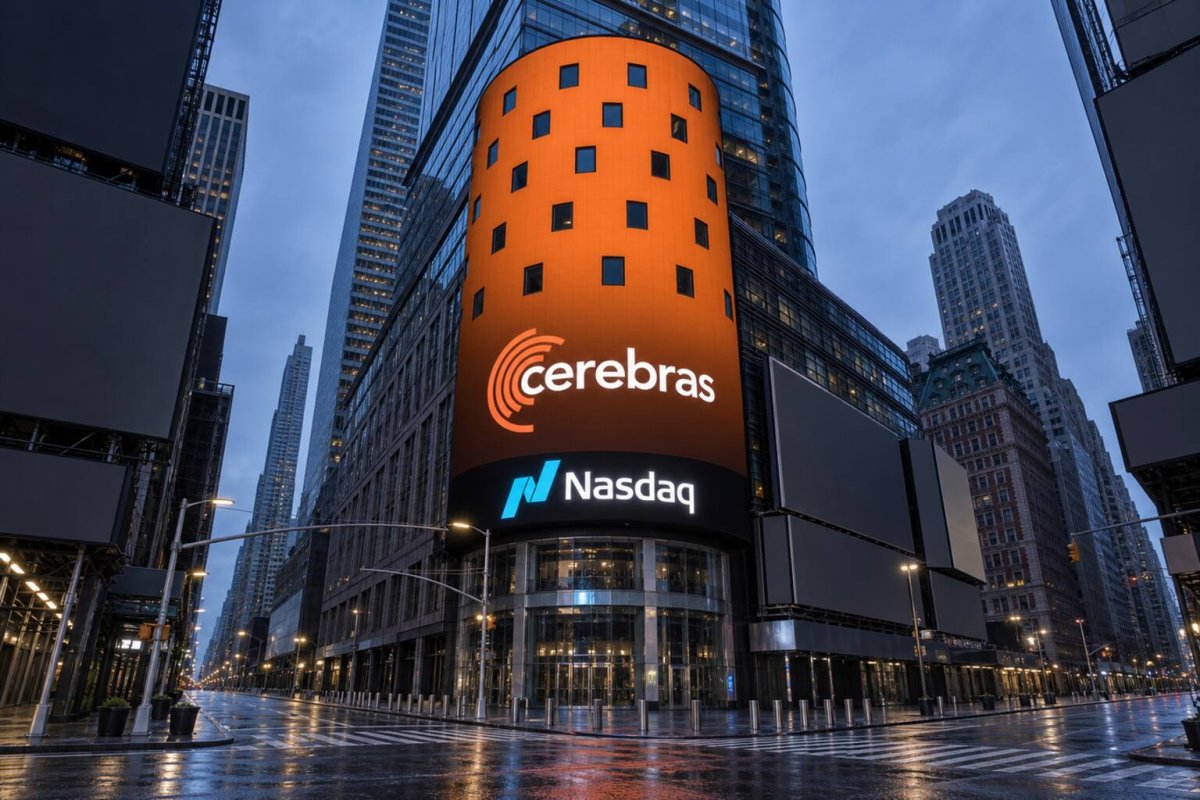
Three insiders at Cerebras Systems (NASDAQ:CBRS) sold a combined 140,901 shares on September 4, generating approximately $29.63 million in proceeds. While the headline figure may raise eyebrows, a closer look reveals that the two top executives executed their sales under pre-arranged trading plans, softening the bearish signal.
Chief Executive Andrew Feldman and Chief Technology Officer Sean Lie both used Rule 10b5-1 plans established on May 20. Feldman sold 37,441 Class A shares at weighted-average prices ranging from $199.18 to $216.62, netting about $7.88 million. Lie sold 53,460 shares at an average of $210.16, bringing in roughly $11.24 million. Both executives converted Class B shares into Class A before selling, retaining substantial ownership—Feldman still holds 13.95 million Class B shares and 525,000 options, while Lie retains 7.58 million Class B shares, 345,569 Class A shares, and 289,021 options.
In contrast, director Steven Vassallo's transaction was not flagged as preplanned. A family trust sold 50,000 shares at prices between $209.81 and $211.56, yielding about $10.52 million and leaving 171,977 shares in the trust. The Form 144 indicates these shares originated from a 2016 private placement, but the lack of a 10b5-1 designation makes this sale more discretionary.
Market Reaction and Context
Since the sales, the stock has struggled. CBRS closed Friday, September 11, at $191.93—down roughly 8.6% from its $210.05 close on the sale date and 8.7% below the insiders' combined average sale price. The stock remains only 3.7% above its $185 IPO price, reflecting the volatility typical of a recent listing.
The three sales represent just 0.13% of the 112.25 million Class A shares reported on their Forms 144, a negligible amount from an economic standpoint. However, timing matters: the sales occurred after a 21.7% rally from September 1 to September 4, and Vassallo's trust disposed of about 22.5% of its pre-sale position. For a stock just four months past its IPO, such concentrated selling—especially without a preplanned plan—warrants attention.
Fundamentals vs. Insider Activity
The more critical test for Cerebras is operational performance. The company reported second-quarter GAAP revenue of $180.1 million, up 74% year-over-year, and core revenue of $209.9 million after non-GAAP adjustments. Yet GAAP gross margin stood at just 14%, versus a 41% core margin, and the GAAP operating loss ballooned to $477.2 million. The gap stems from stock compensation, customer-warrant amortization, and data-center pass-through costs—expenses that investors cannot ignore.
The bull case rests on a $25.4 billion remaining performance obligation (RPO) balance and over 600 megawatts of capacity live or contracted for delivery by end-2027. Management guides to $880–890 million in 2026 core revenue and a 41–43% core gross margin. The balance sheet holds $8.6 billion in cash and short-term investments, largely from the IPO.
However, concentration risk looms. The three largest customer buckets accounted for 34%, 32%, and 10% of revenue in the June quarter. The OpenAI arrangement alone contributed $56.8 million, and a $1.0 billion working-capital loan and warrants make that relationship complex. Cerebras must execute on capacity deployment and convert backlog into profitable reported results.
What to Watch
The next catalyst is third-quarter guidance: $214–216 million in core revenue and a 38–40% core gross margin. A miss, coupled with further discretionary insider sales, would amplify the cautionary signal. Conversely, hitting those numbers, improving GAAP margins, and maintaining large founder stakes would support a more optimistic view.
Investors should also monitor lockup releases. Cerebras's IPO lockup permits periodic early releases of some pre-IPO shares before the 180-day period expires, which could add supply. The takeaway is nuanced: $29.6 million in insider selling is real, but two-thirds came from executives with preplanned trades who retained significant exposure. The unplanned director sale, future lockup releases, and the company's ability to turn backlog into GAAP profit will determine whether this activity is a red flag or a non-event.
