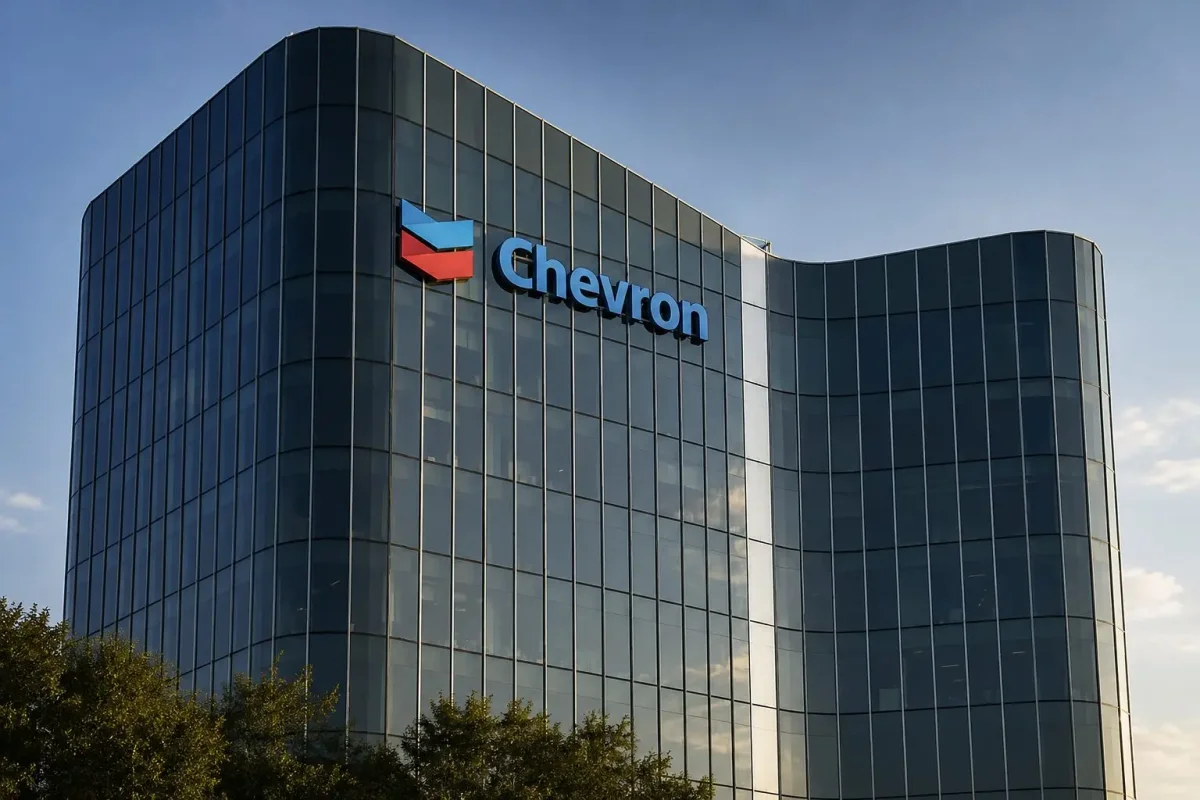
Chevron Corporation (NYSE:CVX) closed at $176.40 on Friday, marking a 4.3% gain from Tuesday's close as U.S. markets ended the week. The increase came despite news that a newly signed five-year gas supply agreement with Alinta Energy will average just 9.2 petajoules per year, a 54% decline from the 20.0 petajoules per year under the previous seven-year contract.
The reduced volume has drawn investor attention as energy markets grapple with supply concerns. A supply-risk premium on oil has boosted near-term profit expectations for major producers. According to LSEG estimates via Reuters, Chevron and ExxonMobil (NYSE:XOM) are on track to report their strongest quarterly earnings since 2022, with profits potentially more than tripling from the prior quarter.
Between July 2 and July 10, Chevron outperformed the S&P 500 by 3.0 percentage points and ExxonMobil by 2.9 points, though its margin over ConocoPhillips (NYSE:COP) was just 0.1 point. The S&P 500 rose 1.2% over the same period, while ExxonMobil gained 1.3% and ConocoPhillips advanced 4.1%.
The new gas deal, effective July 2027, covers supply from Chevron's interests in the Gorgon, Wheatstone, and North West Shelf projects. Alinta CEO Jeff Dimery said the agreement brings "greater certainty in our portfolio." The previous contract was limited to Wheatstone gas. Price terms were not disclosed, so the 54% volume reduction does not necessarily equate to a 54% revenue decline.
Alinta's overall demand may not be shrinking. On July 8, the company signed a separate deal for over 30 petajoules with LNG Japan Corporation, with deliveries extending into the early 2030s. This suggests Alinta is diversifying its supplier base rather than reducing long-term commitments.
Chevron Australia President Balaji Krishnamurthy described Gorgon and Wheatstone as "pillars of energy security," noting they collectively supply about 40% of Western Australia's domestic gas. The broader asset base in the new contract could offer Chevron more operational flexibility, though the company has not released specific terms.
Jefferies analyst Lloyd Byrne lowered his price target on Chevron to $216 from $236 but maintained a Buy rating. He projects second-quarter adjusted EPS of $5.86, roughly 9% above consensus, which would be about 4.2 times the $1.41 reported in the first quarter. The new target is still about 22% above Friday's closing price.
Market dynamics remain volatile. "Gasoline prices have rallied alongside the massive move higher in crude oil," said Alex Hodes, director of energy-market strategy at StoneX Group (NASDAQ:SNEX), following attacks on tankers in the Strait of Hormuz. West Texas Intermediate crude settled at $71.41 a barrel on Friday, up 4% for the week, while Brent crude closed at $76.01, a 5.4% gain. A normalization of shipping traffic could erode some of this premium and pressure Chevron's upstream earnings.
Investors will watch upcoming data closely: the June U.S. consumer price index on Tuesday, July 14, followed by producer prices and the EIA's weekly petroleum report on July 15. Chevron's second-quarter earnings conference call is scheduled for July 31 at 11 a.m. ET.
Friday's trading volume of 5.9 million shares was about 40% below the 50-day average of 9.8 million. Despite the weekly gain, shares remain 17.8% below their March 30 high. The move appears more tied to the oil price reset than to a clear strengthening of Chevron's long-term Australian gas portfolio.