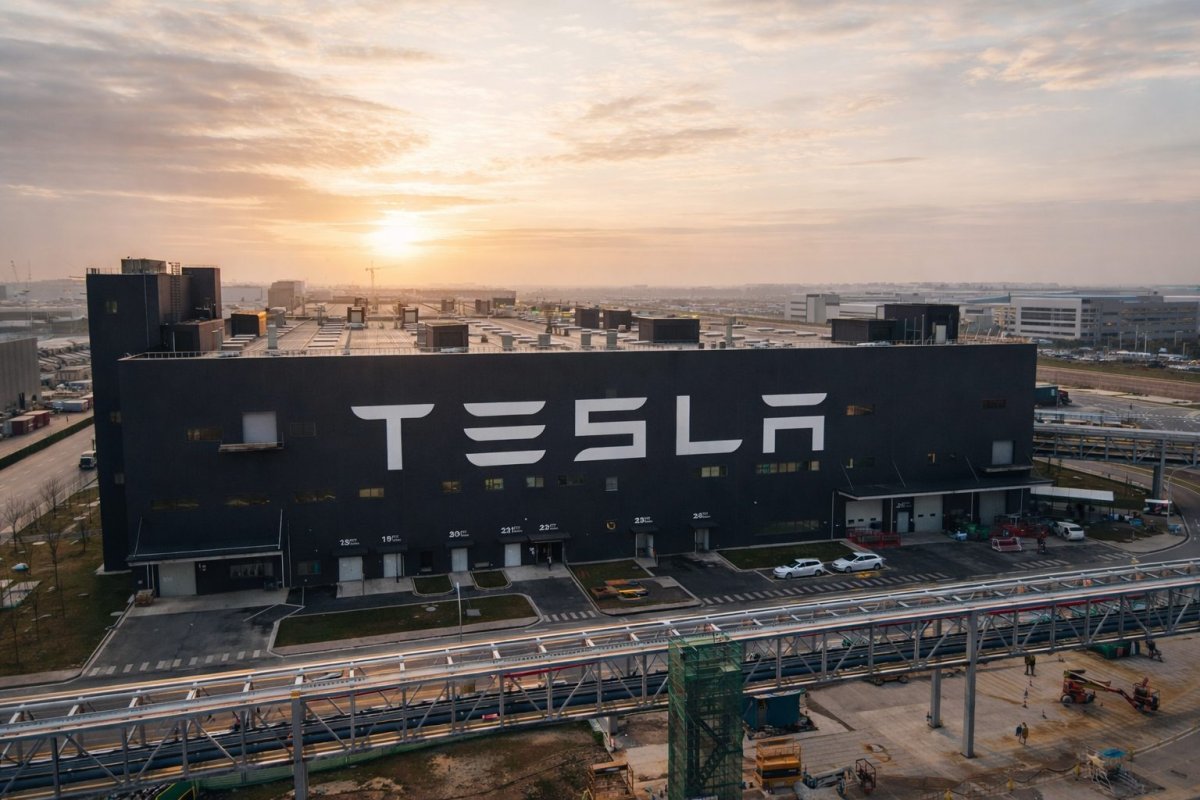
Beijing is evaluating potential restrictions on exports of sophisticated solar manufacturing equipment to the United States, a move that could significantly hinder Tesla Inc.'s ambitions to expand its domestic production capacity as the company diversifies beyond electric vehicles. Sources indicate these discussions are in preliminary stages, with no final decision reached. Such export controls would introduce new challenges for U.S. companies, including Tesla, seeking to establish or grow manufacturing plants on American soil.
Energy Division Outshines Auto Business
This potential supply chain disruption emerges as Tesla's energy segment gains prominence while its core automotive business faces headwinds. According to data, Tesla's energy storage and generation division is projected to achieve gross margins of approximately 30% in 2025. This figure doubles the roughly 15% margin for the automotive unit, excluding regulatory credits, following a period where U.S. EV sales declined over 25% in the six months after the expiration of a $7,500 federal tax credit.
Tesla had outlined plans to procure $2.9 billion worth of solar-panel manufacturing equipment from Chinese suppliers. Concurrently, CEO Elon Musk has advocated for establishing 100 gigawatts of solar production capacity within the United States by 2028. The company's large-scale battery product, the Megapack, has rapidly become a significant revenue driver, recording $430 million in sales to xAI last year alone.
China's Dominance in the Solar Supply Chain
The contemplated policy shifts in Beijing would reverberate through a global supply chain where China already commands a dominant position. The nation manufactures more than 80% of the world's solar panel components and hosts all ten of the leading producers of solar cell manufacturing equipment. This concentration gives Chinese regulators substantial influence over the pace and cost of solar expansion worldwide.
Preliminary discussions have reportedly centered on equipment used to produce heterojunction (HJT) solar cells, which utilize ultra-thin silicon layers to enhance efficiency. The exact scope of potential licensing requirements, their implementation timeline, and the specific products and markets that would be subject to new restrictions remain undetermined.
Both Tesla and its supplier Suzhou Maxwell declined to comment when approached. Chinese regulatory bodies have not yet solicited formal feedback from the industry, suggesting the proposal is not finalized and could undergo significant revisions or delays.
Automotive Rivals Pivot to Storage
Other automakers are also making strategic moves into the energy storage space, albeit from different starting points. Ford Motor Company has allocated $2 billion over two years to develop a battery-storage business unit. General Motors, in partnership with LG Energy Solution, is converting an electric vehicle battery plant in Tennessee to produce storage cells. Bob Lee, head of LGES in North America, cited "fallout" from the EV slowdown, cautioning that the near-term outlook "isn't going to be all rosy."
Kurt Kelty, who leads GM's battery operations and is a former Tesla executive, noted in January that it matters little whether the U.S. battery supply chain ultimately serves electric vehicles or stationary storage systems. Industry data supports this view: Benchmark Mineral Intelligence forecasts North American demand for stationary batteries at 76 gigawatt-hours this year, while existing factories producing EV batteries possess a capacity of about 275 GWh.
Broader Industry Challenges Persist
While Tesla may hold an early lead, the broader automotive industry slowdown continues. Lithium iron phosphate (LFP) batteries, prized for their lower cost and predominantly sourced from China, form the backbone of most energy storage systems. Retrofitting manufacturing plants to produce different battery chemistries can cost several hundred million dollars and take up to 18 months, making any new export barriers from China a significant obstacle for the sector.
Even if Beijing decides against new restrictions, Tesla faces a persistent challenge: its supply chain for critical battery materials remains vulnerable to U.S. trade policies, including 35% tariffs. Although Tesla has spent a decade scaling its energy storage business, the current deliberations in China highlight the extent to which the company's non-automotive operations still rely on complex, globally dispersed supply chains largely beyond its direct control.