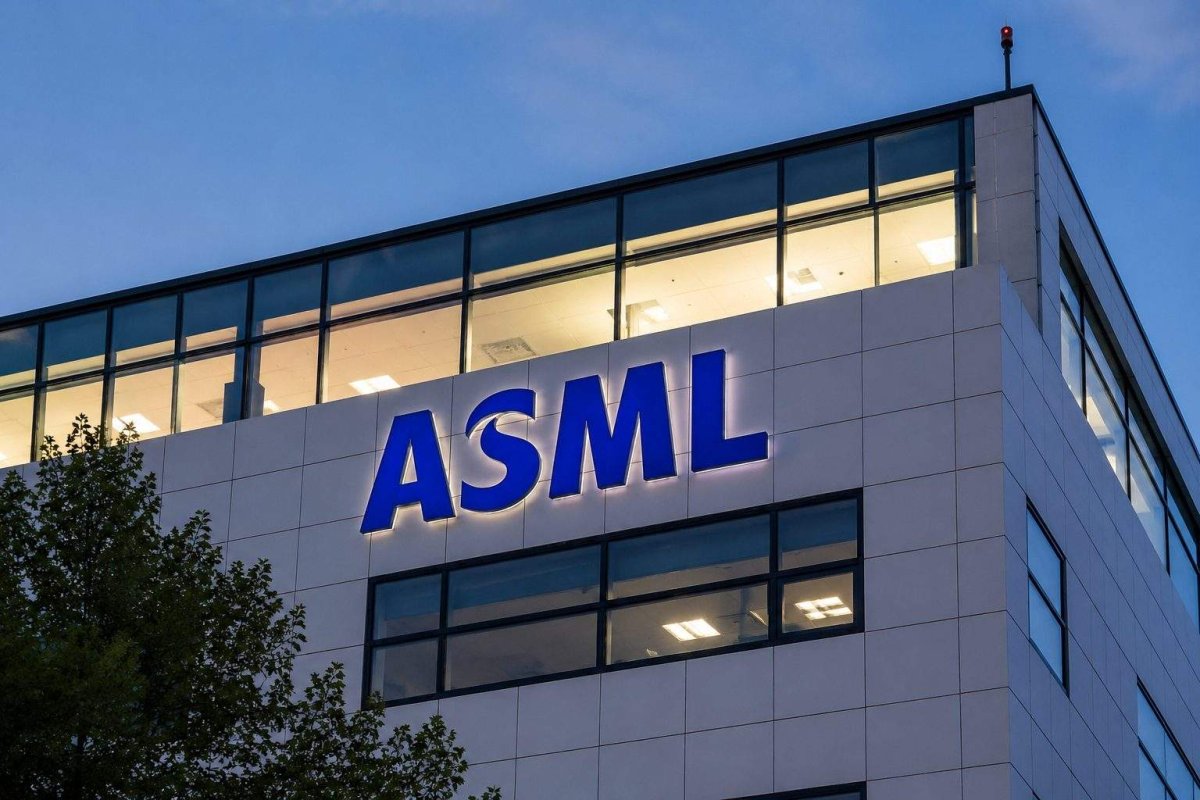
ASML Holding shares closed up 4.10% in Amsterdam on Wednesday at €1,656.40, pushing the AEX index to a record high. The company's U.S.-listed ADRs traded 6.4% higher at $1,919.39, after earlier reaching $1,938.00.
The rally was triggered by a bullish call from Citi analyst Atif Malik, who raised his bull-case estimates for wafer-fabrication equipment spending to $145 billion for 2026, $200 billion for 2027, and $250 billion for 2028, according to Investor's Business Daily. Malik cited rising memory needs from new AI systems that can operate with more autonomy, writing, "The rise of agentic AI is driving a structural increase in NAND demand," as reported by Barron's.
ASML is widely viewed as Europe's premier AI proxy, as its lithography systems are essential for chipmakers expanding production of advanced processors and memory. The stock move also lifted other chip-equipment names, including Applied Materials, Lam Research, and KLA, which all gained on the day.
The broader European tech sector rose 1.5%, with ASML and BE Semiconductor each advancing around 4%. The STOXX 600 added 0.5%, marking its fifth consecutive positive session, as traders monitored the Federal Reserve and potential U.S.-Iran peace developments.
ASML's recent financial results provide context for the optimism. The company reported first-quarter net sales of €8.8 billion, a gross margin of 53.0%, and net income of €2.8 billion. Management forecasts 2026 sales between €36 billion and €40 billion. CEO Christophe Fouquet noted in April that "demand for chips is outpacing supply" and customers are accelerating capacity expansion plans for 2026 and beyond.
ASML's strategic importance stems from its monopoly in extreme ultraviolet lithography (EUV) machines, which are critical for manufacturing the most advanced chips at customers like TSMC and Intel.
However, significant risks remain. U.S.-China export controls continue to cloud the demand outlook. ASML expects China to account for 20% of 2026 sales, but JPMorgan analyst Sandeep Deshpande warned in April that new restrictions could reduce earnings per share by as much as 10%. Fouquet also cautioned that delivery delays could push customers toward alternative suppliers or technologies.
The current rally is driven by scarcity and extended lead times, not just quarterly results. The key question for investors is whether the heightened spending forecasts will translate into tangible order growth and shipment acceleration, or remain merely analyst projections.