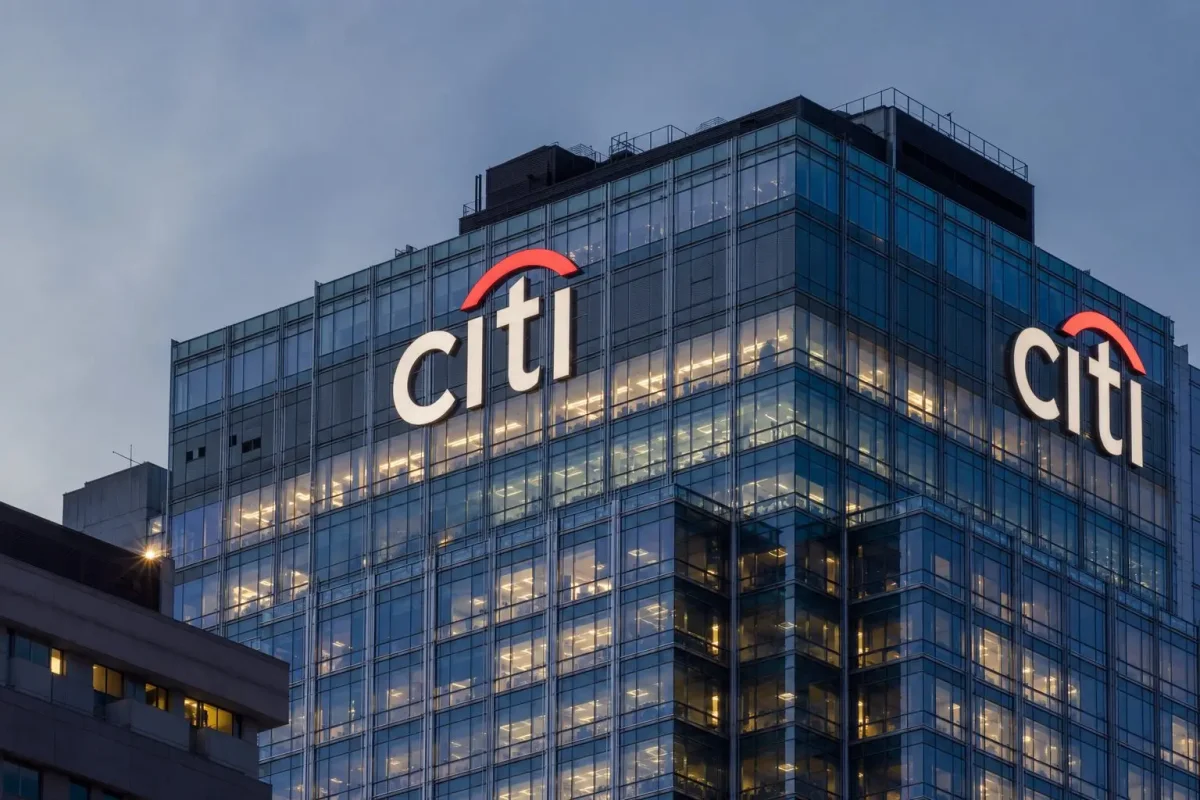
Citigroup Inc. (NYSE:C) shares reversed early gains and fell 4.4% to $134.47 by 12:55 p.m. EDT on Tuesday, even after the bank reported second-quarter earnings that beat analyst estimates by roughly 15%. The stock had initially risen as much as 2% before management's commentary on reinvestment plans and a steady full-year return target prompted a sharp reversal.
The selloff came as investors focused on the implications of Citigroup's unchanged 10% to 11% full-year return on tangible common equity (RoTCE) target. The bank posted a 13.0% RoTCE in the second quarter and 13.1% for the first half. Simple arithmetic suggests that to land within the full-year range, second-half RoTCE would need to fall to approximately 6.9% to 8.9%—a significant step down from recent performance.
“A stronger environment isn’t just upside to report. It’s an opportunity we will put to work,” Chief Executive Jane Fraser told analysts, signaling plans to increase investment. However, the market interpreted the message as a warning on expenses. Citigroup’s second-quarter efficiency ratio—costs as a share of revenue—came in at 57.4%, well below the full-year guide of about 60%, leaving room for costs to rise later in the year.
Another factor weighing on the stock was the impact of share buybacks on book value. Citigroup repurchased $4 billion of common stock in the quarter and returned approximately $5 billion including dividends. While the buyback reduced share count by 8.9% year-over-year and boosted earnings per share, it also diluted tangible book value per share because shares were bought above tangible book value. The stock now trades at about 1.33 times tangible book value, reducing the automatic accretion benefit of capital return.
Revenue for the quarter reached $24.77 billion, up 14% year-over-year, marking the best quarterly top-line figure in a decade. Growth was broad-based: Services revenue rose 18% with a 30.9% RoTCE, Markets revenue increased 17% led by a 45% surge in equities, Banking revenue gained 34% with investment-banking fees up 44%, and Wealth revenue grew 13%. Chief Financial Officer Gonzalo Luchetti noted that clients “pivoted towards equity and debt capital markets” and that the bank remained “very disciplined in terms of deploying the balance sheet.”
Despite the strong operating performance, investors are now pricing Citigroup more in line with peers. The stock’s trailing price-to-earnings ratio of 16.6 is within 0.3 multiple point of JPMorgan Chase (NYSE: JPM), which traded up 1.9% on Tuesday. Bank of America (NYSE: BAC) also rose 1.9%, while Wells Fargo (NYSE: WFC) slipped 2.1%. The narrowing valuation gap suggests that the market no longer sees Citigroup as a deep earnings discount, raising the bar for further upside.
Looking ahead, the key question is whether Citigroup can sustain returns near the second-quarter level or demonstrate that increased spending will drive durable growth in Services, Wealth, and equities. The U.S. Consumer Cards business, where revenue grew just 1% while expenses rose 10%, remains a critical test. If second-half RoTCE lands in the implied 7%-9% range, the stock will need earnings growth rather than multiple expansion to advance. The numbers tell a different story from the headline beat.