CleanSpark (CLSK) reported a net loss of $378.3 million for its fiscal second quarter ended March 31, 2026, as a sharp decline in bitcoin prices triggered a $224.1 million non-cash fair-value loss on its digital asset holdings. The bitcoin miner also saw revenue fall 24.9% year-over-year to $136.4 million, from $181.7 million in the same period last year. The results underscore the volatility that comes with holding a large bitcoin treasury and the urgency behind the company's pivot toward artificial intelligence and high-performance computing (HPC).
Bitcoin Mining Margins Under Pressure
The company mined 1,795 bitcoin during the quarter at an average price of $75,989, down from 1,957 bitcoin at $92,870 a year earlier. Rising energy costs and increased network difficulty weighed on profitability. Direct energy costs per bitcoin reached $45,411, while including miner depreciation pushed the total direct cost to $103,440—well above the $75,827 average revenue per coin at its facilities. Energy expenses now consume 59.9% of mining revenue, up from 46.0% in the prior-year period.
CleanSpark attributed the drop in production to global hashrate growth outpacing its own expansion, reducing its share of network rewards. The company's balance sheet shows $260.3 million in cash and bitcoin holdings valued at $925.2 million, including collateral. Working capital stands at $1.0 billion, while long-term debt totals $1.8 billion.
AI and HPC Pivot Yet to Materialize
CleanSpark has been touting its move into AI and HPC as a way to diversify beyond bitcoin mining, but as of March 31, the company reported zero revenue from that segment. The company's 10-Q filing indicates it is evaluating converting or developing some of its existing sites for AI and HPC, including a property in Brazoria County, Texas, with roughly 300 megawatts of power capacity that could be doubled to 600 megawatts, and another site in Austin County with about 285 megawatts planned.
CEO Matt Schultz said the company aims to “commercialize our AI/HPC-applicable assets” while maintaining efficient mining operations. CFO Gary Vecchiarelli described the balance sheet as a “core competitive advantage” and noted the company is seeking new power and land expansion opportunities. However, the lack of any AI/HPC revenue highlights the early stage of this transition.
Peer Comparison and Market Context
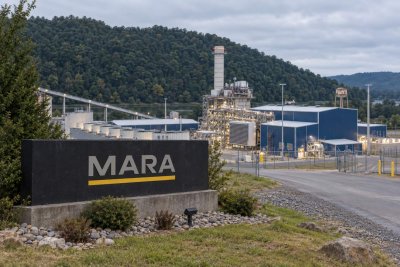
Fellow bitcoin miner MARA Holdings reported first-quarter revenue of $174.6 million and a net loss of $1.26 billion to common stockholders. MARA also noted it is moving into AI and HPC alongside its core mining business. CoinShares Head of Research James Butterfill observed that while some miners are shifting toward data-center operations, CleanSpark remains focused on mining in the near term, gradually easing into AI exposure.
The company faces several risks, including bitcoin price volatility, rising mining difficulty, and its limited experience in HPC and AI. Delays in lease signings or weaker bitcoin prices could further pressure earnings. As of early Tuesday, bitcoin was trading near $80,738, above the $68,200 valuation used at quarter-end, which could provide some relief if prices hold.
CleanSpark's net loss per basic share was $1.52, compared to a loss of 49 cents per share in the year-ago quarter. The company's stock will be closely watched as investors weigh the potential of its AI pivot against the ongoing challenges in its core mining business.