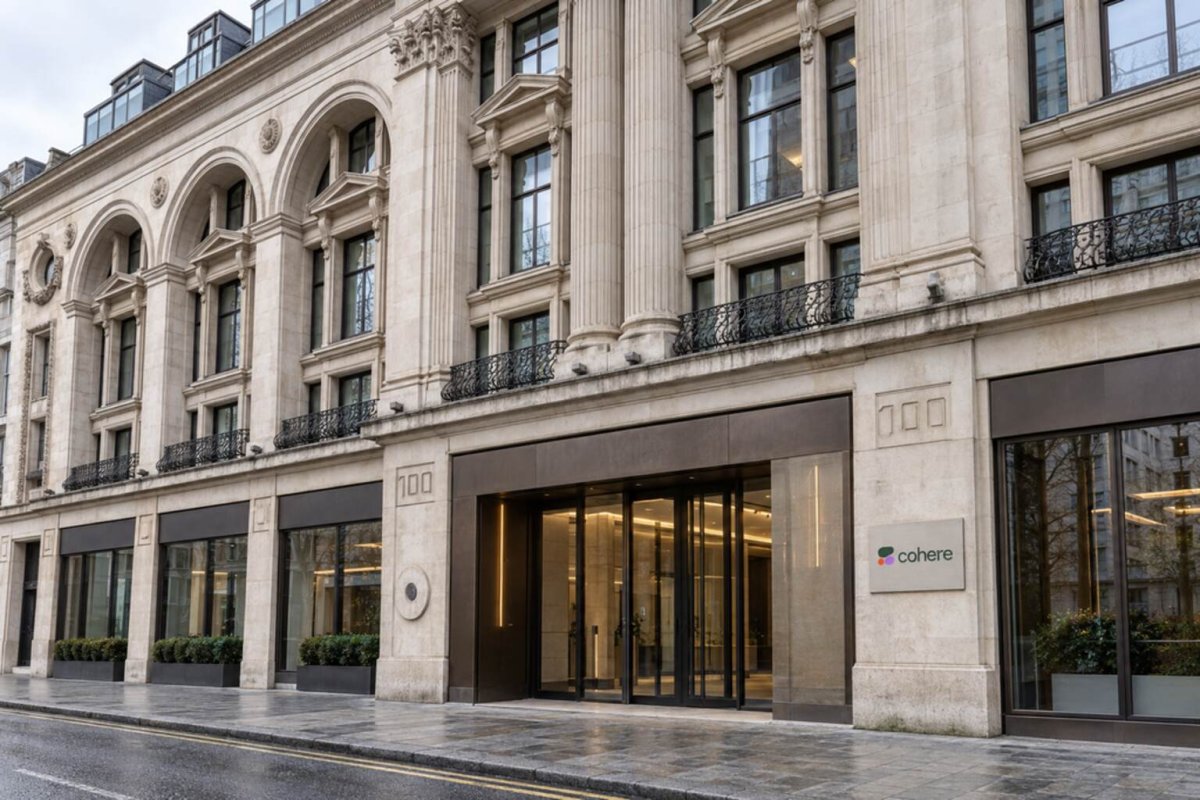
Canadian enterprise-AI firm Cohere has acknowledged significant investor interest in its Series E financing round, though it has stopped short of confirming the valuation figures that have circulated in recent reports. The Globe and Mail reported on September 11 that the company is in advanced discussions to raise between $2 billion and $3 billion at a valuation of approximately $20 billion. This would represent a substantial increase from its previous valuation of $7 billion, set just a year ago.
The distinction between confirmed interest and a finalized deal is crucial. The reported round is neither signed nor publicly priced, and its size could change before closing. Cohere told PYMNTS that it does not comment on speculation, while acknowledging "strong inbound interest" from investors and promising details only after the process formally concludes.
Valuation Reset: 2.9x in One Year
The proposed valuation is the number investors should test. Cohere said it was valued at $7 billion when it added $100 million in a September 2025 second close. A $20 billion price would be about 2.9 times that level, or roughly 186% higher, in one year. That does not reveal the dilution. Neither the report nor Cohere's response specifies whether $20 billion is a pre-money or post-money figure, which securities are being offered, or which existing investors would participate. On the old valuation, the proposed $2 billion-to-$3 billion cheque would equal 29% to 43% of the entire company. On the new valuation it would equal 10% to 15%, before allowing for the deal structure.
The reported financing therefore represents a much larger test than Cohere's last close. The company needs capital to develop models, secure compute, and expand sales, but private funding also has to bridge the gap between partnership announcements and recurring revenue. Cohere does not publish audited revenue, cash-burn, or backlog figures that would let public-market investors verify the $20 billion figure.
OpenText Partnership: Distribution, Not Revenue
Cohere supplied a fresh piece of commercial evidence on Wednesday. It announced a partnership with OpenText to combine Cohere's North platform and models with OpenText's Aviator AI agents. Customers are meant to be able to deploy the combined system on premises or in private, public, or sovereign clouds. The arrangement fits Cohere's strategy: sell security, deployment control, and data residency to governments and regulated businesses rather than fight for consumer-chatbot usage. Its Command A+ model, released in May, uses a 218-billion-parameter mixture-of-experts architecture while activating 24 billion parameters per prompt. Cohere says it can run on two Nvidia H100 processors or one B200, an efficiency claim that speaks directly to customers' inference costs.
OpenText and Cohere did not disclose contract value, revenue sharing, minimum purchases, or customer commitments. That makes the partnership evidence of distribution rather than evidence that the valuation has been earned. OpenText shares traded at $23.43 around 10:32 a.m. ET, down about 1.1% from Tuesday's close in delayed Nasdaq data; there is no basis to attribute that move to the announcement.
No Clean Public-Market Trade
Cohere remains private. Nvidia is an existing investor, and Cohere products can run on Nvidia hardware, but the size of Nvidia's stake and any participation in this round have not been disclosed. Oracle and SAP are partners, not stand-ins for Cohere equity. A financing close would support demand for AI infrastructure at the margin; it would not be large enough on its own to establish an earnings change for those companies.
The strongest confirmation would be a signed round with named investors, a defined valuation basis, and fresh operating metrics. The strongest counterargument is equally simple: a large private cheque can validate investor appetite without validating the business price, especially when revenue, margins, and cash consumption remain private. Until Cohere supplies those figures, $20 billion is a negotiation marker, not a market-cleared valuation.