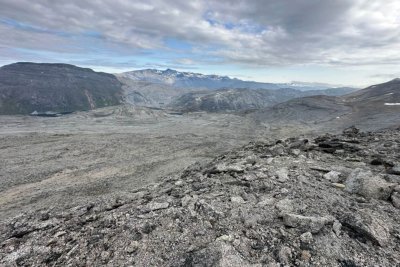
Critical Metals Corp. saw its stock price surge on Monday after announcing a definitive agreement to acquire European Lithium Ltd. for approximately $835 million. The all-stock transaction will give Critical Metals complete ownership of the Tanbreez rare earth project in Greenland, one of the world's largest deposits of heavy rare earth elements.
Under the terms of the deal, European Lithium shareholders will receive 0.035 Critical Metals shares for each share they hold. Critical Metals will also cancel 45,536,338 of its own shares currently held by European Lithium, representing roughly 34% of the total float. The acquisition brings over European Lithium's cash pile of approximately AUD$306 million (about $219 million), which will be added to Critical Metals' existing $124 million cash reserve.
Shares of Critical Metals jumped $2.34 to $13.85 in late Nasdaq trading, with nearly 40 million shares changing hands. The stock briefly touched $14.04 earlier in the session. Other rare earth-focused companies, including USA Rare Earth and Energy Fuels, also saw gains, though Critical Metals led the pack with a sharper rally.
The deal comes at a pivotal time for the critical minerals sector. On Friday, the United States and the European Union deepened their cooperation on critical minerals, focusing on raw materials deemed essential for economic security and vulnerable to supply disruptions. Western officials are actively seeking ways to reduce China's dominance over metals vital for advanced manufacturing and defense. According to the International Energy Agency, China produced 91% of the world's refined magnet materials in 2024.
Rare earths—17 metals critical for high-strength magnets, electric vehicles, wind turbines, medical devices, and defense hardware—remain heavily concentrated in China. That dominance has pushed rare earth finance and processing into the geopolitical spotlight, expanding the debate beyond simple mining. Heavy rare earth elements are particularly crucial for making high-performance magnets that function under demanding heat and pressure. Critical Metals says Tanbreez holds all eight key heavy rare earth elements essential for defense, clean energy, and advanced technology.
Earlier this month, Greenland granted Critical Metals approval to increase its ownership of Tanbreez to 92.5%. Critical Metals chairman Tony Sage called that approval a game-changer for the project, stating it eliminated "the most significant structural overhang." He added, "Tanbreez is no longer a future project — it is a project in development."
Critical Metals is not the only company pursuing a rare earth supply chain outside China. Last week, USA Rare Earth agreed to acquire Brazil's Serra Verde in a $2.8 billion deal. MP Materials is advancing its U.S. Defense Department-funded project to boost rare earth magnet output. In March, Energy Fuels reported it had produced pilot-scale terbium oxide at its Utah facility.
Financing remains a significant hurdle for much of the sector. Bernd Schaefer, chief executive at EU-backed EIT RawMaterials, told Reuters last week that Europe has not yet built deep or transparent spot markets for critical minerals, calling the lack of transparency "an absolute deal breaker for many investments."
The Critical Metals deal is not yet finalized. A letter of intent is in place, but the transaction still requires a binding agreement, approval from European Lithium shareholders, court and regulatory sign-offs, and due diligence. European Lithium must also demonstrate at least AUD$330 million in net cash and liquid assets. Additionally, there is leadership overlap: Sage serves as executive chairman of European Lithium, and Dietrich Wanke manages European Lithium while also heading Critical Metals' European operations.
If the deal closes, Critical Metals will gain a cleaner stake in Tanbreez, eliminating a significant cross-holding from its shareholder list. However, the real challenge remains moving this strategic Arctic asset from a promising deposit to a funded, operating mine.