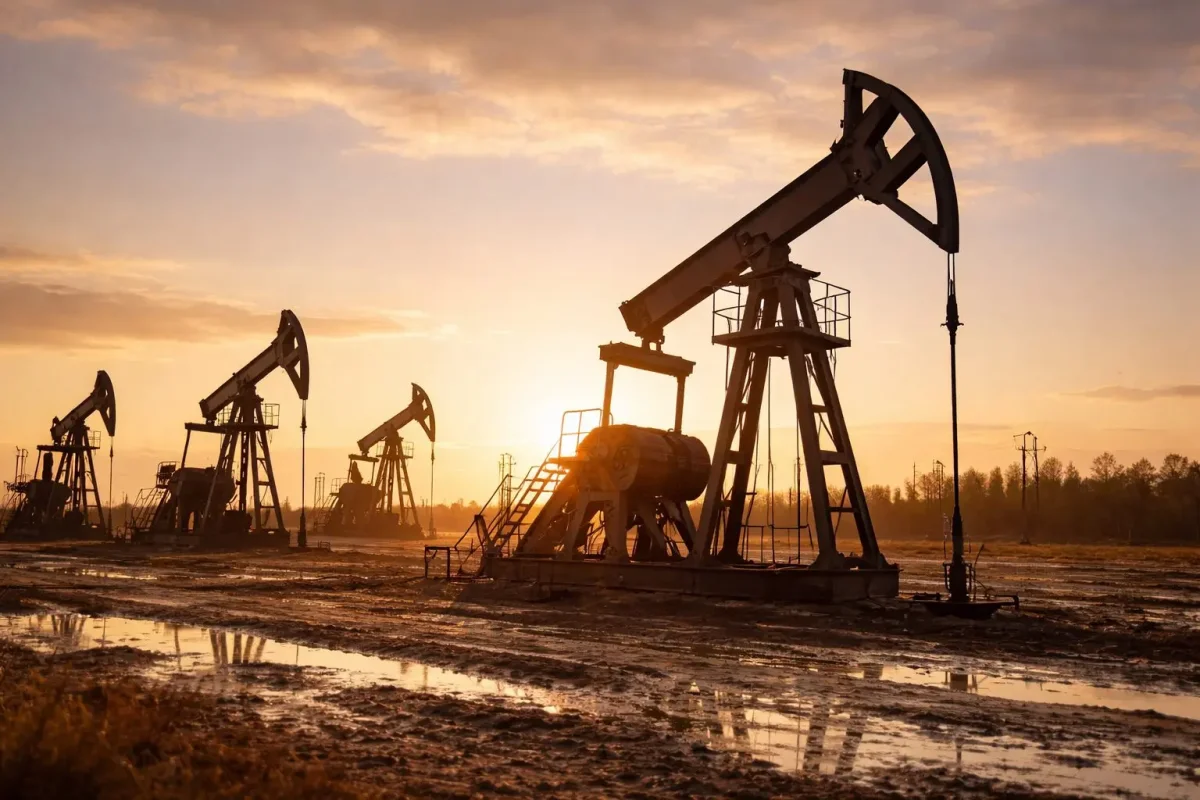
Global oil markets experienced a dramatic reversal Tuesday, with benchmark crude prices plummeting approximately 15% following remarks from former President Donald Trump that suggested a potential near-term resolution to the ongoing military conflict involving Iran. The sharp sell-off effectively wiped out the substantial gains recorded just one day earlier, when supply fears had propelled prices to multi-year highs.
Price Action and Market Reaction
Brent crude futures, the international benchmark, fell $14.23 to settle at $84.73 per barrel during early New York trading. Concurrently, U.S. West Texas Intermediate (WTI) crude dropped $14.46 to $80.31 per barrel. This decline represented a significant retracement from Monday's peak above $119, a level reached amid escalating regional tensions and threats to critical shipping lanes.
The market's violent swing underscores its acute sensitivity to geopolitical developments in the Middle East. "This is the market reacting to the possibility that the Strait of Hormuz could reopen," stated Andrew Lipow, president of Lipow Oil Associates. The strategic waterway, located between Iran and Oman, typically facilitates the transit of about one-fifth of global seaborne oil and liquefied natural gas. Since hostilities intensified on February 28, vessel traffic through the strait has plummeted by 97%, according to United Nations data cited by Reuters.
Geopolitical Context and Official Statements
Trump's comments to CBS, in which he described the war as "very complete" and progressing faster than anticipated, provided the catalyst for the sell-off. His administration, reportedly mindful of consumer energy costs ahead of the November congressional elections, has evaluated several policy options to curb prices. These include potentially easing certain oil sanctions on Russia or authorizing a release from U.S. and allied emergency petroleum stockpiles.
However, the actual military situation showed little sign of de-escalation on Tuesday. U.S. and Israeli forces conducted what Pentagon officials and witnesses characterized as their most intense aerial barrage against Iranian targets to date. In response, Tehran reiterated threats to choke off regional oil exports if the attacks continue. The White House later clarified that the U.S. military had not yet begun escorting commercial vessels through the Strait of Hormuz, tempering expectations for an immediate normalization of shipping traffic.
Policy Response and Supply Challenges
Finance ministers from the Group of Seven (G7) nations opted against an immediate coordinated release from strategic petroleum reserves. Instead, they requested the International Energy Agency (IEA) to study the supply situation and draft potential intervention scenarios. This cautious approach highlights the complexity of the crisis, where physical supply disruptions are intertwined with sentiment-driven price volatility.
Analysts warn that even if a ceasefire is achieved, restoring lost oil supply will not be instantaneous. "Cranking up the supply chain won't be swift," noted Simon Flowers, chairman and chief analyst at Wood Mackenzie. He explained that oil wells shut in for an extended period can require weeks or longer to return to full production. The supply damage is already substantial: consultancy IIR reported that nearly 1.9 million barrels per day of refining capacity in the Gulf region is currently offline.
Infrastructure Damage and Broader Warnings
Regional energy infrastructure sustained further damage. A drone attack ignited a fire, forcing Abu Dhabi National Oil Company (ADNOC) to halt operations at its Ruwais refinery, according to a source familiar with the matter. This incident illustrates the persistent vulnerability of production and processing facilities.
Saudi Aramco CEO Amin Nasser offered a sobering assessment, cautioning that any prolonged closure of the Strait of Hormuz would have "catastrophic consequences" for worldwide oil markets. His statement served as a reminder that Tuesday's price drop reflected shifting trader sentiment rather than a material improvement in the underlying physical supply constraints.
Analyst Outlooks and Economic Implications
Investment banks are parsing the short-term shock against longer-term fundamentals. JPMorgan analysts noted that policy interventions would likely have limited impact unless secure passage through the Strait of Hormuz is guaranteed. Conversely, Goldman Sachs maintained its year-end Brent price forecast of $66 per barrel, anticipating the current supply shock will ease before the fourth quarter.
The economic ripple effects have been immediate. Monday's price surge had stoked fears of a renewed inflationary spike, with rising fuel costs pressuring both household budgets and corporate profit margins. Although equity markets recovered somewhat Tuesday, Reuters highlighted that U.S. gasoline prices had already surpassed $3.50 per gallon—a tangible sign of how quickly an oil price shock transmits through the broader economy.
Ultimately, the day's trading action highlighted the oil market's fragility when a key global chokepoint is threatened. While diplomatic signals can trigger rapid repricing, the path to restoring normal supply flows remains fraught with operational and security challenges.