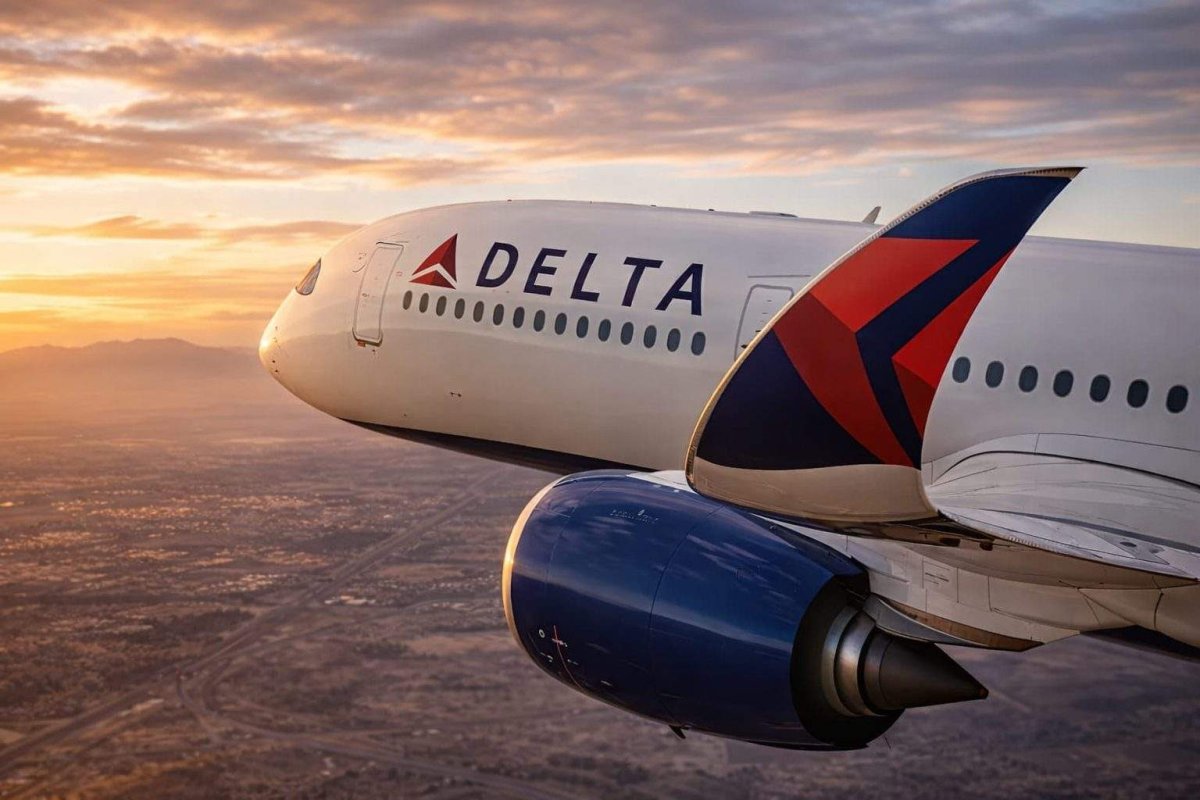
Major U.S. carriers are signaling resilience in the face of a sharp spike in operating costs, with Delta Air Lines and American Airlines both upgrading their revenue forecasts for the current quarter. The revisions, announced Tuesday, point to sustained strength in passenger demand across corporate, international, and leisure segments, providing a buffer against fuel expenses that have climbed dramatically since the start of the year.
Revenue Strength Counters Fuel Shock
Atlanta-based Delta now anticipates first-quarter revenue growth in the high-single-digit percentage range, an improvement from its prior guidance of 5% to 7%. The airline reported a significant 25% year-over-year jump in weekly sales recently, driven by broad-based demand. "The story for us this quarter is about revenue demand and the health of the demand set," CEO Ed Bastian stated at a J.P. Morgan industry conference.
American Airlines followed suit, lifting its quarterly revenue growth outlook to more than 10%, up from a previous range of 7% to 10%. The positive adjustments sparked a rally in airline stocks, with Delta shares closing up over 6%, American gaining 3.5%, and United Airlines Holdings rising 3.2% as investors bet on the sector's ability to manage cost pressures.
Jet Fuel Prices Skyrocket
The optimistic demand picture unfolds against a challenging backdrop of soaring energy prices. Jet fuel costs have nearly doubled since January, a surge largely attributed to ongoing conflict in the Middle East and related supply concerns. Bastian noted the increase has added approximately $400 million to Delta's fuel bill for March alone. American's CEO Robert Isom reported a similar $400 million increase in fuel costs over the past seven weeks.
Globally, the fuel shock has been severe. Prices in Europe have doubled since late February, while Asian benchmarks have jumped nearly 80%. With Brent crude settling at $103.42 a barrel and U.S. crude at $96.21 on Tuesday, airlines face sustained cost headwinds. Fuel typically constitutes 20% to 25% of an airline's operating expenses, and most U.S. carriers have limited hedging programs, leaving them exposed to market volatility.
Carriers Adjust to New Reality
In response, airlines are taking measures to protect profitability. Carriers have already implemented multiple fare increases over recent weeks and begun adding fuel surcharges on certain routes. United Airlines reported record bookings for the early part of 2026, with CEO Scott Kirby expressing confidence that robust demand could allow airlines to offset the full increase in fuel costs. "100% of that increase" could be passed through if demand holds, Kirby suggested.
However, not all airlines share this optimism. Low-cost carrier Frontier Group has dialed back its outlook, placing its full-year forecast under review. The airline now expects first-quarter jet fuel to average $3.00 per gallon. Similarly, analysts warn that persistent high costs could eventually dampen demand. Morningstar's Lorraine Tan cautioned that further price increases might cause leisure travelers to "opt out," while TD Cowen's Tom Fitzgerald expressed skepticism about margin expansion this year unless energy prices retreat rapidly.
Operational Disruptions Add Complexity
Beyond financial pressures, operational challenges persist. Geopolitical instability continues to disrupt air travel. The United Arab Emirates temporarily closed its airspace on Tuesday following missile and drone threats. Frankfurt airport reported that 86,000 passengers were affected by cancellations in the first two weeks of the conflict, with only a third of its regular Middle East flights operating.
Despite these hurdles, the current data suggests a resilient travel recovery. Demand from March is spilling into April and May bookings, even with crude oil prices hovering near $100 a barrel. The key question for the industry is whether this demand strength will continue to outweigh soaring costs, allowing major airlines to avoid the margin compression that sparked warnings of a potential travel slowdown earlier this month.