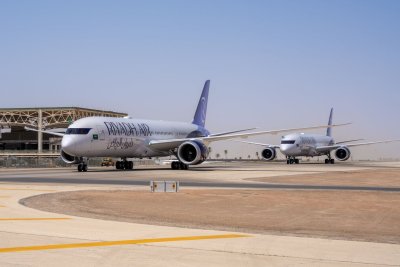
NEW YORK – U.S. equities closed Monday's regular session with notable gains in the airline sector, led by Delta Air Lines (NYSE: DAL), which advanced 4.75% to $91.59. The rally was fueled by a sharp drop in crude oil prices, with Brent crude falling 7% to $83.77 per barrel and West Texas Intermediate sliding 5.1% to $80.34. This decline in fuel costs provided a tailwind for carriers, as jet fuel represents a significant portion of operating expenses.
Other major airlines also posted strong gains: United Airlines Holdings (NASDAQ: UAL) rose 5.80%, American Airlines Group (NASDAQ: AAL) advanced 5.08%, Southwest Airlines (NYSE: LUV) climbed 4.69%, and Alaska Air Group (NYSE: ALK) surged 5.82%. The sector-wide move suggests that investors were responding to the oil price slump rather than any company-specific news, according to market analysts.
However, Delta's advance came despite another reported charter disruption involving the Boston Red Sox. The team's flight from Los Angeles to Boston on August 2–3 was delayed by over five hours due to a mechanical issue, according to a verified social media account. This marks the third such incident in six weeks, following a Denver-to-Boston flight that turned back in June and a Chicago-to-New York delay in July. While these events are concerning for Delta's premium service reputation, they have not yet translated into a broader reliability problem, as the carrier still leads major U.S. airlines in on-time performance for the second quarter, according to preliminary FlightStats data.
Investors are focusing more on Delta's financial metrics, which show a notable increase in maintenance costs. In the second quarter, spending on aircraft maintenance materials and external repairs jumped 17% year-over-year to $689 million, while capacity (available seat miles) grew only 1% to 78.694 billion. As a result, maintenance expense per available seat mile rose approximately 15% to 0.876 cents, up from 0.761 cents a year earlier. This estimate, based on Delta's reported figures, does not include internal labor costs, but it highlights a trend of rising external repair expenses outpacing capacity growth.
Delta's overall financial performance remains solid. Adjusted revenue increased 13.9% to $17.7 billion, and the operating margin came in at 8.8%. Chief Executive Ed Bastian said the company is “executing from a position of strength,” and management reaffirmed its full-year free cash flow forecast of $3 billion to $4 billion. The company's market value on Monday was approximately $60.23 billion, implying a free cash flow yield of around 5.8% based on the midpoint of guidance.
In contrast, Advance Auto Parts (NYSE: AAP), which also traded on Monday, saw only a modest 0.21% gain to $55.68. The automotive parts retailer is in a turnaround phase, with comparable sales up 3.5% in the first quarter and an adjusted operating margin of 3.8%. CEO Shane O'Kelly noted that 2026 is “off to a solid start,” and the company maintains its full-year free cash flow projection of roughly $100 million. This implies a free cash flow yield of about 2.9% based on its $3.39 billion market capitalization, which is roughly half of Delta's yield.
The performance gap between the two stocks has widened recently. Last week, Delta rose 0.9%, while Advance Auto Parts fell 3.8%. Monday's airline rally further increased the divergence. Investors will be watching the upcoming July jobs report, due Friday at 8:30 a.m. EDT, for broader economic signals. Advance Auto Parts is scheduled to report second-quarter earnings on August 20.
Despite the positive momentum, risks remain for Delta. The company reported a 77% increase in adjusted fuel costs last quarter, and even after Monday's crude decline, fuel prices remain volatile. The recurring charter disruptions could damage Delta's reputation for premium service, and the rising maintenance costs per seat-mile warrant continued scrutiny. For now, the Red Sox delays are a cautionary note rather than a fundamental threat to the airline's outlook, which remains supported by robust cash flow forecasts.