As Firmus Technologies gears up for its initial public offering (IPO), the news that its three founders will be permitted to sell a portion of their holdings just one year after listing has sparked a mix of anticipation and scrutiny. While this timeline provides a tangible marker for potential insider selling, it does little to clarify the fundamental questions underpinning the company's valuation.
According to a report by Capital Brief on September 17, citing investor-roadshow documents and the Australian Financial Review, the founders collectively hold a 13% stake in the data-centre developer. They will be allowed to sell up to 10% of their shares after 12 months, with an additional 29.9% becoming eligible after two years. The report also indicates an intended listing date of October 22.
It's crucial to note that these are permissions, not obligations. No founder is compelled to sell. However, the schedule matters because it sets the earliest possible moment when a significant block of shares could hit the market, potentially affecting share price dynamics.
The first unlock represents 1.3% of the company (10% of the 13% stake) before accounting for IPO dilution. At the reported valuation of around A$50 billion, this first eligible block would be worth approximately A$650 million. This calculation is based on TS2's analysis of reported figures, not a confirmed sale plan.
From a market perspective, a 1.3% unlock is not large enough to destabilize a liquid public company, and a 12-month lock-up is longer than the typical six-month restriction. The staged release could be seen as a way to align founder interests with those of public investors, while avoiding a massive day-one sell-off. However, the concern lies in valuation sensitivity: if the IPO is priced on future capacity rather than current earnings, even a modest post-lock-up sale could be interpreted as a lack of confidence.
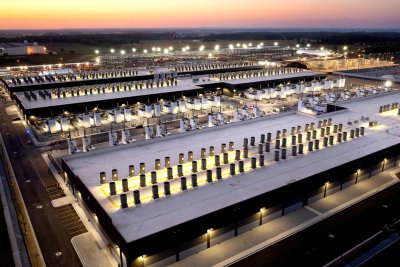
The company's operational status is a key factor. Firmus has secured OpenAI as an anchor customer for two Malaysian sites, bringing contracted capacity to over 900 megawatts. Yet, only two of its seven planned facilities are operational, with the rest targeting readiness over the next 24 months. This gap between contracted capacity and operating assets is the central execution risk, as construction timelines, grid access, and customer ramp-up schedules will determine when revenue can be generated.
Firmus has attracted significant private investment, including a fully subscribed US$2 billion equity round on August 7, involving Coatue, Nvidia, Blackstone, and Jane Street. This funding reduces immediate capital concerns but also raises the bar for the IPO valuation. New public investors will need to see what they are buying beyond the capital already raised privately.
ABC reported on September 16 that Firmus is seeking up to A$7 billion in the float, though the company has not confirmed the raise size or the proportion of the business to be sold. Until a prospectus is released, detailing the primary-versus-secondary split, audited financials, customer concentration, and capital expenditure plans, the reported roadshow figures remain a sales pitch rather than an investable model.
The next document to be released is more critical than any valuation rumor. A comprehensive prospectus should clarify whether the lock-up percentages apply before or after IPO dilution, outline any orderly-sale restrictions, and reconcile contracted capacity with expected revenue and earnings. With the October 22 target date, these disclosures are imminent, and investors will be watching closely.