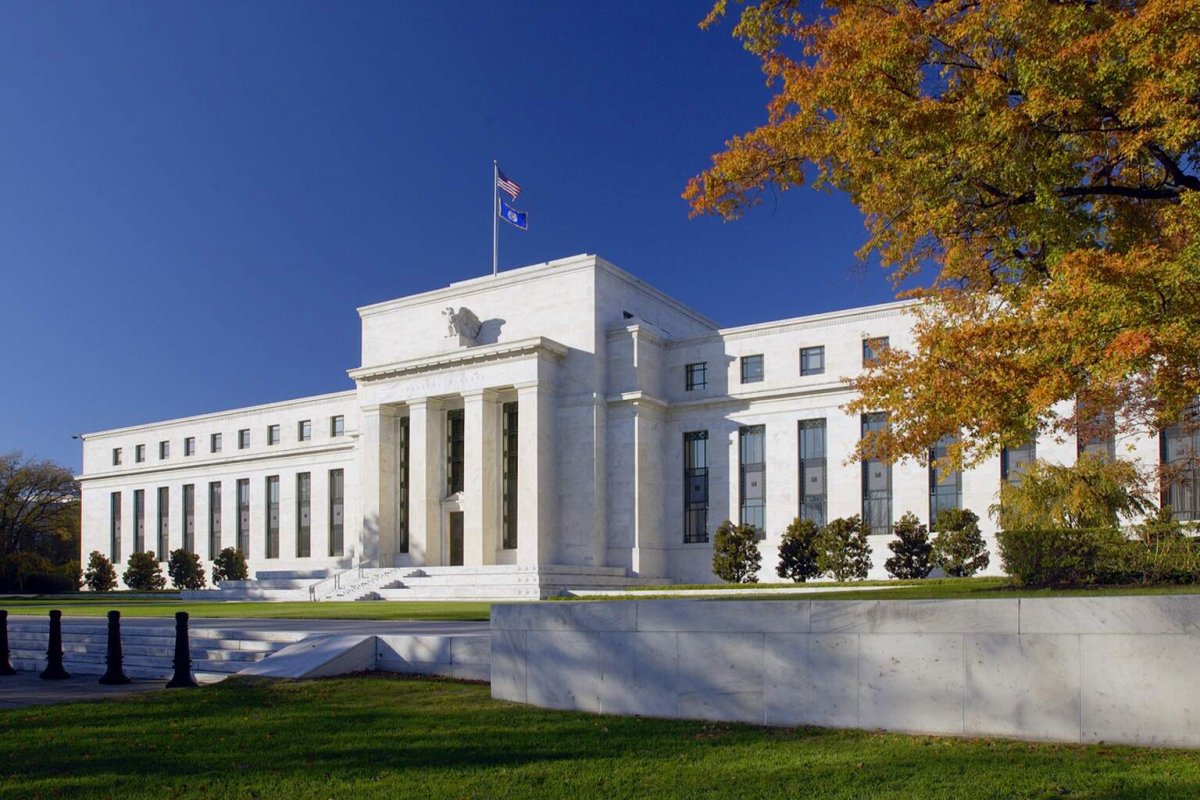
Currency markets are holding their breath as the Federal Reserve prepares to unveil its latest policy decision at 2:00 p.m. Eastern on Wednesday, followed by Chair Kevin Warsh's press conference at 2:30 p.m. While a quarter-point rate hike is widely anticipated, the real drama lies in the accompanying statement, updated economic projections, and the tone of Warsh's remarks regarding the future trajectory of monetary policy.
The ICE U.S. Dollar Index, a key barometer of the greenback's strength against a basket of major currencies, was trading near 99.73 at 9:06 a.m. Eastern, up roughly 0.1% from Tuesday's reference close of 99.615. This muted pre-meeting movement suggests that traders are positioning for a potentially sharp reaction once the Fed's communications hit the wires.
Fed's Official Schedule
According to the Federal Reserve's official September calendar, the FOMC statement and updated economic projections are scheduled for release at 2:00 p.m. ET. Chair Warsh's post-meeting press conference is set to begin at 2:30 p.m. Additionally, minutes from the September 15-16 meeting are due on October 7. Forex Factory, a market-information platform owned by Fair Economy, Inc., lists these events on its calendar, but the Federal Reserve remains the authoritative source for all official communications.
It's important to note that Forex Factory displays events in a user's selected time zone, so overseas traders may see different local times for these releases. However, the actual moment of the announcements is simultaneous across the globe.
The Baseline: A 25-Basis-Point Hike
With the current policy rate hovering around 3.6%, economists overwhelmingly expect a 25-basis-point increase, which would bring the target range to 3.75%-4.00%. This would mark the Fed's first rate hike in over three years, according to an Associated Press preview. Inflation remains stubbornly above the committee's comfort zone, even as President Donald Trump has publicly advocated for lower rates.
However, a well-telegraphed hike does not guarantee a stronger dollar. Exchange rates respond to the difference between the expected policy path before the meeting and the path implied afterward. If officials raise rates but signal a willingness to pause, traders could sell dollars after the announcement. Conversely, a hike accompanied by higher projected rates or a warning that inflation requires further restraint would likely support the dollar.
Three Key Signals to Watch
The first comparison point is the new target range against the expected 3.75%-4.00%. The second is the distribution of officials' projected rates in the updated 'dot plot'. The third is Warsh's language on how much evidence the committee needs before acting again. A single adjective in the statement matters less than whether these three signals align.
Three Dollar Scenarios
1. Hike with further tightening signaled: This is the clearest dollar-positive outcome. Short-dated Treasury yields would likely surge, and the dollar would follow if markets lift the expected policy path.
2. Hike with a cautious pause: This is the main 'sell-the-fact' risk. The Fed would deliver the expected increase but deny traders a reason to price another hike quickly. The dollar could weaken even though the nominal policy rate rises.
3. No change: A hold would be the largest immediate surprise. The first response would likely be lower short-term yields and a softer dollar, although an explanation tied to financial stress or an external shock could make the cross-asset move less orderly.
Beyond the Fed: Other Market Drivers
The counterargument to a Fed-only trade is that currencies rarely move on one input for long. Oil prices, safe-haven demand, and the relative paths of the European Central Bank and Bank of England can overwhelm the U.S. rate signal. Positioning also matters: a heavily anticipated hike can leave more investors able to take profit than to add fresh dollar exposure.
Forex Factory serves as a useful timing tool, but it is not a substitute for the Fed's own documents. At 2 p.m., traders should pivot from the calendar to the Fed's official statement and compare the policy path with what was priced at 1:59. That differential, rather than the word 'hike' itself, will determine whether 99.73 becomes support or a failed pre-meeting high for the dollar index.
