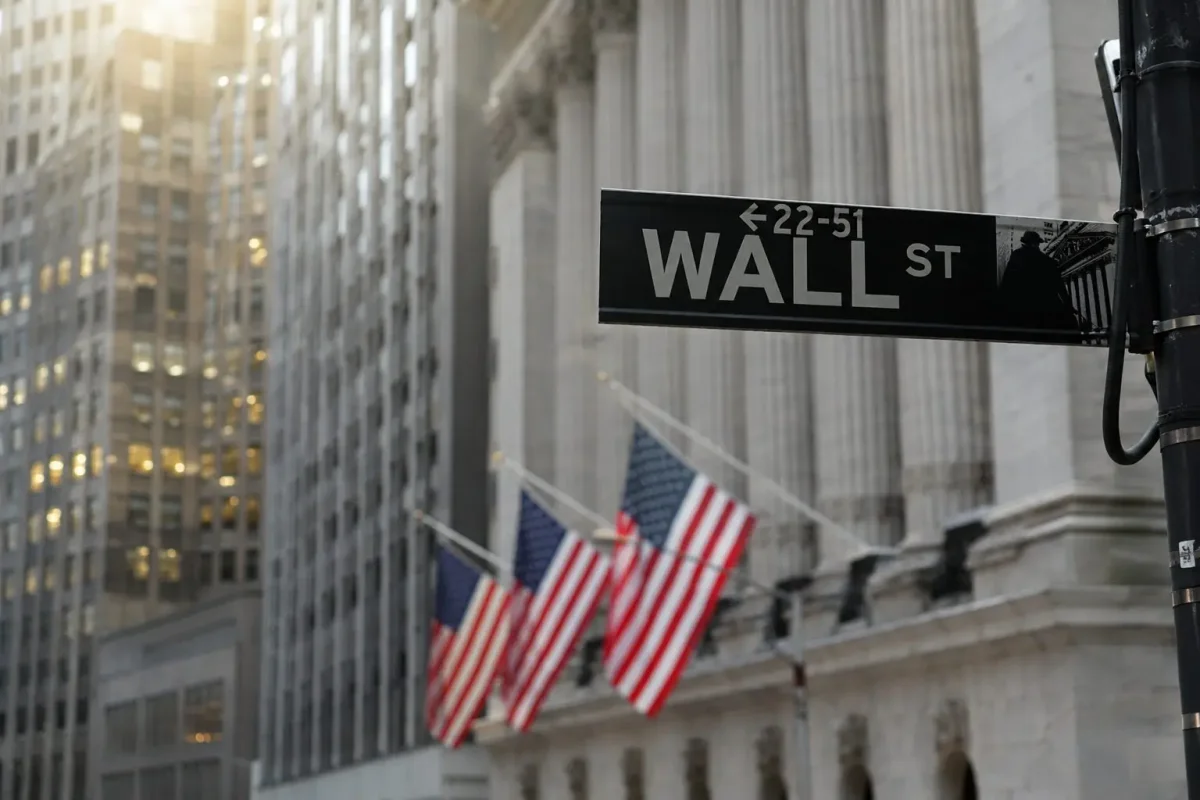
U.S. equity futures showed a clear divergence on Tuesday morning, with Dow Jones Industrial Average futures climbing 0.9% while Nasdaq 100 futures dipped 0.8%. S&P 500 futures were near flat, signaling a broad market rotation rather than a widespread sell-off. The gap between the Dow and Nasdaq has widened to about nine percentage points over the past month, underscoring a shift in investor sentiment away from capital-intensive artificial intelligence plays toward companies that generate immediate cash flow.
The rotation continued from Monday's close, where the Dow rose 0.51%, the Nasdaq Composite slipped 0.18%, and the Russell 2000 index of smaller firms gained 0.62%. This pattern suggests that investors are increasingly focused on free cash flow conversion and profitability, rather than top-line revenue growth fueled by heavy borrowing. According to Reuters, large technology firms have borrowed nearly double the amount they did a year ago, intensifying scrutiny on their ability to turn massive capital expenditures into sustainable returns.
Dorian Carrell at Schroders described the market's questioning as constructive, noting that it is healthy for investors to demand proof that hundreds of billions of dollars in AI infrastructure spending will translate into lasting cash flows. This week, major tech spenders including Amazon.com (AMZN), Meta Platforms (META), Apple (AAPL), and Microsoft (MSFT) are set to report earnings, providing a key test for the sector.
The semiconductor sector has been hit particularly hard. Advanced Micro Devices (AMD) fell about 4.2%, Intel (INTC) dropped 5%, and Corning (GLW) tumbled 17% after issuing cautious guidance despite stronger quarterly results. Nvidia (NVDA) declined again following a 5% drop on Monday, and the Philadelphia Semiconductor Index is now down more than 20% from its record high in June. The weakness in chips reflects broader concerns about demand and competition, especially from China.
Global markets also felt the pressure. South Korea's Kospi index tumbled over 10%, triggering a circuit breaker, while Japan's Nikkei lost roughly 4% as investors weighed intensified competition from Chinese firms. The sell-off in Asia added to the cautious tone ahead of the Federal Reserve's two-day policy meeting, which began on Tuesday. Markets are pricing in a 35.8% chance of a 25-basis-point rate hike at Wednesday's announcement, with the decision expected at 2 p.m. EDT.
In contrast, companies with strong cash generation saw gains. Coca-Cola (KO) shares rose nearly 3.4% after raising its full-year guidance, targeting about 5% organic revenue growth and 9% to 10% comparable earnings growth on a non-GAAP basis. United Parcel Service (UPS) gained nearly 2.7% after increasing its outlook, forecasting 2026 revenue of approximately $91.2 billion and adjusted earnings per share of $7.22. Its free cash flow for the first half jumped to $1.57 billion from $742 million. Boeing (BA) rose about 1% after reporting quarterly free cash flow of $631 million, even though operating profit fell short of estimates.
Lower energy costs also provided a tailwind beyond the tech sector. U.S. crude slipped 1.8% to around $81.15 per barrel, and Brent crude fell 2.2% to nearly $84.02, as talks between the U.S. and Iran continued. The decline in oil prices helped ease cost pressures for many non-tech companies.
On the economic front, the Conference Board is scheduled to release July consumer confidence data at 10 a.m. EDT, with initial estimates pointing to a reading of 92.0, up from 91.2 in the prior month. The data will provide further insight into the health of the U.S. economy as the Fed deliberates.
Investors are now distinguishing between growth powered by funding and growth fueled by debt. The nine-percentage-point monthly difference between the Dow and Nasdaq highlights how this distinction is reshaping capital flows at the index level. With big tech earnings and the Fed decision on the horizon, market participants are bracing for potential volatility.