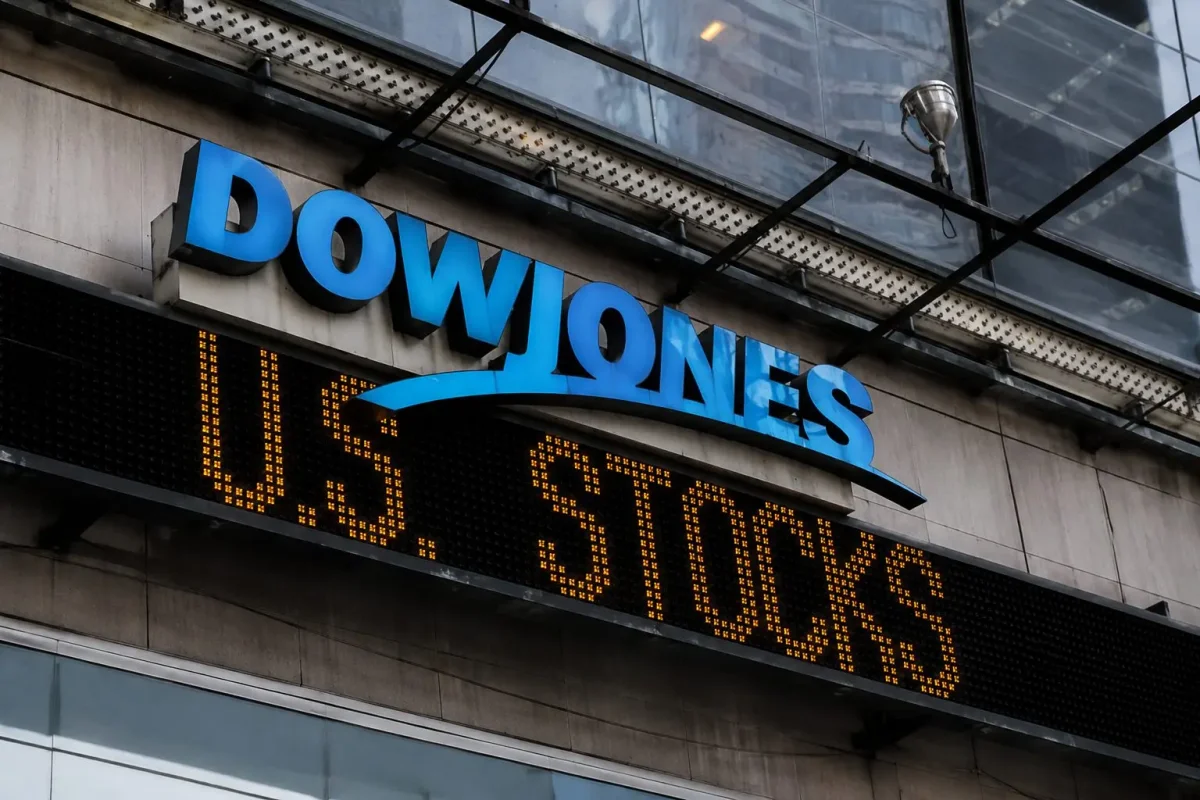
The Dow Jones Industrial Average staged a powerful rebound on Thursday, surging 929.60 points, or 1.86%, to close at 50,848.38. The sharp recovery came after a steep sell-off on Wednesday, with the index bouncing back as oil prices tumbled following President Donald Trump's decision to cancel planned military strikes on Iran.
Oil Plunges on De-escalation
Brent crude oil slid 3.93% to $89.44 per barrel, according to Reuters market data, after President Trump called off the strikes, easing fears of a broader conflict in the Middle East. The move helped calm energy markets and reduce the geopolitical risk premium that had been weighing on stocks. The U.S. 10-year Treasury yield also fell to 4.505%, reflecting lower inflation expectations and diminished risk sentiment.
Industrial Stocks Lead the Rally
Industrial and cyclical stocks powered the Dow's advance. Honeywell International Inc. (HON) finished up 5.52%, Boeing Co. (BA) gained 5.37%, and Caterpillar Inc. (CAT) added 4.88%. Nike Inc. (NKE) climbed 4.29%, while Amgen Inc. (AMGN) ended the session 2.49% higher, according to MarketScreener data. These gains reflected renewed investor appetite for risk after the previous day's sharp decline.
Laggards in the Dow
Not all Dow components participated in the rally. Chevron Corp. (CVX) dropped 2.17%, Salesforce Inc. (CRM) fell 2.10%, and Microsoft Corp. (MSFT) slipped 1.65%. Coca-Cola Co. (KO) gave back 0.90%, and Visa Inc. (V) declined 0.87%. The mixed performance highlighted the uneven nature of the bounce, with energy and tech names lagging.
Market Context: A Bounce After a Steep Drop
The Dow's rebound followed a 953.33-point slide on Wednesday, a 1.87% decline triggered by escalating U.S.-Iran tensions and a sell-off in chip stocks. The S&P 500 tech sector closed Wednesday down 11% from its June 2 high, entering correction territory, Reuters reported. Thursday's rally was partly a technical rebound from oversold conditions. "Our technical indicators are looking relatively oversold here," said Robert Phipps, director at Per Stirling Capital Management in Austin, Texas, to Reuters. "Just as we had gone up too far, too fast, we came down too far, too fast."
Inflation Pressures Persist
Despite the market's relief from lower oil prices, inflation concerns remained front and center. The U.S. Bureau of Labor Statistics reported that the Producer Price Index (PPI) for final demand rose 1.1% in May. Goods prices climbed 2.8%, while services were up 0.3%. On a year-over-year basis, final demand prices increased 6.5%, underscoring persistent inflationary pressures that could influence Federal Reserve policy.
Tech Sector: Mixed Signals
Technology stocks showed a mixed picture on Thursday. Oracle Corp. (ORCL) plummeted 11.2% after announcing plans for higher capital spending in fiscal 2027, Reuters reported. On the other hand, chip stocks such as Lam Research Corp. (LRCX) and KLA Corp. (KLAC) moved higher during the market bounce, according to the Associated Press. The divergence highlighted ongoing uncertainty in the tech sector.
Outlook: Oil and Rates in Focus
Looking ahead, oil prices remain the key swing factor for markets. Lower crude is taking some pressure off inflation worries, but there is debate over whether Thursday's jump will stick or prove to be a mere dead-cat bounce after Wednesday's sharp drop. Wholesale inflation numbers remain high, and rapid shifts in Middle East news continue to drive energy prices. Oil, interest rates, and risk appetite are set to steer market action in the coming sessions.