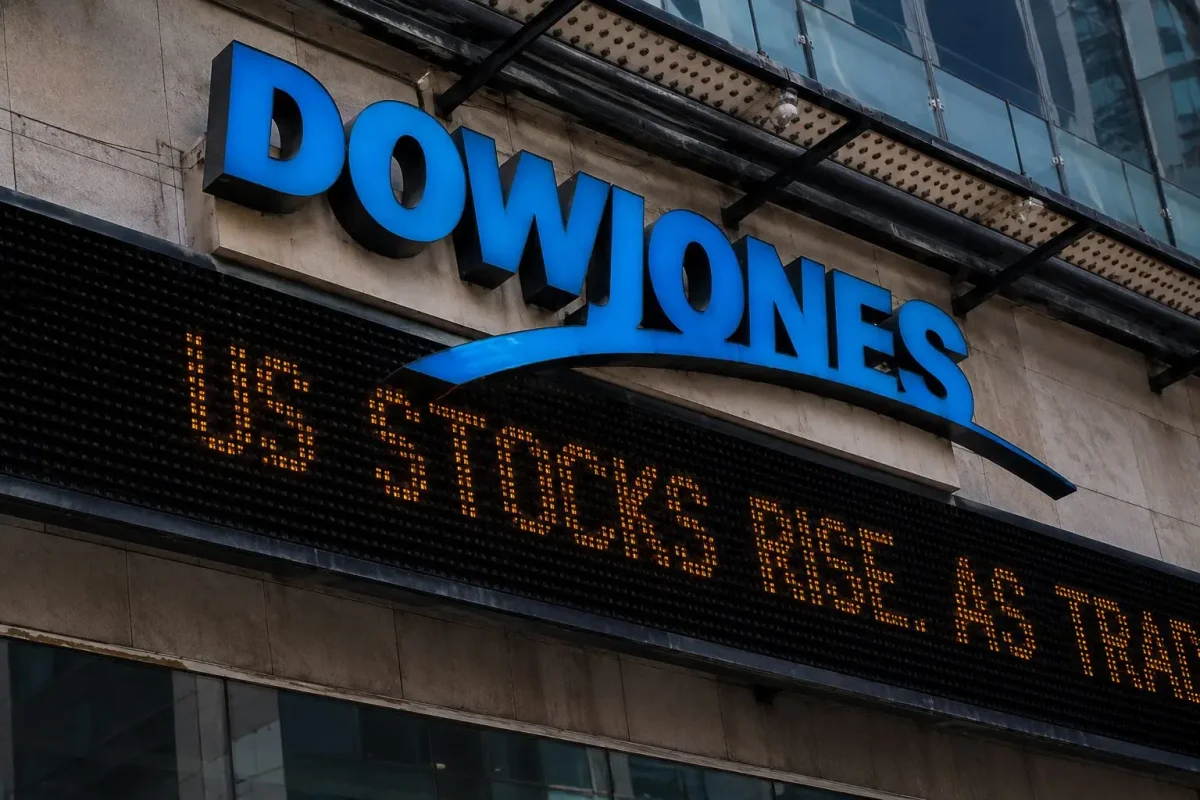
The Dow Jones Industrial Average ended Monday with a modest decline, losing 104.70 points, or 0.21%, to close at 50,762.08, as a sharp rebound in technology and semiconductor stocks failed to lift the blue-chip index. The S&P 500 and the Nasdaq Composite, however, posted gains as investors returned to the tech sector following Friday's steep selloff.
The divergence in performance highlighted a market still digesting the implications of last week's decline, which erased roughly $1 trillion from the market capitalization of U.S.-listed chipmakers. The Philadelphia SE Semiconductor Index surged 6.2% on Monday, recovering a portion of Friday's losses. Analysts described the move as a classic 'bargain hunt' after a period of extreme overvaluation in the sector.
Despite the broader tech rebound, the Dow's price-weighted structure meant that weakness in a few high-priced components weighed heavily. Shares of Travelers, Sherwin-Williams, Apple, IBM, and Merck were among the biggest drags on the index. Apple fell 1.4% even as CEO Tim Cook kicked off the company's Worldwide Developers Conference, unveiling updates to Apple Intelligence and Siri.
Friday's selloff had been triggered by a stronger-than-expected May payrolls report, which reignited fears that the Federal Reserve might keep interest rates elevated or even tighten further. The Dow dropped 695 points on Friday, the S&P 500 fell 2.64%, and the Nasdaq tumbled 4.18%. Nonfarm payrolls increased by 172,000 in May, while the unemployment rate held steady at 4.3%, indicating a still-tight labor market that could keep upward pressure on rates.
Citigroup raised its year-end S&P 500 target for 2026 to 8,100 from 7,700, citing stronger earnings and AI-driven growth. However, the firm cautioned that the sustainability of AI growth beyond 2027 remains a key uncertainty, and noted that the market's rapid shift into AI stocks warrants some caution.
Investors are now turning their attention to Wednesday's release of the May Consumer Price Index, which could provide further clues on the inflation trajectory. A hotter-than-expected reading could quickly reverse the current risk-on sentiment, particularly affecting the high-valuation growth stocks that led Monday's rebound. Additionally, renewed tensions in the Middle East pose a risk to energy prices, adding another layer of uncertainty to the market's fragile recovery.
In after-hours trading, the mood remained cautious but not overly pessimistic. While the Dow slipped, buyers remained active in chips and select AI names, though the support did not extend broadly across the market. The narrow nature of Monday's bounce suggests that the rally may be vulnerable to a sudden shift in sentiment.