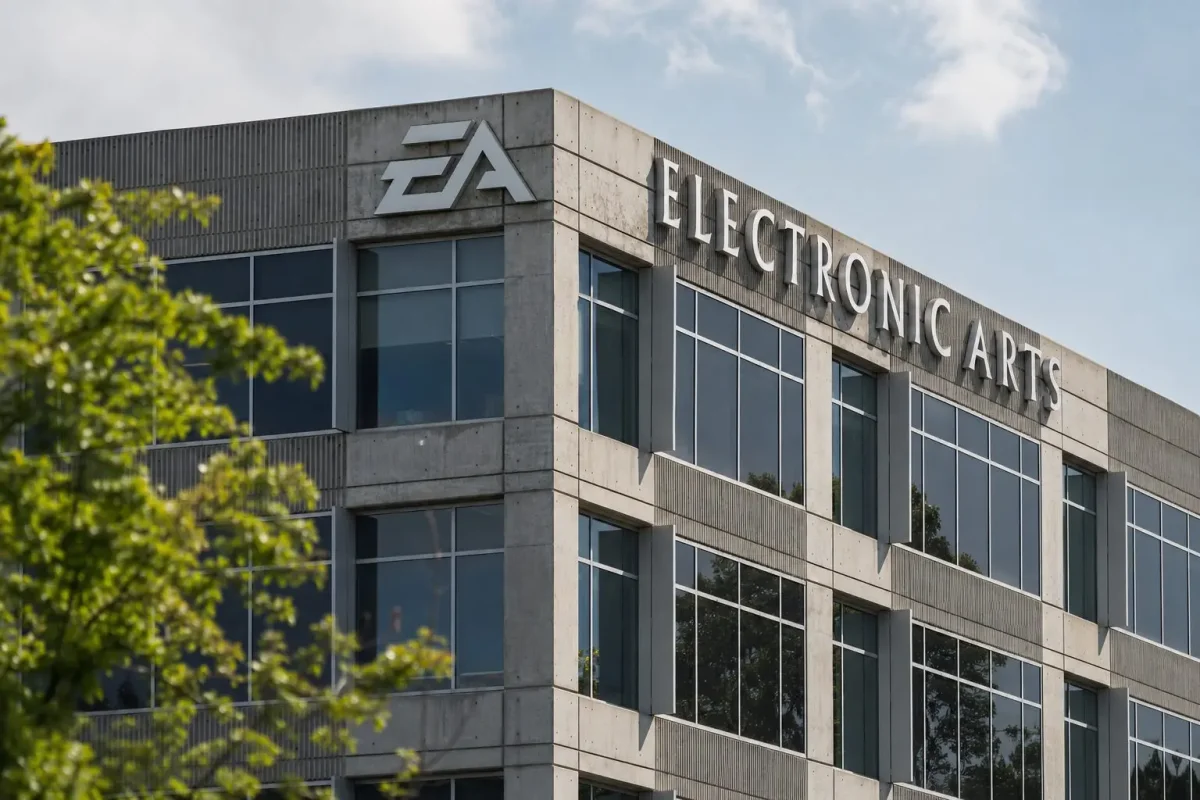
Electronic Arts (NASDAQ:EA) has officially exited the public markets following the completion of its $55 billion acquisition on August 4. The company's shares closed at $209.70 on its final trading day, a mere 30 cents shy of the $210 cash payout that eligible shareholders are set to receive. The narrow spread, representing just 0.14% of the payout, indicates that merger-arbitrage risk was minimal in the final session.
The go-private transaction, which was first announced in late September 2025, delivered a 24.8% premium over Electronic Arts' unaffected close of $168.32 on September 25, 2025. The deal valued the gaming giant at approximately 7.3 times its audited fiscal-2026 revenue of $7.531 billion, which itself represented a 1% year-over-year increase. Trading in EA shares was halted by Nasdaq ahead of the market open on August 5, marking the end of its 30-year run as a publicly traded entity.
Now that the equity portion of the deal is complete, investor attention has shifted to the company's balance sheet. The acquisition involved $20 billion in committed debt, equivalent to 7.8 times EA's projected operating cash flow for fiscal 2026. According to the final filing, the anticipated total funded debt upon closing is approximately $18 billion, representing around 7.1 times the same cash-flow metric. This significant leverage raises questions about the company's ability to service its obligations while continuing to invest in growth.
The financing package includes a $6.125 billion U.S. term loan B, a €1.725 billion euro term loan B, a $3.250 billion term loan A, and a $500 million revolving credit facility, all provided on August 4. Additionally, the company issued $2.875 billion in secured dollar notes due 2033 with a 7.25% coupon, €1.080 billion in secured euro notes due 2033 with a 6.25% coupon, and $2.500 billion in unsecured dollar notes due 2034 with an 8.75% coupon. Based on the disclosed principal and coupon rates, annual interest payments on the dollar notes alone total approximately $427 million, representing 16.7% of EA's projected operating cash flow for fiscal 2026. The euro notes add an additional €67.5 million per year, before accounting for interest on the term loans.
The company's most recent quarterly results, for the June quarter (fiscal Q1 2027), showed mixed performance. Net revenue rose 18.9% year-over-year to $1.986 billion, while net income nearly doubled to $397 million, with diluted earnings per share of $1.56, up 97.5% from the prior year. However, net bookings—a key metric for the gaming industry—came in at $1.35 billion, falling 8.8% short of the LSEG forecast of $1.48 billion. Reuters attributed the shortfall to lower post-launch engagement for Battlefield 6, a franchise that remains critical to EA's success. Net bookings represent the total value of products and services sold during the period, and the miss underscores the challenges the company faces in a competitive gaming market.
This bookings shortfall is particularly concerning given the company's new leverage. Live services, which include recurring revenue from in-game purchases and subscriptions, generated $5.383 billion in fiscal 2026, accounting for 71.5% of total revenue. The reliance on a limited number of franchises, such as Battlefield and EA Sports titles, adds to the risk profile. If bookings continue to fall short, the company's ability to generate the cash flow needed to service its debt could be constrained, potentially limiting investment in new projects.
Prior to the acquisition, analyst sentiment on EA was cautious. MarketBeat's latest consensus, based on 17 analysts, showed just one buy rating, 14 hold ratings, and two sell recommendations, with an average price target of $202.27. Notable actions included Argus Research downgrading EA from Buy to Hold in May, Citigroup raising its target to $204 in May, and Morgan Stanley lifting its target to $210 in October 2025. These targets, however, are now moot following the cancellation of shares and the end of public price discovery.
In a statement, EA Chief Executive Andrew Wilson said the new owners planned to “invest boldly” and “accelerate innovation.” Egon Durban of Silver Lake, which led the acquisition group, echoed this sentiment, saying the group was prepared to “invest heavily to grow the business.” Despite these assurances, the company now operates as a private entity, and its financial health will be measured primarily through debt prices and operational disclosures, as it plans to request a suspension of its public reporting duties.
The delisting of Electronic Arts marks the end of an era for one of the gaming industry's most prominent companies. The new private owners face the dual challenge of managing a heavy debt load while navigating a rapidly evolving entertainment landscape. With the company no longer subject to quarterly earnings calls or shareholder pressure, the true test will be whether the promised investment can translate into sustained growth and ultimately a successful exit for its new owners.