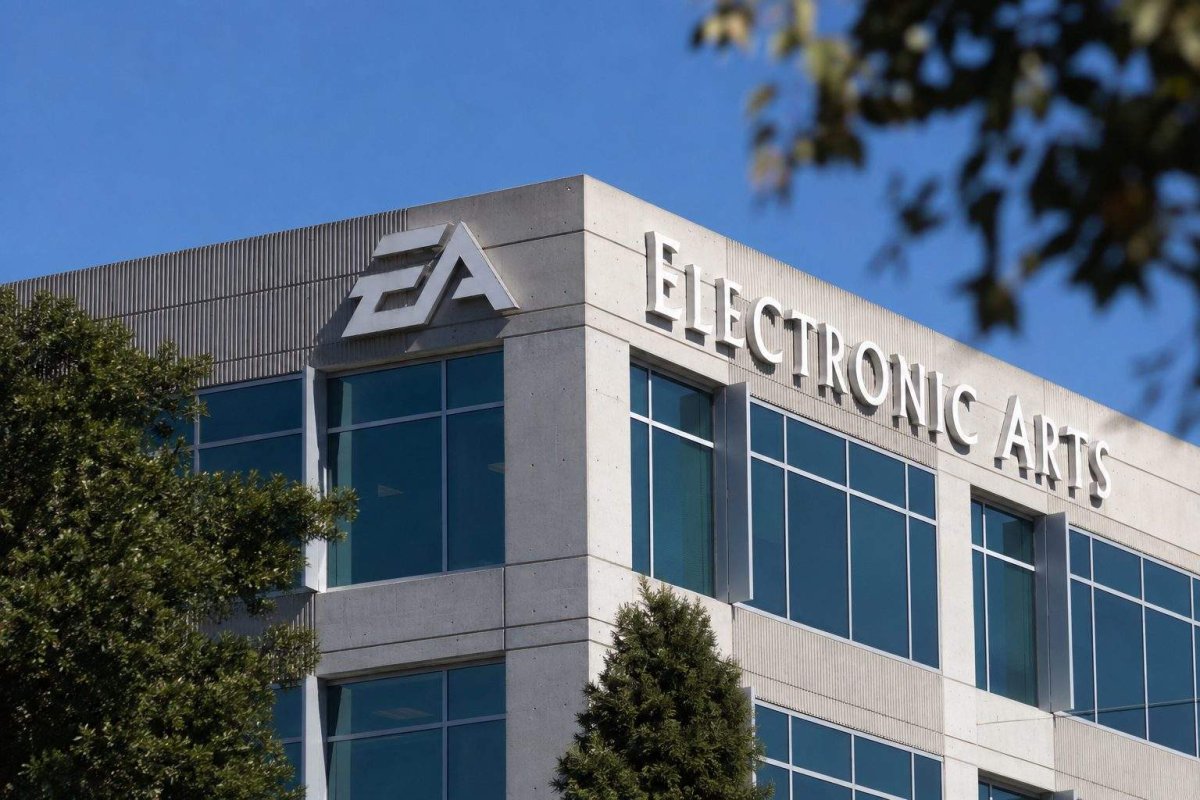
Electronic Arts (NASDAQ: EA) has officially exited the public markets following the completion of its $55 billion acquisition by a consortium including Saudi Arabia’s Public Investment Fund (PIF), Silver Lake, and Affinity Partners. The transaction, finalized after Tuesday’s market close, delivered $210 in cash for each share of EA common stock. Trading in EA shares was halted on Wednesday as the company began its new chapter as a privately held entity.
The final merger spread was razor-thin, with EA’s last quoted price at $209.70, just $0.30 below the cash offer. That represented a gross return of only 0.14% for arbitrageurs, excluding settlement timing and tax considerations. The deal’s premium over EA’s unaffected closing price of $168.32 on September 25, 2025, stood at $41.68 per share, or roughly 24.8%—just shy of a 25% premium.
According to the transaction’s terms, the enterprise value of $55 billion includes $20 billion in debt financing, which accounts for 36.4% of the total. That leverage, combined with the operational challenges ahead, now rests on the private buyers. EA’s latest quarterly results, released just hours before the deal closed, underscore the risks: net bookings for the fiscal first quarter of 2027 came in at $1.350 billion, missing the LSEG consensus estimate of $1.480 billion by 8.8%. The shortfall of $130 million was attributed to softer demand for Battlefield 6, with post-launch engagement declining and raising concerns about recurring live-service revenue.
Despite the bookings miss, EA’s GAAP financials showed impressive growth. Net revenue rose 18.9% year-over-year to $1.986 billion, while net income nearly doubled to $397 million, up 97.5% from $201 million a year earlier. Diluted earnings per share came in at $1.56, compared to $0.79 in the prior-year quarter. The divergence between bookings and GAAP revenue stems from the timing of deferred online-game revenue recognition, which can cause the two metrics to be reported in different periods.
The $55 billion enterprise value represents a significant multiple of EA’s operating metrics. It equates to 6.9 times projected net bookings for fiscal 2026 (based on $8.026 billion), 73.7 times net revenue ($7.531 billion), 47.3 times operating income ($1.162 billion), and 21.5 times operating cash flow ($2.553 billion). While these are not conventional valuation metrics, they highlight the premium paid relative to EA’s current financial performance. The consortium is betting on future growth, with Silver Lake CEO Egon Durban stating plans to “invest heavily in EA’s growth,” particularly in artificial intelligence.
EA’s exit leaves a shrinking pool of major publicly traded U.S. gaming companies. At the time of the deal, EA’s market value was approximately $52.5 billion, about 19% higher than Take-Two Interactive’s (NASDAQ: TTWO) $44.0 billion market cap, and nearly double that of Roblox (NYSE: RBLX) at $26.3 billion. Take-Two, which is set to release GTA VI, remains the closest comparable. EA was also replaced in the S&P 500 by Ferguson Enterprises (NYSE: FERG) prior to the start of trading on Wednesday.
Despite the deal’s completion, analyst sentiment had been cautious. In the final days before the close, all six analysts covering EA rated the stock as Hold, with an average price target of $208.80—just below the $210 offer. Recommendations ranged from $204 to $210, with several analysts reaffirming their ratings in early August. The consensus reflected the deal’s terms rather than a standalone earnings outlook, and those ratings are now obsolete given the stock’s delisting.
Public market investors received nearly the full offer price, even as bookings fell short. The private buyers now face the challenge of defending a valuation that implies significant growth, with debt making up more than a third of the enterprise value. The risks are clear: a $20 billion debt load, weaker-than-expected performance for a key franchise, and a business model where live services accounted for 71% of fiscal 2026 revenue. EA’s CEO Andrew Wilson expressed confidence, saying the company is beginning its next phase “from a position of strength.”