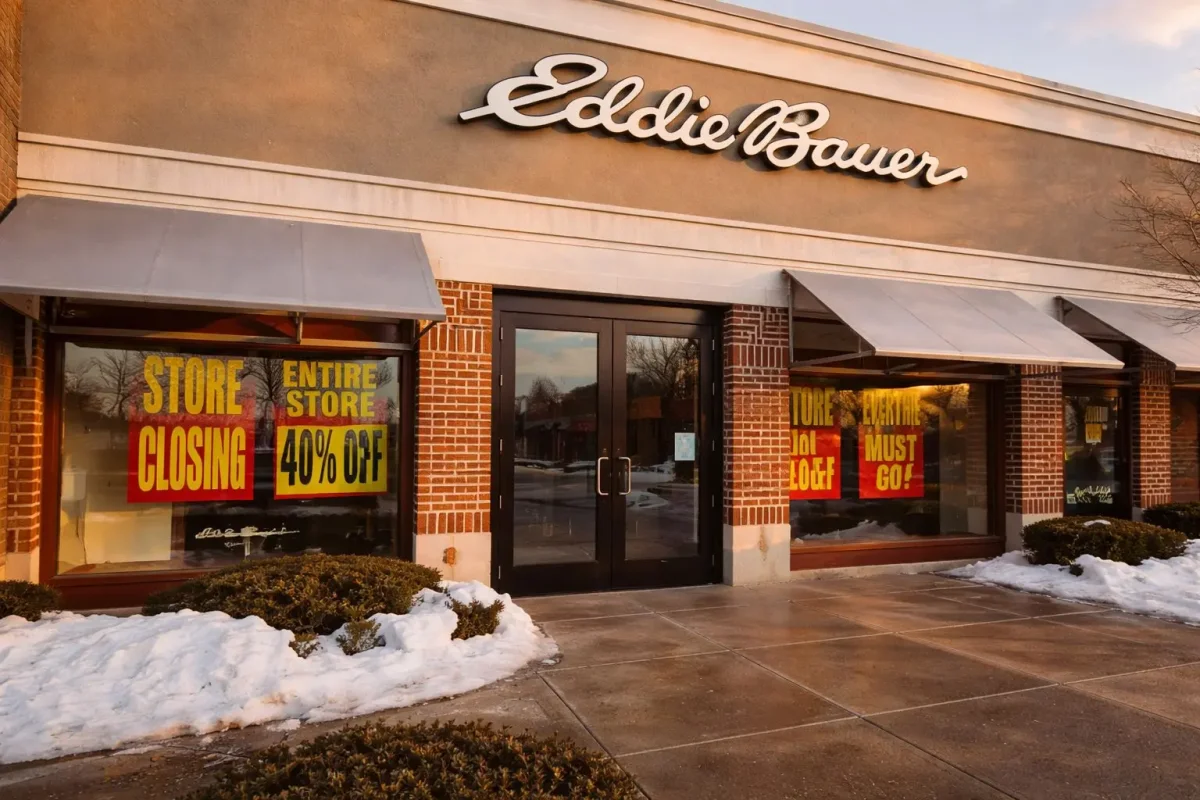
The retail operator for outdoor apparel brand Eddie Bauer is closing every one of its 13 stores in California after a court-supervised search for a buyer concluded unsuccessfully. The company, Eddie Bauer LLC, which manages the brand's physical stores across the United States and Canada, filed for Chapter 11 bankruptcy protection on February 9, 2026. The filing cited a combination of declining sales, persistent supply chain challenges, inflationary pressures, and concerns over tariffs as primary reasons for seeking restructuring.
Liquidation Sales Proceed as Auction Canceled
With no qualified bids submitted by the March 3 deadline, a planned auction of the store assets scheduled for March 6 was formally canceled. This triggered immediate liquidation sales across the affected locations. The company is now actively marketing approximately 174 store leases spanning the U.S. and Canada for assignment. Real estate advisor RCS Real Estate Advisors is handling the portfolio, which encompasses over 1.08 million square feet of retail space in malls, lifestyle centers, and high-traffic shopping districts.
Ivan Friedman, President and CEO of RCS, characterized the lease collection as a "rare opportunity" for other retailers seeking turnkey locations. However, court documents indicate that store-closing sales will continue to move forward unless a superior last-minute offer materializes.
Consumer Deadlines and Impacted Locations
Shoppers face immediate deadlines. The company announced that gift cards and loyalty program credits will only be honored through Thursday, March 12, 2026. After that date, these forms of payment will become invalid. Furthermore, all sales are now final, with no returns or exchanges accepted.
The California closures eliminate the brand's entire physical presence in the state. Affected locations include stores in Corte Madera, Milpitas, Gilroy, Petaluma, Vacaville, Fresno, and San Clemente. Reports from local outlets noted that employees at several stores had not received definitive closure timelines, though clearance signage was already prominent.
Brand Operations Continue Under New Structure
Critically, the bankruptcy filing pertains solely to the store operating entity, Eddie Bauer LLC. The Eddie Bauer brand itself remains unaffected. Authentic Brands Group continues to own the brand's intellectual property. Meanwhile, the brand's e-commerce, wholesale, design, and product development operations for the U.S. and Canadian markets have already been transferred to a separate entity, Outdoor 5.
David Brooks, Executive Vice President at Authentic Brands Group, stated that key priorities include "expanding its digital and wholesale reach" and guiding the brand back to its outdoor heritage. Marc Rosen, CEO of parent company Catalyst Brands, called the bankruptcy filing a difficult decision, emphasizing that the team's focus is on preserving value and liquidity where possible.
Historical Context and Market Pressures
This development represents a significant retreat for a historic American brand. Eddie Bauer was founded in Seattle in 1920 and is credited with inventing and patenting the quilted down "Skyliner" jacket in 1940. At its peak in 2001, the retailer operated nearly 600 stores across North America. This marks its second encounter with bankruptcy, having previously filed in 2009.
The closure occurs amid intense competition in the outdoor apparel sector. Rivals like Patagonia, Arc’teryx, and Vuori have aggressively expanded their direct-to-consumer channels, selling more through their own websites and branded stores, a strategy that has resonated with younger demographics. At the time of its Chapter 11 filing, the retailer was carrying approximately $1.7 billion in debt.
Without a late bidder emerging, landlords are now tasked with finding new tenants for the over 1.08 million square feet of retail space previously occupied by Eddie Bauer. The outcome underscores the ongoing challenges for traditional brick-and-mortar retailers navigating a landscape increasingly dominated by digital and direct-to-consumer models.
