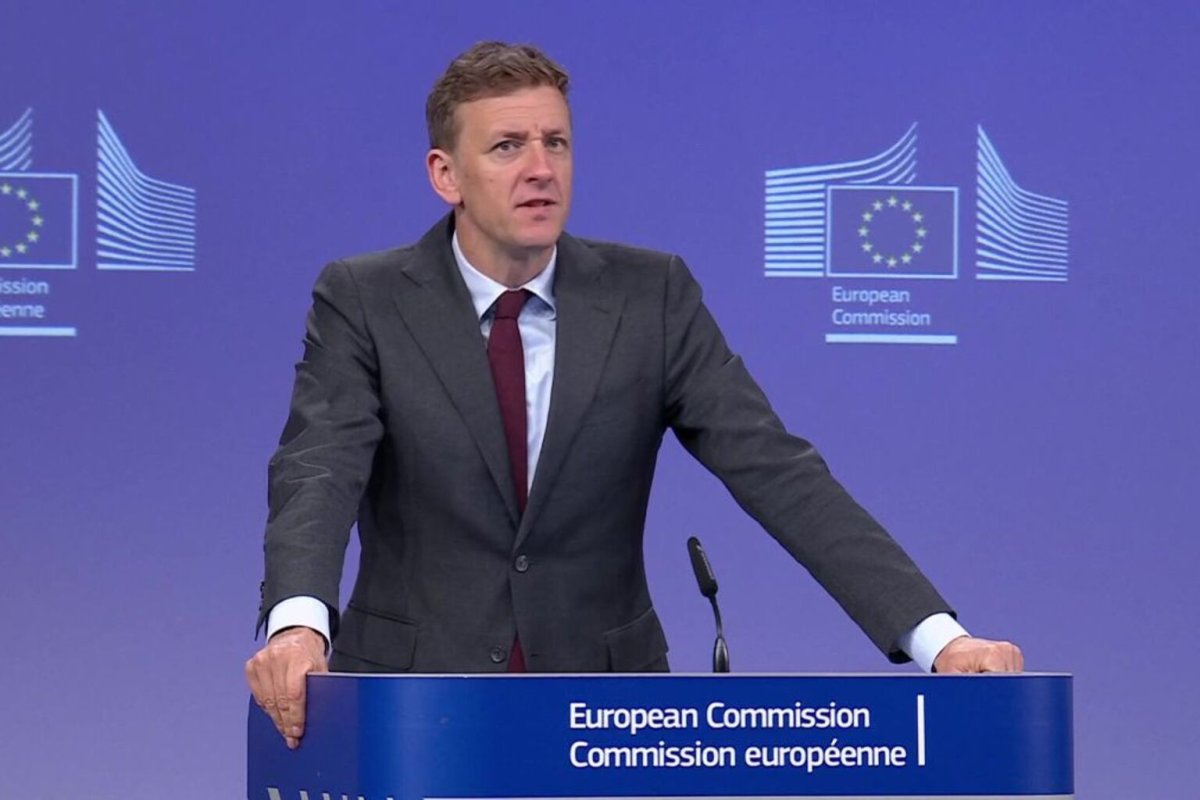
The European Commission has formally submitted the EU-India free-trade agreement to the Council of the European Union for signature and conclusion, marking a procedural milestone in a deal that could eventually save European exporters up to €4 billion annually in import duties. The submission, made on September 11, advances the agreement but does not trigger any immediate tariff reductions. Several hurdles remain, including Council authorization, European Parliament consent, and India's domestic ratification process.
The agreement, which concluded negotiations on January 27, aims to eliminate or reduce tariffs on more than 96% of EU goods exports to India. According to the Commission, two-way goods trade between the EU and India reached €120 billion in 2024, while services trade hit €59.7 billion in 2023. The pact is one of the largest trade deals ever negotiated by the EU, covering a vast array of sectors from machinery to automobiles.
For equity investors, the key distinction is between exposure and timing. Machinery and electrical equipment, the EU's largest export category to India, worth €16.3 billion in 2024, face Indian tariffs up to 44%. The agreement would eliminate these tariffs for almost all products, but the phase-in period extends over 5–7 years. Similarly, aircraft and spacecraft exports (€6.4 billion) see tariffs drop from up to 11% to zero, but mostly over five years. Optical, medical, and surgical equipment (€3.4 billion) will see 90% of products get zero tariffs, with staging periods of 5 or 7 years.
The automotive sector, a headline-grabbing concession, sees Indian tariffs slashed from 110% to 10%, but only within a 250,000-vehicle annual quota. Chemicals (€3.2 billion) will see tariffs of up to 22% eliminated mostly at entry into force. This uneven tariff map means the €4 billion headline is not a near-term profit estimate. The Commission's factsheet notes total EU goods exports to India at €48.8 billion in 2024, but maximum tariffs represent the upper edge, not the weighted average duty paid by exporters. Companies also face freight, local taxes, distribution costs, certification, and rules-of-origin requirements that the headline rate does not capture.
For European industrial, aerospace, medical-technology, chemical, and auto companies, the deal expands their addressable market if their EU-made products qualify. However, investors need to assess three company-specific factors: Indian revenue, the share of imports versus local production, and the tariff phase-in for their actual product mix. Without such disclosures, applying a sector tariff cut directly to consolidated margins would be false precision.
Indian exporters, on the other hand, receive a much faster benefit. India's Department of Commerce reports that 90.7% of export value covered by the pact would become duty-free upon entry into force. This includes over $33 billion in labor-intensive exports such as apparel, textiles, leather, footwear, gems, and jewelry. Indian manufacturers in these sectors could see immediate competitive gains, though EU carbon regulations, safeguards, and origin requirements will still affect realized benefits.
The next investable event is approval, not another estimate. The Council's public register now lists the signing proposal under interinstitutional file 2026/0278(NLE), along with the conclusion file. A Council decision would authorize signature, followed by European Parliament consent and Council conclusion. India must also complete its domestic procedures. Separately, the EU and India are negotiating investment protection and geographical indications agreements, which should not be assumed to arrive with the goods package.
The strongest skeptical case is that markets already priced in the broad tariff bargain in January, and Friday's submission was an expected procedural step. Benefits are spread across thousands of product lines and years, while country-level trade totals say little about earnings sensitivity for any single stock. Approval could also slip, adding uncertainty.
Still, the filing sharpens investor focus. Instead of treating 'EU-India trade' as a single theme, investors should separate immediate Indian export access from staged European import relief, then map each listed company by origin, local manufacturing, and product schedule. The first material re-rating should belong to businesses that can show near-term duty savings in guidance, not just those with India in an investor presentation.