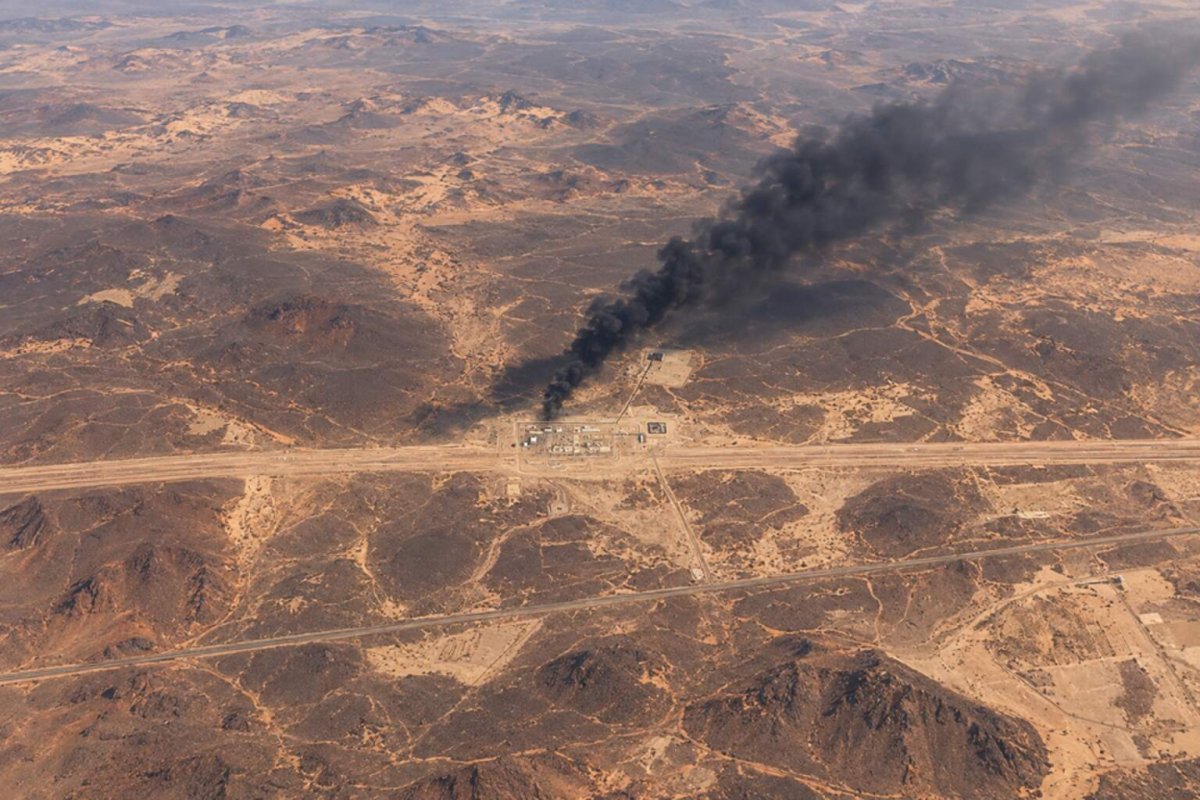
Saudi Arabia's decision to halt operations on its East-West crude pipeline following a series of attacks has introduced a new layer of uncertainty into global oil markets, just as traders were beginning to view this route as a reliable workaround for the Strait of Hormuz. The immediate focus is not on the pipeline's capacity—which can move up to 5 million barrels per day for export—but on the extent of the disruption and the timeline for restoration.
Attack Details and Immediate Impact
The Saudi Energy Ministry reported that the pipeline was struck in the Riyadh and Madinah regions on the morning of Thursday, September 10, prompting an immediate shutdown as a precautionary measure. The attacks resulted in injuries, and emergency and technical teams were deployed to secure the system and evaluate its integrity. A subsequent statement from the Foreign Ministry indicated that several drones had been launched from Iraqi territory, causing damage that was still being addressed. Neither statement provided specifics on lost volumes, export impacts, or a restart schedule.
This lack of operational detail is expected to weigh heavily on Monday's oil market opening. Brent crude settled at $104.61 a barrel on Friday, down $3.02 (2.81%), after briefly touching $110 during Thursday's surge. The pullback reflected tentative hopes for a shipping arrangement around Hormuz, but it occurred before investors had the weekend to fully price in a confirmed outage on the Saudi alternative. An ICE futures screen showed a sharply backwardated curve on Friday, with November Brent at $104.77 versus December at $99.86, signaling a premium for barrels available sooner—a condition that would be exacerbated by an extended infrastructure outage.
Capacity vs. Actual Losses
The East-West pipeline connects eastern Saudi production and processing facilities to the Red Sea port of Yanbu, offering a route that bypasses the Strait of Hormuz. According to the U.S. Energy Information Administration (EIA), the pipeline has a total capacity of 7 million barrels per day, of which roughly 5 million can be allocated to exports, with the remainder used domestically.
However, these are capacity figures, not verified outage numbers. Reuters reported on Saturday that the pipeline had been moving between 4 million and 5 million barrels per day recently while Hormuz remained heavily constrained. Saudi officials have not confirmed these throughput levels, nor have they indicated that an equivalent amount of production has been shut in. Inventories at Yanbu, storage elsewhere, adjustments in refinery runs, and any available Gulf export movements could cushion the initial days of a disruption.
The scale of the pipeline's role makes this more consequential than damage to an ordinary midstream asset. The EIA estimated that 20.9 million barrels per day of oil passed through the Strait of Hormuz in the first half of 2025. The East-West line had become Saudi Arabia's primary physical hedge against that chokepoint; its closure removes redundancy at a time when it is most valuable.
Three Key Signals for Monday
Investors will be watching for three critical indicators to gauge the risk premium:
- A dated Saudi operational update: A restart, partial-capacity figure, or repair schedule would allow traders to replace worst-case assumptions with a measurable outage. Silence would keep duration risk in the price.
- Evidence of continued exports: Tanker loadings from Yanbu and any disclosed use of inventories matter more than the nameplate-capacity headline. Stable loadings would show that the shutdown has not yet translated one-for-one into lost supply.
- The security response: Iraq said the attacks originated from its territory and moved to investigate, while Saudi Arabia said it would hold off on responding at this stage. A contained diplomatic response would reduce the chance of repeated strikes; retaliation or further attacks would do the opposite.
The strongest counterargument to a lasting oil spike is Saudi repair speed. After attacks in April reduced East-West pumping capacity by about 700,000 barrels per day, the Energy Ministry said full 7 million-barrel-per-day capacity was restored within days. The present shutdown is broader—the entire line was halted while damage was assessed—but the earlier episode shows that an attack does not automatically create a long-duration supply loss.
For investors, Monday's clean dividing line is operational rather than geopolitical. A prompt, quantified restart would leave Friday's backwardation and high outright price as the main warnings. No restart guidance, weaker Yanbu loadings, or another strike would turn the pipeline from a resilience story into a physical-supply constraint—and make the front of the Brent curve the most sensitive place to watch.