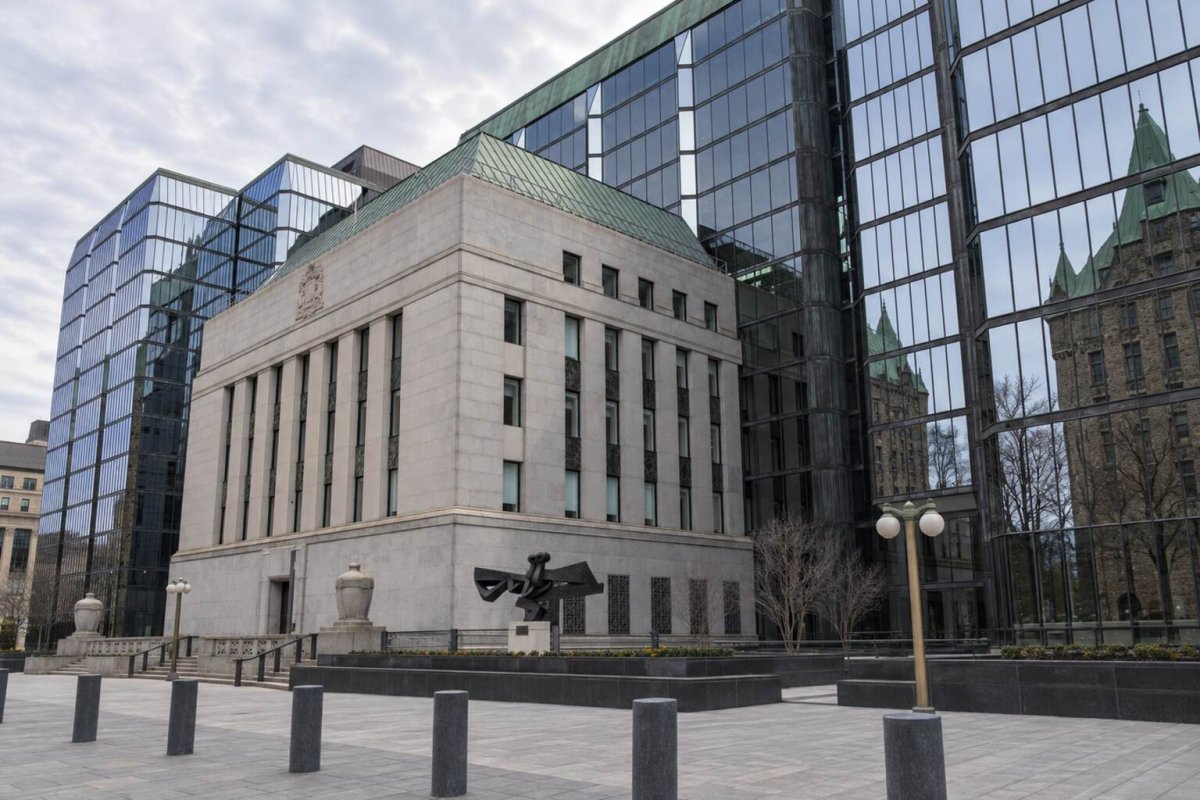
The Canadian dollar enters a critical juncture this week as traders brace for two major central bank events within a 30-minute window on Wednesday. The Bank of Canada will release the summary of deliberations from its September policy meeting at 1:30 p.m. ET, followed by the Federal Reserve's rate decision and updated economic projections at 2 p.m. ET. The loonie has been on the defensive heading into these events, with the currency posting its weakest daily average of the week on Friday.
According to the Bank of Canada's official data, the daily average exchange rate stood at C$1.3866 per U.S. dollar on Friday, up from C$1.3822 the previous day. Inverted, one Canadian dollar bought 72.12 U.S. cents, down from 72.35 cents. The 0.32% decline marked the loonie's lowest point of the week, and the move was not merely a reflection of a stronger greenback. The Bank's broad Canadian effective exchange-rate index fell from 112.27 to 111.91, and even the measure excluding the U.S. dollar lost 0.38%, indicating broad-based weakness in the Canadian currency.
Oil and Policy Divergence Weigh on Loonie
One factor behind the loonie's decline was the drop in oil prices. Brent crude settled 2.8% lower at $104.61 a barrel on Friday, according to the Associated Press market report. As a major energy exporter, Canada's currency is sensitive to oil price movements through the country's terms of trade. However, Brent remains historically high, and a single session does not establish a lasting relationship between oil and the currency.
The more persistent pressure comes from monetary policy divergence. The Bank of Canada has held its overnight rate at 2.25% since October 2025, while the Federal Reserve's target range stands at 3.50% to 3.75%. This 1.25-to-1.50-percentage-point gap makes holding short-term U.S. dollars more attractive than Canadian dollars, all else being equal.
Wednesday's Central Bank Double-Header
Wednesday's schedule offers three key moments for traders. At 1:30 p.m. ET, the Bank of Canada releases its summary of deliberations from the September 2 meeting. At 2 p.m. ET, the Fed publishes its decision and Summary of Economic Projections following its September 15-16 meeting. The Fed chair's press conference at 2:30 p.m. ET provides a second chance for markets to reprice the expected policy path.
The Canadian document will not change the rate, as the decision was already made, but it will reveal the balance of concern among policymakers. On September 2, the Bank noted that Canadian growth had broadened but that U.S. tariffs threatened its durability. Inflation near 3% was largely driven by gasoline, while core measures were close to 2%. If the minutes emphasize persistent energy and tariff inflation, markets may infer that the 2.25% rate is less likely to be cut soon, offering some support to the loonie. Conversely, if officials focused on excess supply and the risk that tariffs delay investment and hiring, the currency could remain vulnerable even without an immediate rate cut.
The Fed event carries more immediate weight. Its July decision was a 9-3 vote to hold, with three dissenters preferring a quarter-point increase. A quarter-point move on Wednesday would widen the lower end of the U.S.-Canada policy gap to 1.50 percentage points. However, a hike accompanied by a shallow projected path could still disappoint dollar bulls, as foreign exchange markets respond to expectations of what comes next, not just the announced rate.
Implications for Investors and Sectors
A softer loonie has mixed implications. Canadian energy producers, which price their output in U.S. dollars while paying many costs in Canadian dollars, could benefit from a weaker currency as it cushions the impact of lower oil prices. Exporters with U.S.-dollar revenues may see a similar translation benefit. On the other hand, importers, retailers, and businesses with unhedged U.S.-dollar costs face increased pressure.
U.S. investors in unhedged Canadian shares or ETFs must also separate asset returns from currency returns. A Canadian stock can rise in Toronto while delivering a smaller gain in U.S. dollars if the loonie weakens simultaneously.
The strongest argument against further Canadian-dollar weakness is that much of the policy divergence may already be priced in. A Fed hold, a softer set of rate projections, or another oil rebound could quickly unwind Friday's move. The key thresholds to watch are whether USD/CAD holds above C$1.3866, whether the Bank of Canada sounds more worried about inflation than growth, and whether the Fed validates a wider rate gap. Wednesday will test all three within one hour.