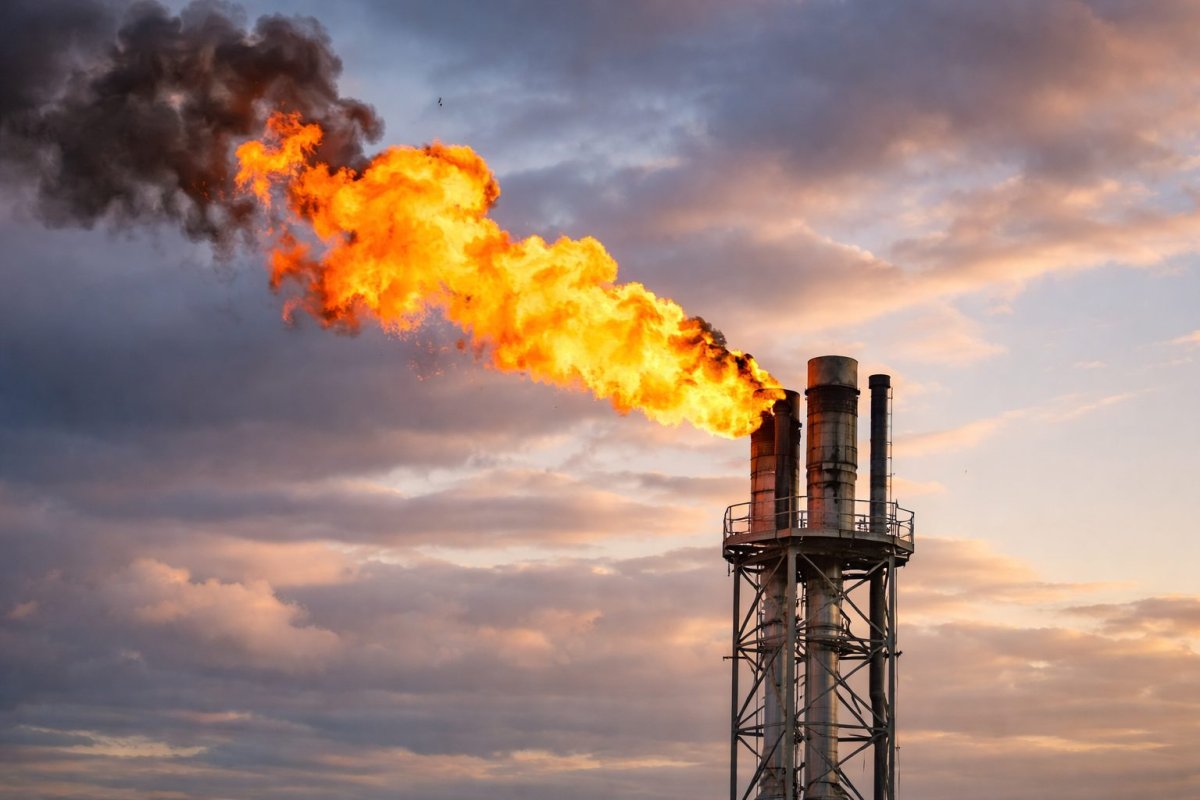
European natural gas markets experienced a pullback on Wednesday, with benchmark contracts surrendering a portion of the substantial gains recorded earlier in the week. The price movement reflects a market grappling with conflicting signals: easing immediate geopolitical tensions against a backdrop of persistent structural supply risks and the urgent need to replenish storage facilities before winter.
Price Action and Market Drivers
The front-month contract at the Dutch Title Transfer Facility (TTF), Europe's primary gas trading hub, settled near 41.4 euros per megawatt hour. This represents a decline of approximately 4.5% from Tuesday's close and a significant retreat from Monday's peak of 51.3 euros. The sell-off partially unwound a "war premium" that had been baked into prices following the outbreak of conflict involving Iran on February 28. Since that date, prices had nearly doubled within three weeks and, as of Tuesday, remained roughly 35% above pre-conflict levels according to a European Commission draft document seen by Reuters.
EU Warns of Continued Vulnerability
Despite the day's decline, officials in Brussels issued a stark warning that the region's energy security remains fragile. The European Commission emphasized that a prolonged disruption to shipping through the Strait of Hormuz—a chokepoint for approximately 20% of global liquefied natural gas (LNG) and oil traffic—could severely hamper Europe's efforts to rebuild gas inventories and trigger "extreme price spikes." This caution comes as the bloc enters the critical summer injection season, where it must stockpile gas for the high-demand winter months. Storage levels recently fell to concerning lows, around 28% of total capacity, prompting EU officials last month to urge member states to begin refilling storage sites earlier than usual.
While Europe's primary gas suppliers are Norway and the United States, not the Gulf, the global nature of the LNG market means price shocks in one region quickly transmit worldwide. The EU's economy commissioner, Valdis Dombrovskis, underscored that any potential government aid to industry must include "clear sunset clauses" and avoid stimulating additional demand for oil and gas, which could exacerbate price pressures.
Geopolitical Developments and Supply Adjustments
Some pressure eased after U.S. President Donald Trump suggested the Iran conflict might be nearing a conclusion. Furthermore, a source in Tehran indicated Iran might permit shipping to use the Omani side of the Strait of Hormuz should a formal agreement be reached. However, tanker traffic through the vital waterway remains substantially below normal levels, acting as a floor under prices and preventing a steeper decline.
The recent price volatility has already forced major market participants to swiftly adapt their supply chains. Italian energy company Edison moved quickly to secure seven LNG cargoes from the United States after QatarEnergy canceled ten scheduled deliveries between April and mid-June. Edison's Chief Executive, Nicola Monti, described the market as "tight" but noted remaining "flexibility options" to maintain supply. He also indicated that Qatar might extend its force majeure declaration—a contractual clause invoked due to uncontrollable events—beyond mid-June, though he maintains the market should regain structural balance within the next 18 months.
Buyers Seek Alternative Sources
The search for diverse and secure supply is pushing European buyers to consider longer and more expensive routes. Germany's Uniper is among several companies evaluating LNG shipments from Canada that would transit the Panama Canal. The debate over supply strategy is intensifying within the EU; Eni's CEO Claudio Descalzi recently argued the bloc should reconsider its planned phase-out of Russian LNG, noting that replacing 20 billion cubic meters of supply has proven exceptionally challenging.
Global Ripple Effects
The supply crunch is not confined to Europe. Pakistan is witnessing spot LNG prices surge to between $20 and $30 per million British thermal units (mmBtu), the industry's benchmark pricing unit. In response, Petroleum Minister Ali Pervaiz Malik stated Islamabad's preference to shift toward government-to-government contracts to avoid paying exorbitant spot market premiums.
Outlook and Risks
The path forward for European gas prices remains fraught with uncertainty. The European Commission has warned that a protracted crisis could lead to "demand destruction," where both households and industrial consumers are forced to slash consumption due to prohibitively high prices, with shockwaves spreading across manufacturing supply chains. For now, traders have dialed back the most extreme panic-driven buying, but a risk premium linked to the unstable geopolitical landscape persists in the market. The coming months of storage injections will be a crucial test for Europe's energy resilience.