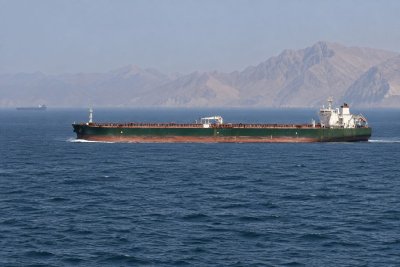
Exxon Mobil and Chevron both surpassed Wall Street's adjusted earnings expectations for the first quarter, though reported profits declined sharply from a year ago. The Iran conflict created significant operational and accounting headwinds, muddying the impact of higher crude prices on the bottom line.
Exxon posted adjusted earnings of $1.16 per share, easily clearing the consensus estimate of $1.00 from LSEG. Reported net income fell to $4.2 billion, or $1.00 per share, from $7.7 billion in the prior-year period. The company attributed a $3.9 billion drag to unfavorable timing effects and an additional $700 million loss on settled financial hedges that were not offset by physical shipments due to Middle East supply disruptions.
Chevron reported adjusted profit of $2.8 billion, or $1.41 per share, topping the Reuters forecast of $0.95. Net income dropped to $2.2 billion from $3.5 billion a year earlier. The downstream segment, which includes refining and fuels, recorded a loss of $817 million. Chevron CEO Mike Wirth emphasized the "resilience of our portfolio," highlighting gains from the Hess deal and strong U.S. production in the Gulf of America and Permian Basin.
Free cash flow painted a contrasting picture. Exxon generated $2.7 billion in free cash flow but returned $9.2 billion to shareholders through dividends and buybacks. Chevron posted negative free cash flow of $1.5 billion yet still managed to return $6.0 billion to shareholders, marking its 16th consecutive quarter above $5 billion.
Executives from both companies characterized the disruptions as temporary. Exxon CFO Neil Hansen told Reuters that timing effects typically last "a few months." Chevron CFO Eimear Bonner estimated $1 billion in paper positions that are expected to unwind with gains in the second quarter, stating, "All our plans are on track."
The Iran war's impact varied between the two firms. Approximately 20% of Exxon's oil and gas output comes from the Middle East, compared with less than 5% for Chevron. Exxon's record production in Guyana, which topped 900,000 gross barrels per day last quarter, helped cushion the blow. Meanwhile, U.S. production rose 24% for Chevron, contributing to a 15% jump in global output year over year.
European majors BP, Shell, and TotalEnergies, which have larger trading desks, benefited from disrupted cargo flows, while their U.S. rivals focused on scaling up drilling. Analysts described the situation as unclear. SEB Research's Ole Hvalbye called it "a mess," and IG's Tony Sycamore characterized the odds of a near-term resolution or reopening of the Strait of Hormuz as "dim."
Investors are now weighing whether the expected reversal of accounting hits will materialize or if fresh market swings could spark another round of distortions. A protracted war, damage to Middle East infrastructure, or another sharp move in crude prices could again pressure output, cash flow, and hedging positions before this quarter's mark-to-market pain fades.