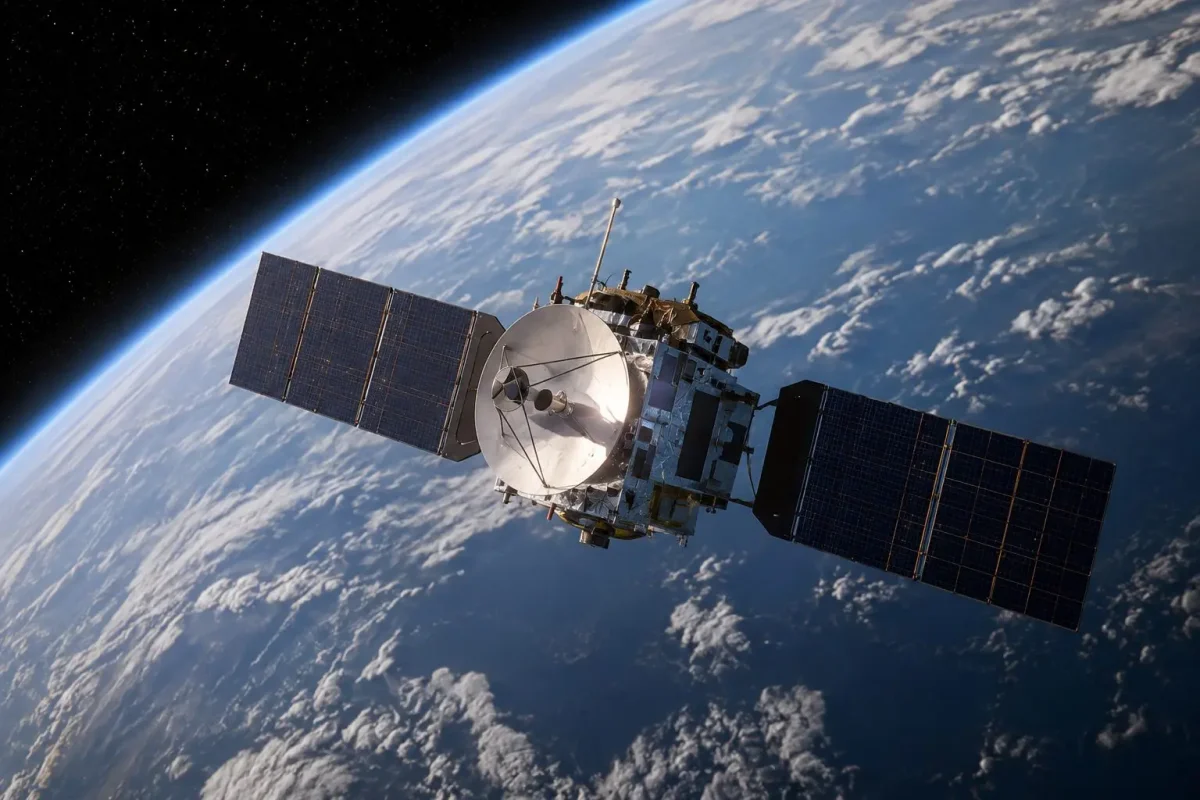
The U.S. Federal Communications Commission (FCC) has granted Reflect Orbital authorization for its inaugural space mirror demonstration, a milestone that shifts the company's immediate commercial focus toward premium lighting services rather than large-scale power generation, according to pricing disclosed by its chief executive.
Ben Nowack, CEO of Reflect Orbital, stated that a single mirror would cost approximately $5,000 per hour under an annual contract of at least 1,000 hours, translating to an annual bill of roughly $5 million. This pricing structure underscores a near-term strategy centered on providing brief, targeted, and costly illumination services, with energy generation remaining a longer-term goal.
The company's roadmap indicates that energy testing will continue through 2028, targeting a 1% capacity-factor gain—average output as a share of maximum—by 2030, once its satellite fleet exceeds 5,000 units. For the foreseeable future, the product is light: short-duration, highly directed, and expensive.
Key Milestones and Financial Context
The FCC's authorization covers a single non-geostationary satellite, designated Earendil-1, which will operate at an altitude of 625 km. The agency's approval specifically regulates the radio station, spectrum usage, and orbital debris plan, explicitly setting aside objections related to a future larger constellation. Reflect Orbital must post a surety bond by August 10, but has until July 9, 2032, to launch the satellite and begin operations, providing a wide regulatory window without immediate revenue pressure.
Financially, Reflect Orbital has raised $26.5 million through a $6.5 million seed round and a $20 million Series A. A single annual lighting contract at the stated minimum would equal approximately 19% of that total. The company's Series A announcement mentioned receiving 260,000 applications from 157 countries but did not disclose any signed customer contracts or contract values. Lead investor Josh Wolfe of Lux Capital described Reflect as “a new category in-space infrastructure.”
Technical and Historical Context
Earendil-1, with a reported size of roughly 60 feet square, can intercept at most about 0.45 megawatt of incoming solar power, based on NASA's figure of 1,361 watts per square meter at the top of the atmosphere. This estimate does not account for losses from imperfect reflection, mirror angle, atmospheric interference, or light spreading across the target area. The closest historical parallel is Russia's 1993 orbital mirror test, which was followed by a failed later mission and eventual program abandonment.
Nowack called the license “the first step toward rigorously testing our technology’s efficacy and the safeguards we have developed.” The company expects the mission to launch later in 2026 and is commissioning independent research while seeking a coordination agreement with the National Science Foundation.
Regulatory and Market Implications
Opponents view the authorization as a governance test. Roohi Dalal of the American Astronomical Society warned that Reflect's activities “will have an impact on the Earth environment,” citing potential effects on human health, agriculture, wildlife, and astronomy. The downside case is clear: a failed deployment, weak pointing accuracy, or less ground light than modeled would undermine the engineering case, while a successful test that produces more spill or disruption than expected could strengthen calls for tighter regulation. Cloud cover also poses a fundamental limit to any light-based service, and scaling from one licensed satellite to thousands would require significantly more capital, launch capacity, and approvals.
U.S. cash equity markets were closed Sunday for the weekend, with regular trading scheduled to resume Monday at 9:30 a.m. Eastern. Investors will be looking for a firm launch slot, named test sites or customers, and any formal challenge to the FCC order. The next investable data point is not the license itself, but measured performance in orbit—deployment, pointing accuracy, and brightness at ground level—along with evidence that customers are willing to pay the published rate. Until then, the numbers describe a high-priced lighting experiment with a long road to power generation.