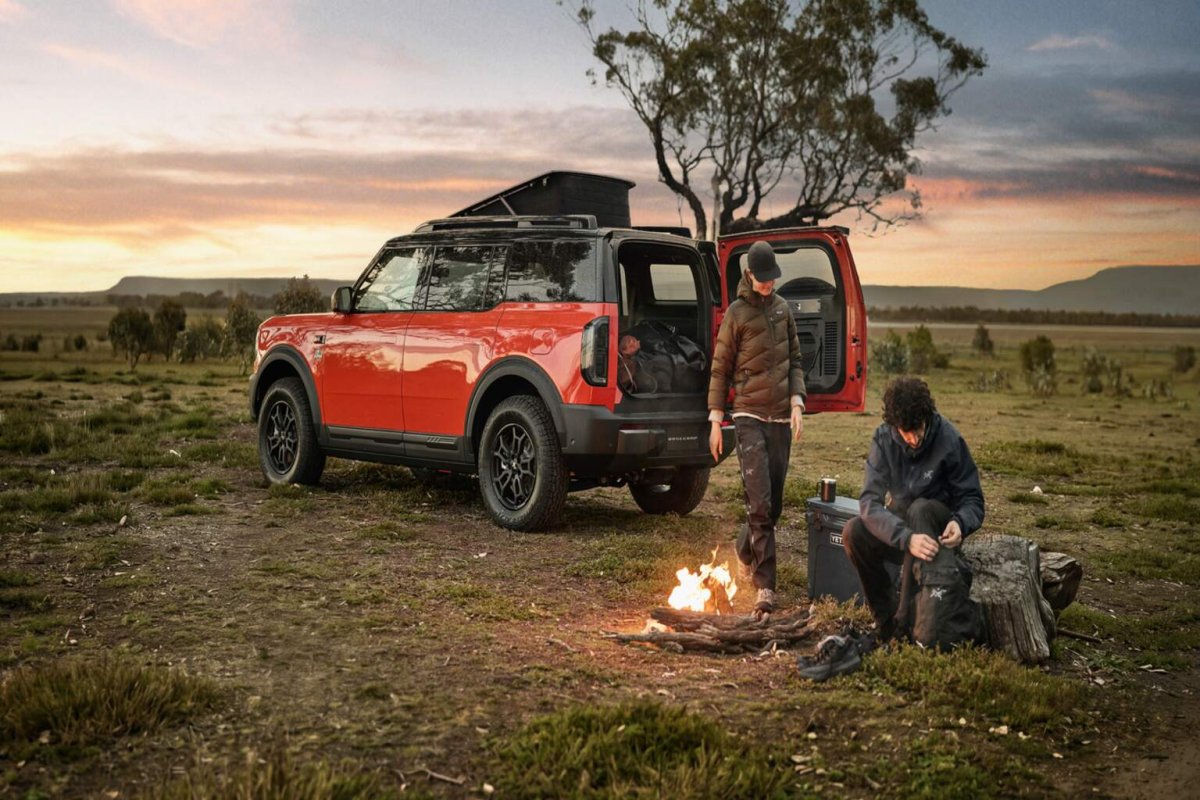
Ford's upcoming Bronco Basecamp, an extended-range electric SUV, is slated to arrive in Australia and New Zealand around mid-2027. But its significance goes beyond a new model launch. It serves as a litmus test for Ford Australia's ambitious expansion strategy, which aims to double its market coverage from about 30% to 60% within three years. The vehicle's success could influence Ford's broader global product strategy.
Shares of Ford (NYSE: F) closed at $13.88 on September 10, up 3.2% from $13.45. While that uptick may seem encouraging, investors should recognize that it's not solely due to the Bronco Basecamp announcement. The real question is whether Ford can convert a broader showroom into profitable incremental sales without eroding margins through discounts or increased warranty costs.
Bronco Basecamp: More Than Just an EV
The Bronco Basecamp is a five-seat, all-wheel-drive SUV with dual-motor electric propulsion, a 49-kWh usable battery, and a 1.5-liter turbocharged petrol engine acting as a range extender. Ford estimates a combined range of 800 to 900 kilometers on the WLTP cycle, though these figures are preliminary. Unique features include Pro Power Onboard (6.6 kW), fold-flat seats with an optional mattress, and an Outer Banks version with a powered pop-up roof and 7.5-liter heated/cooled storage. A tailgate table transforms the rear door into a campsite work surface, setting it apart from typical electrified crossovers and allowing for higher-margin variants and accessories.
The 30%-to-60% Market Coverage Strategy
Ford currently competes in only about 30% of Australia's new-car market, a concentration risk given its strong positions in pickups and large SUVs like the Ranger and Everest. The company aims to more than double this coverage over the next three years, with over 90% of its Australian volume coming from all-new or substantially refreshed vehicles by 2030. The Bronco Basecamp adds an adventure-focused electrified SUV without requiring customers to rely solely on public charging, a concept that fits Australia well. However, open questions remain about pricing, towing capability, final safety specifications, and supply.
One model alone won't double market coverage; it's about expanding the segments where Ford offers credible products. The investor test is whether more addressable segments translate into actual registrations and contribution margin, not just a longer catalog.
Seven-Year Warranty: A Double-Edged Sword
Ford Australia has extended its new-vehicle warranty from five to seven years with unlimited kilometers for vehicles delivered from September 1. Eligibility requires scheduled servicing within Ford's dealer network. High-voltage batteries retain separate eight-year or 160,000-kilometer coverage. While this extension can support resale values and keep service revenue in-house, it also lengthens Ford's exposure to repair costs. This is particularly relevant as Ford targets $1 billion in warranty and material-cost reductions in 2026. A longer promise is a bullish quality signal only if claims frequency and repair severity continue to decline.
Financial Context and Investor Implications
On its own, the Bronco Basecamp won't move the needle much for Ford. The company reported $48.3 billion in second-quarter revenue, $2.5 billion in adjusted EBIT, and $2.1 billion in adjusted free cash flow. Ford Blue generated $1.1 billion of EBIT on $26.1 billion of revenue. Even a successful Australian launch would be small relative to these figures. Strategically, the vehicle matters if it proves Ford can efficiently adapt products for right-hand-drive markets, that extended-range electric powertrains can win over buyers who reject battery-only compromises, and that adventure features can command a premium.
At $13.88, Ford's 15-cent quarterly dividend implies an annualized yield of about 4.3%. The company guides to $10 billion to $11 billion of adjusted EBIT and $6 billion to $7 billion of adjusted free cash flow for 2026. These fundamentals, not the Bronco Basecamp, support the dividend and valuation today.
What Investors Should Watch
The next key release is Ford's final Australian pricing and variant list. A price below a comparably equipped Everest could broaden demand; an ambitious premium would rely more on lifestyle accessories. Final range, towing, safety, and delivery timing also need confirmation, as current images show a prototype. Post-launch, monthly registrations will reveal whether greater market coverage translates into share, and quarterly warranty expense will show if the seven-year promise is buying loyalty at an acceptable cost.
Bottom line: The Bronco Basecamp is a credible addition to Ford Australia's lineup, but it's not a stand-alone reason to buy F stock. The upside lies in a repeatable product-expansion model, while the risk is that a wider lineup and longer warranty create more cost than volume. Pricing will be the deciding factor.