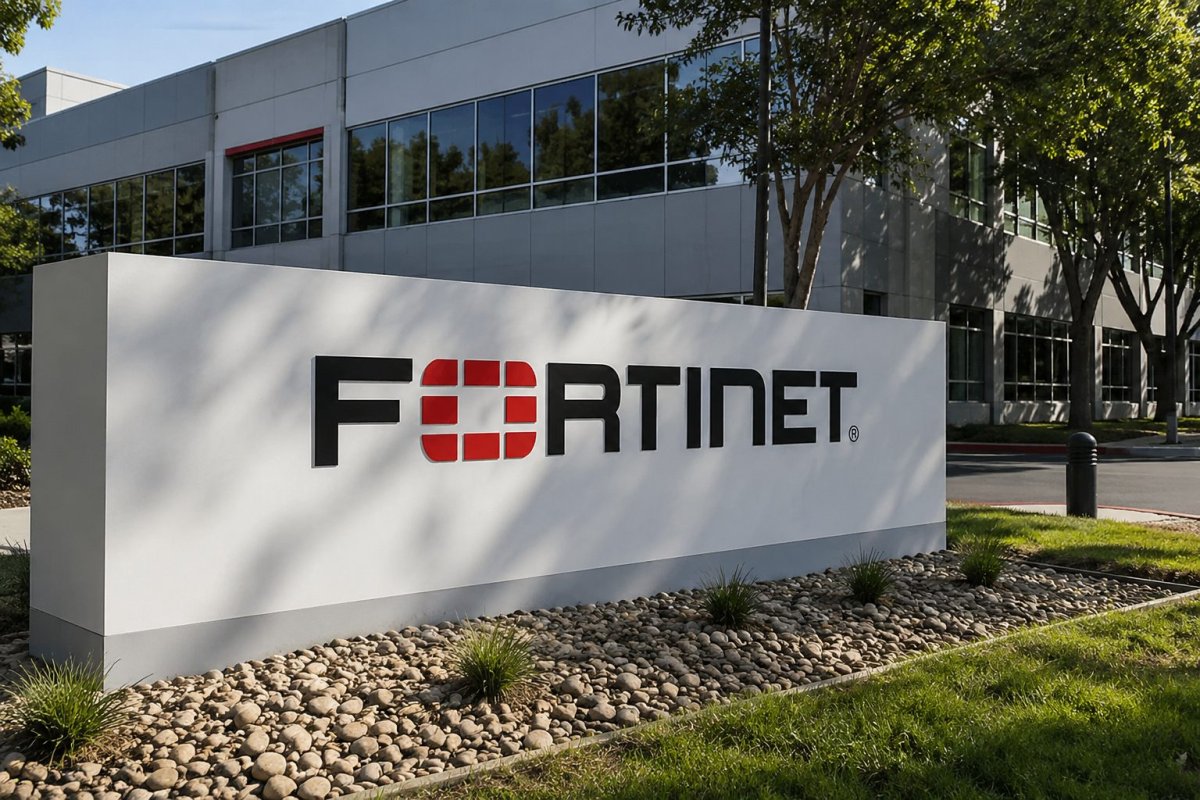
Fortinet (FTNT) shares surged 12.3% in premarket trading Thursday, after the cybersecurity firm reported first-quarter results that topped Wall Street expectations and raised its 2026 guidance, driven by robust demand for AI-powered security solutions.
The Sunnyvale, California-based company posted adjusted earnings of $0.82 per share on revenue of $1.85 billion for the quarter ended March 31, 2026, surpassing consensus estimates of $0.62 per share and $1.73 billion in revenue. Billings, a key metric that reflects new sales and deferred revenue, jumped 31% to $2.09 billion, while product revenue surged 41% to $645 million.
AI Security Demand Fuels Growth
CEO Ken Xie attributed the strong performance to "strong execution and broad-based demand," noting that the quarter exceeded the high end of the company's guidance. "The convergence of networking and security, combined with AI-driven threats, is accelerating demand for our solutions," Xie said in a statement.
Fortinet's results underscore a broader trend in the cybersecurity industry: investors are looking for evidence that AI is driving increased security spending rather than replacing it. The company's faster firewalls, network segmentation tools, and security products designed for AI infrastructure are seeing heightened demand as customers grapple with heavier traffic and more sophisticated threats.
Segment Highlights
Secure networking billings rose 32% year-over-year, while OT security—covering industrial and critical infrastructure—soared over 70%. Unified SASE, Fortinet's cloud-based access security business, posted 31% billings growth. The company also noted that its FortiSASE solution has been adopted by 18% of large enterprise clients, a more than 45% increase.
Chief Financial Officer Christiane Ohlgart highlighted the strong performance across all segments, which contributed to the company's improved outlook.
Raised 2026 Guidance
Fortinet raised its full-year 2026 guidance, now projecting revenue between $7.71 billion and $7.87 billion, up from the previous range. The midpoint of $7.79 billion exceeds the consensus estimate of $7.6 billion. The company also guided for billings in the range of $8.8 billion to $9.1 billion and adjusted EPS of $3.10 to $3.16.
For the second quarter, Fortinet expects revenue between $1.83 billion and $1.93 billion, with adjusted EPS in the range of $0.72 to $0.76. The midpoint of $1.88 billion tops the analyst consensus of $1.82 billion.
Analyst Reactions
BofA Securities raised its price target on Fortinet to $130 from $120, maintaining a Buy rating. The firm highlighted the company's 31% billings growth alongside 20% revenue growth, noting momentum in secure networking and unified SASE demand. Analysts also underscored Fortinet's advantage from custom ASICs, which outperform general-purpose processors in security applications.
Jefferies analyst Joseph Gallo struck a cautious note, suggesting that the rosier 2026 forecast could spark talk of "pull forward benefit," where buyers accelerate purchases. However, he pointed out that faster service billings, ramped-up AI data-center demand, and price increases to cover higher memory costs should support growth.
Market Context
Fortinet's results come as corporate technology budgets face heightened scrutiny. The strong billings figure provides a more immediate view of demand than revenue, as it includes both recognized revenue and changes in deferred revenue. The company's performance also puts pressure on rivals like Palo Alto Networks and Check Point Software, which are closely watching Fortinet's traction in the firewall market.
Fortinet is pitching its integrated hardware, software, and services as a way to win more spending as large customers consolidate security vendors and prepare their networks for AI workloads. The company's custom ASICs give it a competitive edge in performance and cost efficiency, which is increasingly important as networks become faster and more complex.
Risks and Outlook
Despite the strong quarter, Fortinet faces several headwinds, including potential component cost increases, reduced IT spending, supply-chain disruptions, and heightened competition. The company also noted that longer sales cycles and margin pressure could impact future results. However, for now, the market's takeaway is clear: Fortinet delivered a clean beat and raised its outlook, underpinned by the theme that customers are investing heavily in securing their networks against AI-driven threats.