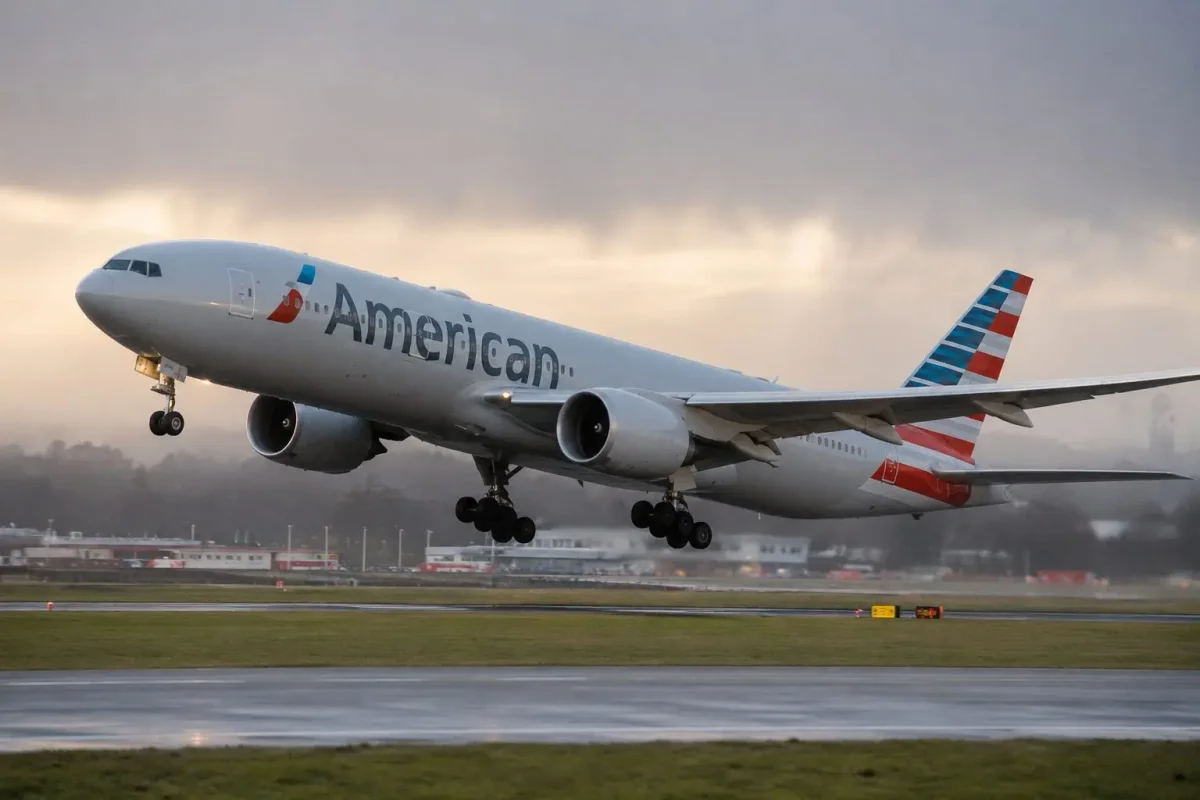
American Airlines Group Inc. (NASDAQ:AAL) traded at $17.92 in early Nasdaq pre-market activity on Monday, down 1.3% from its last close, as investors turned their attention back to the fuel relief trade. The carrier is the most sensitive among its U.S. peers to declines in jet fuel prices, but it also faces the steepest valuation pressures within the group.
Brent crude dropped 1.4% to $71.10 per barrel after OPEC+ announced a production increase of 188,000 barrels per day for August. U.S. West Texas Intermediate crude fell 80 cents to $67.89. The move comes as Gulf oil exports through the Strait of Hormuz have recovered to above 10 million barrels per day, though still 40% below pre-war levels.
Fuel Bill Weight
American Airlines has flagged that its 2026 fuel bill could exceed $4 billion, representing roughly 34% of its current market capitalization of $11.85 billion. The carrier first highlighted this risk in April, noting that it was offsetting about half the fuel cost increase in the second quarter, with expectations of recovering 75% to 85% in the third quarter, and potentially over 90% if fuel prices remain elevated into the fourth quarter.
In the first quarter, American posted revenue of $13.9 billion and a GAAP net loss of $382 million. Total debt fell to $34.7 billion, its lowest level since mid-2015. The company maintained a tight forecast for the second quarter, with adjusted EPS ranging from a loss of $0.20 to a gain of $0.20, and expects full-year earnings to be roughly flat with 2025, even factoring in higher fuel costs.
Earnings Sensitivity
Jefferies analysts noted that every 5% reduction in their $3-per-gallon 2027 fuel price estimate would add 10% to 15% to forecast EPS for Delta Air Lines (NYSE:DAL), Southwest Airlines (NYSE:LUV), and United Airlines (NASDAQ:UAL), but could boost American's EPS by up to 50%. This underscores why cheaper oil is a much bigger factor for AAL than for its rivals.
American's trailing P/E ratio stands at approximately 58, nearly three times that of United, Delta, and Southwest, which trade at P/E multiples of 11.9, 13.5, and 33.5, respectively. The stock's valuation pressure reflects the market's concern over its fuel cost exposure and debt levels.
Industry Context
The U.S. Global Jets ETF (NYSEARCA:JETS) lists American Airlines as its largest airline holding, accounting for 11.37% of net assets as of July 1, ahead of United at 11.01%, Southwest at 10.46%, and Delta at 10.44%. Delta is the next major airline to report earnings, with its June-quarter results scheduled for July 10. Investors will be watching to see if lower fuel costs are being reflected in margins, passed on to consumers through fares, or offset by other expenses.
CEO Robert Isom expressed confidence in the company's trajectory, stating that American is "on track for another record in the second quarter" and that "demand for our product is growing." However, the airline cut its 2026 earnings forecast in April, now expecting a range of a $0.40 loss to a $1.10 gain per share, down from the previous range of $1.70 to $2.70 profit.