U.S. stock futures climbed on Monday as Wall Street resumed trading following the July Fourth holiday, with the Nasdaq Composite futures leading gains amid lingering concerns over a rotation away from semiconductor stocks. Nasdaq futures advanced 1.06%, while S&P 500 futures rose 0.48% and Dow Jones Industrial Average futures edged up 0.21%, signaling renewed appetite for technology and growth names after last week's pullback.
Market Overview and Key Data
The Dow finished at a record high of 52,900.07 on Thursday, gaining 1.14%, while the S&P 500 closed nearly flat at 7,483.24. In contrast, the Nasdaq Composite slipped 0.80% to 25,832.67, dragged down by a sharp 5.4% drop in the Philadelphia semiconductor index, which nonetheless remains up roughly 78% year-to-date. The divergence highlights a market split: investors are questioning whether the artificial intelligence rally is broadening into new sectors or simply pausing.
The Invesco S&P 500 Momentum ETF (SPMO) surged about 44% in the second quarter—its best quarterly performance ever—but has since lost 6.6% in early July. Meanwhile, the Invesco PHLX Semiconductor ETF (SOXQ) tumbled over 11% in the same period, according to MarketWatch, suggesting profit-taking in high-flying chip names.
Commodities and Inflation Relief
Oil prices eased after OPEC+ agreed to boost supply by 188,000 barrels per day starting in August, helping to alleviate a key inflation concern. Brent crude dipped near four-month lows, trading around $71.95 a barrel, according to Reuters. Lower energy costs could provide a tailwind for growth stocks if traders interpret the move as cooling inflation pressures.
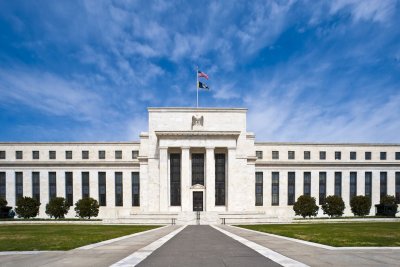
This development comes ahead of the Federal Reserve's June meeting minutes, due Wednesday, which will offer insight into the Fed's policy debate. Following softer-than-expected jobs data and the drop in oil, futures markets now price a 78% probability that the Fed will hold rates steady at its July 29 meeting, Reuters reported. “We’re safe at least for another month,” said Richard Yetsenga, head of research at ANZ. Tickmill strategist Patrick Munnelly called the Fed “the key macro hinge,” noting that the minutes will be the first look at how the Warsh-led committee is deliberating.
Upcoming Earnings and Economic Calendar
This week's earnings slate includes key reports that will test market sentiment. Samsung Electronics is expected to report operating profit of 86 trillion won for April-June, up 18-fold from a year ago, based on an LSEG SmartEstimate cited by Reuters—a critical read on AI memory demand. PepsiCo (PEP) reports Thursday, offering a gauge of consumer pricing power and shopper trends, while Delta Air Lines (DAL) reports Friday, providing insight into travel demand and the impact of lower fuel costs.
Economic data this week includes the ISM services index on Monday, with a consensus target of 54.0; a strong print could reignite expectations for Fed rate hikes. The Fed minutes on Wednesday will be closely scrutinized for the tone of the debate ahead of the oil price decline.
Breadth Risks and Sector Rotation
Bruce Zaro, managing director at Granite Wealth Management, told Reuters that investors are likely locking in gains in chip stocks after their strong runs this year. Nvidia (NVDA) slipped 1.4% on Thursday, SanDisk (SNDK) gave up 14.1%, while Apple (AAPL) rose 4.8%, boosting the indexes. There is a risk that a strong Nasdaq open could mask weak breadth beneath the surface. If semiconductor names continue to see profit-taking even as big tech holds its ground, the S&P 500 may remain steady but active portfolios could face sharp sectoral moves.
Frederic Neumann, chief Asia economist at HSBC, noted that food prices and soft local currencies are “keeping monetary officials on the defensive,” adding to the complexity for global markets.