Shares of GE Vernova closed lower on Monday, shedding approximately 4% to finish at $818.46. The decline came as investors weighed optimistic long-term business updates against immediate supply chain challenges and a broader market downturn.
Gas Turbine Demand Outpaces Supply
During a recent Bank of America conference, GE Vernova CEO Scott Strazik provided a detailed outlook for the company's gas power segment. He projected that combined orders and slot reservations for gas turbines in the first quarter would reach between 12 and 24 gigawatts (GW). This represents a substantial increase from the 8 GW recorded in the same period last year, underscoring what Strazik described as "very strong" ongoing demand.
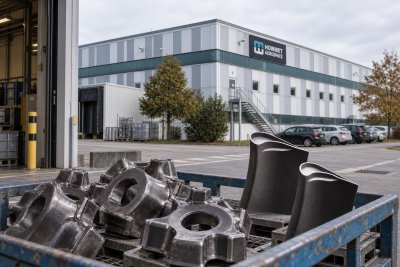
However, this demand is colliding with significant production bottlenecks. Strazik cautioned that new orders for heavy-duty gas turbines placed today would not ship before 2029, with project commissioning potentially extending into 2031. This extended timeline highlights the intense pressure on manufacturing capacity and global supply chains.
Electrification and Data Center Growth
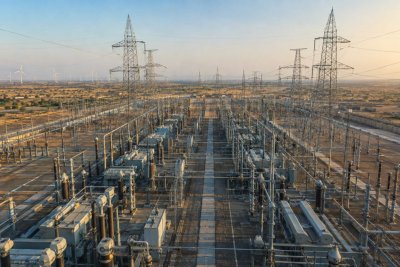
The company's electrification segment is also poised for major expansion. Strazik informed investors that the electrification backlog is expected to double, reaching $60 billion by 2028, up from a current $30 billion. He specifically cited surging demand for high-voltage direct current (HVDC) transmission lines, estimating the total market at $100 billion to $150 billion.
Data centers are becoming an increasingly important driver. While they currently account for 10% to 15% of the gas power backlog, they represent about one-third of the slot reservation agreements expected to convert to firm orders within the next 6 to 18 months. Customers are securing future production capacity with deposits of 20% to 25% before finalizing specific project sites.
International Contracts and Nuclear Ambitions
Growth is not confined to North America. Strazik noted recent contract wins for three additional 1.6-gigawatt liquefied natural gas (LNG)-to-power projects in Vietnam. The company is also actively pursuing opportunities in Taiwan, where gas-fired generation is seen as critical for supporting the chip manufacturing expansion of companies like TSMC.
In a significant development for its nuclear business, a recent U.S.-Japan summit has paved the way for energy deals worth up to $73 billion. Reports indicate that as much as $40 billion of this total could be directed toward GE Vernova Hitachi's small modular reactor (SMR) projects located in Tennessee and Alabama. The company has previously touted its SMR technology as a key tool for nations prioritizing energy security.
Competitive and Operational Challenges
The sector remains fiercely competitive. Analysts note that Siemens Energy, Mitsubishi, and GE Vernova are all racing to increase gas-turbine output to meet demand from data centers and new power plants. Industry forecasts suggest U.S. manufacturing capacity could reach 70 to 80 GW by 2030, though a portion will be allocated for export, and supply chains continue to grapple with parts and labor shortages.
GE Vernova faces its own operational headwinds. The company's wind energy business is contending with an estimated $250 million revenue shortfall for 2026, linked to delays at the Vineyard Wind project. Furthermore, capital costs for new gas plants have more than doubled over the past one to two years, which could slow the pace of capacity expansion.
The company is scheduled to hold its first-quarter earnings webcast on April 22, where investors will seek further clarity on backlog, pricing, and near-term factory performance.
Monday's trading session offered little respite, with the S&P 500 and Nasdaq also declining as markets grappled with geopolitical tensions in the Middle East and volatile oil prices.