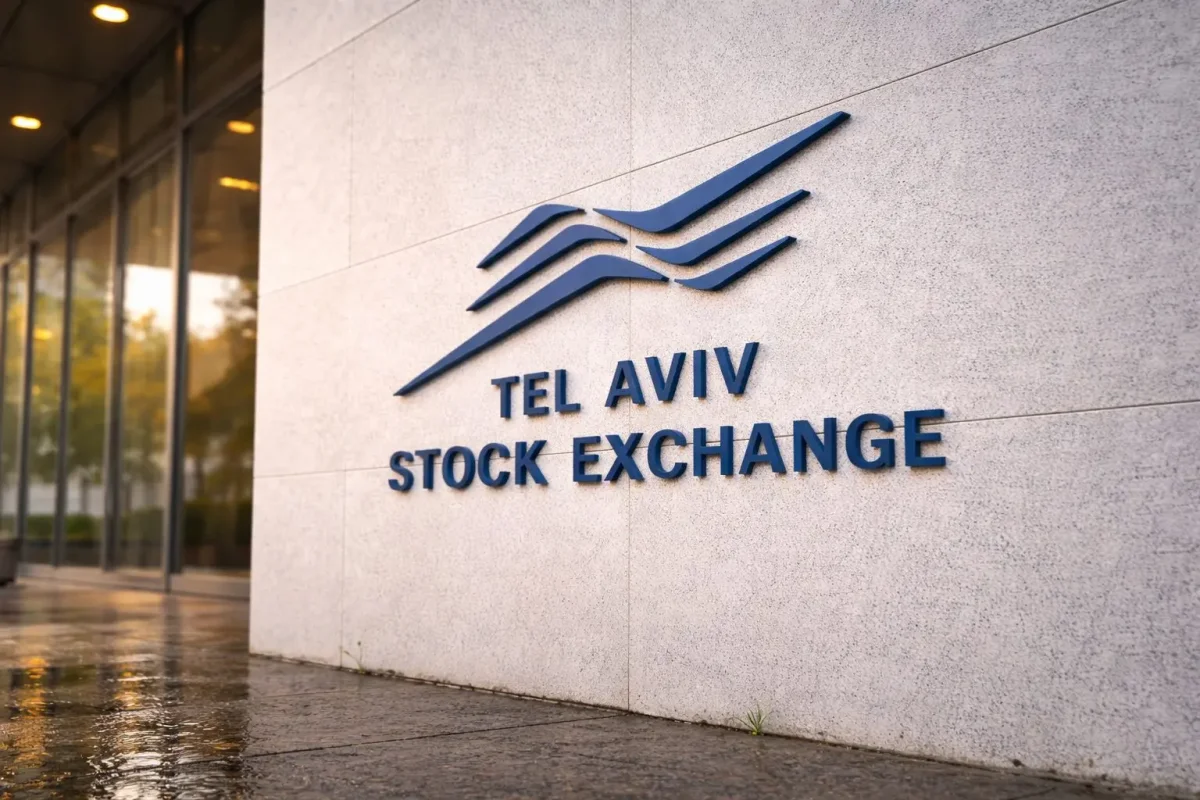
The Tel Aviv Stock Exchange faces a tense reopening on Monday after a weekend of escalating geopolitical tensions. Israel's Energy Ministry has temporarily suspended operations at segments of the country's natural gas reservoirs in response to joint military strikes conducted by the United States and Israel against Iran. This precautionary measure directly impacts major energy infrastructure, including Chevron's offshore Leviathan field and Energean's production vessel, which supplies multiple Israeli sites.
Market Performance and Sector Moves
Despite the looming uncertainty, Israeli equities closed the previous week in positive territory. The benchmark TA-35 index finished Friday's session up 0.65%, closing at 4,128.36. The broader TA-125 index also gained ground, rising 0.51% to settle at 4,074.84. The Friday advance was primarily driven by strength in banking, financial, and insurance stocks. Notable gainers included Next Vision, which surged 4.71%, Nova, climbing 2.66%, and defense contractor Elbit Systems, which added 2.52%.
However, the rally was not broad-based. Energy and commodity-linked stocks faced significant pressure, reflecting immediate concerns over the production shutdowns and regional stability. Ormat Technologies tumbled 4.43%, Newmed Energy declined 3.51%, and ICL Group slipped 3.08%.
Broader Market Context and Risks
The market reopens under a cloud of heightened volatility for risk assets, including equities and high-yield currencies. Analysts warn that the military action has substantially raised the geopolitical risk premium. "The strike raises geopolitical risk premia as markets head into Monday's open," stated Christopher Wong, a strategist at OCBC. Barclays analysts offered a grim outlook for energy markets, cautioning that "Oil markets might have to face their worst fears on Monday."
Risk sentiment was already fragile heading into the weekend. U.S. markets closed lower on Friday, with the S&P 500 falling 0.43% and the Nasdaq Composite dropping 0.92%. This negative tone could spill over into Tel Aviv trading, particularly affecting dual-listed shares and international fund flows.
Energy and Currency Pressures
The situation presents a dual squeeze for the Israeli economy via energy markets. Oil prices, a key inflation driver, climbed to $73 per barrel on Friday, reaching their highest level since July. The market's focus now shifts to an upcoming OPEC+ meeting, where sources indicate a larger-than-expected output hike for April is under consideration.
Beyond equities, currency markets are also in focus. JPMorgan analysts highlighted a persistent risk for the Israeli shekel. They noted that the currency's typical rebound following periods of stress may not materialize if the conflict prolongs and Israel's risk premium remains elevated. "This would especially be the case if confrontation with Iran also triggers more intensive operations against Iran's proxies," the bank's analysts warned.
Key Events on the Horizon
Investors will navigate a critical week for data and corporate updates. After markets reopen, attention will turn to the U.S. non-farm payrolls report for February, scheduled for release on Friday at 8:30 a.m. ET. This data holds significant power to shift global interest rate expectations.
Locally, the Tel Aviv Stock Exchange Ltd. is set to report its fourth-quarter and full-year 2025 financial results after the close on Thursday, March 5. CEO Ittai Ben-Zeev and CFO Yehuda Ben Ezra will host an English-language conference call at 8:30 p.m. local time.
Monday's trading will be the first under the exchange's new Monday-through-Friday schedule, which eliminated Sunday sessions. This change leaves investors to digest weekend developments, like the recent strikes, without an immediate market outlet, potentially amplifying the opening reaction. Trading is set to begin at 09:59 local time.
Market participants will closely monitor bank and growth stocks for direction, alongside any new developments regarding the military situation or a timeline for the resumption of natural gas output. The confluence of geopolitical strife, energy market volatility, and key economic data sets the stage for a turbulent start to the trading week.