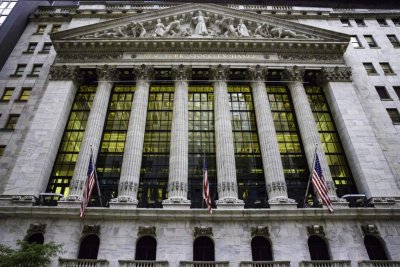
Investors are bracing for a week where geopolitical headlines, corporate earnings, and economic data will vie for dominance. The immediate focus is on the Strait of Hormuz, where the passage of three supertankers over the weekend, concurrent with ongoing U.S.-Iran negotiations, offered a tentative sign that the energy supply shock that rattled global markets in March could ease. The S&P 500 has now nearly erased its decline following the late-February U.S.-Israeli strikes on Iran, closing out its strongest week since November.
Earnings Season Kicks Off with Banking Heavyweights
The financial sector takes center stage as earnings season begins in earnest. Goldman Sachs (GS) reports on Monday, followed by JPMorgan Chase (JPM), Citigroup (C), and Wells Fargo (WFC) on Tuesday. Bank of America (BAC) and Morgan Stanley (MS) round out the major bank reports on Wednesday. Analysts anticipate stronger profits driven by steady net interest income and a potential rebound in investment banking revenue. However, following the recent oil price volatility, market participants will scrutinize executive commentary on loan growth, consumer spending trends, and merger activity for signs of economic stress.
Regulatory developments also offer a tailwind. Analysts at Morgan Stanley estimate that eased draft Basel and GSIB capital requirements could free up to $320 billion for 36 U.S. banks, with Goldman Sachs and Citigroup positioned to benefit the most.
Market Divergence and Chip Strength
Friday's session highlighted a diverging market. The Dow Jones Industrial Average fell 0.56%, and the S&P 500 slipped 0.11%. The Nasdaq Composite, however, gained 0.35%, powered by significant strength in semiconductor stocks. Broadcom (AVGO) jumped 4.7%, Nvidia (NVDA) added 2.6%, and U.S.-listed shares of Taiwan Semiconductor Manufacturing Co. (TSM) rose after the company reported a 35.1% year-over-year surge in first-quarter revenue.
This chip rally places added importance on upcoming reports from industry bellwethers ASML (ASML) on Wednesday and TSMC on Thursday, as investors gauge the durability of the sector's momentum.
Inflation and Economic Data in Focus
The economic calendar, while thinner than recent weeks, holds critical releases. On Tuesday, the Producer Price Index (PPI) for March will be released at 8:30 a.m. ET, providing insight into inflationary pressures at the wholesale level before they reach consumers. This follows a hotter-than-expected Consumer Price Index (CPI) report on Friday, which showed a 0.9% monthly surge in March—the sharpest increase since June 2022—pushing the annual rate to 3.3%. Core CPI, which excludes food and energy, rose 0.2% for the month and is up 2.6% year-over-year.
Wednesday brings the Federal Reserve's Beige Book at 2 p.m. ET, offering a qualitative snapshot of regional economic activity. Industrial production figures for March follow on Thursday morning. The University of Michigan's preliminary consumer sentiment index for April will also be closely watched after its early read for March tumbled to 47.6.
Federal Reserve Policy and Geopolitical Risks
The recent inflation data and oil market volatility have clouded the Federal Reserve's policy path. San Francisco Fed President Mary Daly noted that the oil shock means inflation is unlikely to return to the central bank's 2% target as quickly as previously hoped, potentially necessitating a longer pause on rate adjustments.
The primary geopolitical risk remains the situation in the Middle East. Analysts at Commerzbank highlighted that the "key issue" for oil markets is whether shipping through the Strait of Hormuz will fully resume, noting the waterway remains a sticking point in negotiations. Any relief for energy markets could prove short-lived, keeping inflation concerns elevated.
With March retail sales data delayed until April 21 and housing starts postponed to April 29, investors are left to parse earnings guidance, oil price movements, and weekend diplomatic developments. As Northwestern Mutual's Brent Schutte stated, "company guidance becomes incredibly paramount." By week's end, it will be clearer whether corporate profits can sustain the market's rebound or if persistent geopolitical and inflation worries will reignite concerns over interest rates and economic growth.