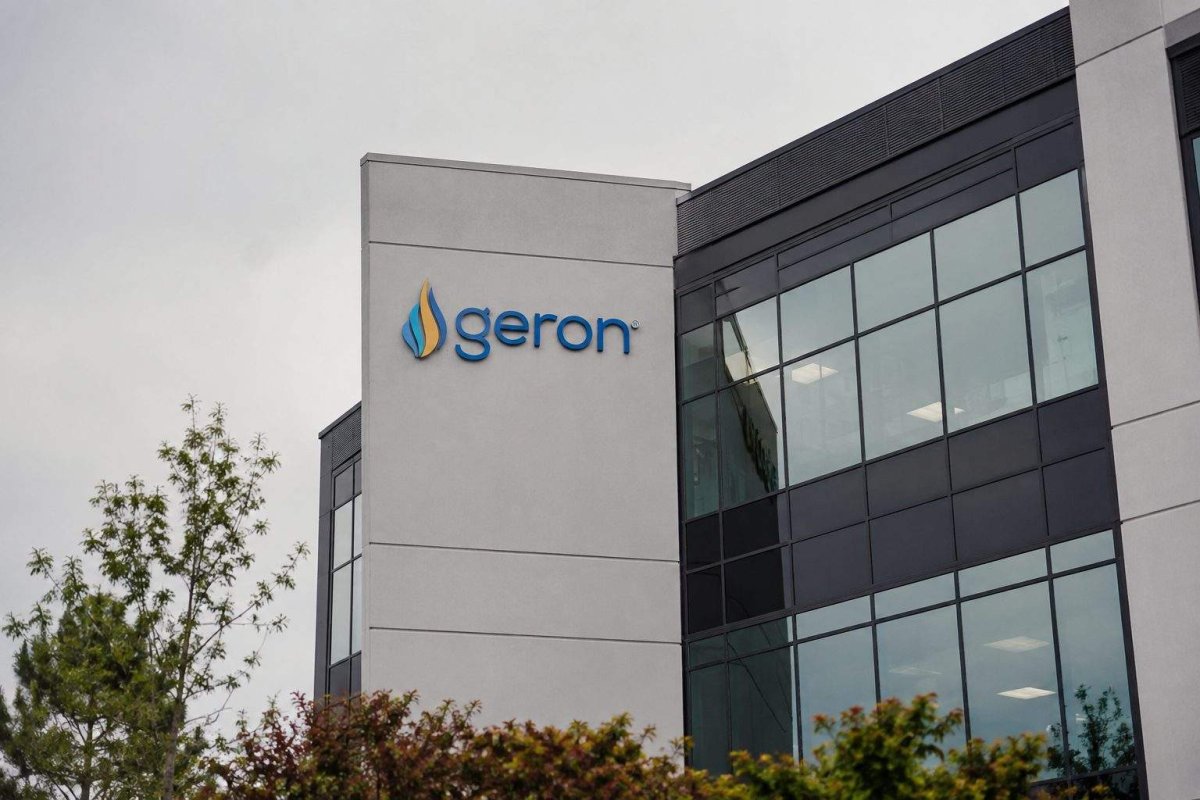
Geron Corporation (NASDAQ: GERN) saw its shares surge 18.3% to $1.585 in early Nasdaq trading on Wednesday, following the release of second-quarter results that showed Rytelo sales moving closer to the company's guidance midpoint. The positive momentum reflects growing confidence in the commercial trajectory of its lead product, Rytelo, a treatment for lower-risk myelodysplastic syndromes.
Rytelo net product revenue for the second quarter reached $57.5 million, an 11% increase from the previous quarter and a 17% year-over-year gain. This performance annualizes to approximately $229.9 million, closely aligning with the midpoint of Geron's 2026 revenue forecast of $220 million to $240 million. The first half of the year generated $109.2 million in product revenue, setting a solid foundation for the remainder of the year.
Management struck a more optimistic tone during the earnings call, now projecting Rytelo revenue to land in the mid-to-upper range of its earlier guidance. Chief Financial Officer Michelle Robertson emphasized expectations for "consistent quarter-over-quarter net revenue growth throughout the year," signaling confidence in sustained commercial momentum.
Key Commercial Metrics
Several indicators underscored the strengthening commercial performance. Demand volume grew 5% sequentially, while ordering accounts increased by approximately 8% to around 1,575. Chief Executive Harout Semerjian highlighted this as the "third consecutive quarter of RYTELO demand growth." Revenue growth outpaced demand growth, suggesting favorable mix, pricing, or channel timing contributed to sales. Management noted distributor inventory remained at two to four weeks and does not anticipate significant fluctuations for the rest of the year.
Financially, the company reported a net loss of two cents per share, slightly wider than the FactSet consensus of a one-cent loss. Total revenue for the quarter was $57.48 million, up 17.2% year-over-year. Operating expenses rose to $70.0 million from $61.5 million, largely due to non-cash inventory-related charges. Cost of goods sold jumped to $9.24 million from $1.19 million, reflecting these inventory adjustments.
Revised Full-Year Outlook
To achieve the $220 million lower end of guidance, Geron needs $110.8 million in second-half revenue, implying just 1.4% growth over the first half. The midpoint of $230 million requires $120.8 million, a 10.5% increase, while the upper end of $240 million would necessitate $130.8 million, a 19.7% jump. Meeting the upper end would require quarterly sales averaging $65.4 million, 13.8% above the second-quarter run rate.
Cash and securities stood at $326.9 million at quarter-end, down from $341.0 million in the first quarter. The company believes its current resources, along with anticipated U.S. sales, will support operations for the foreseeable future. Non-COGS operating expenses in the first half decreased by 4% despite a 24% revenue increase, demonstrating improved operating leverage.
Market Context and Competitive Landscape
Geron's shares significantly outperformed the broader biotech sector. The SPDR S&P Biotech ETF (XBI) rose just 0.7%, while the iShares Nasdaq Biotechnology ETF (IBB) gained 0.8%. In contrast, Bristol Myers Squibb (BMY), which markets the competing drug Reblozyl, saw its shares decline 3.5% to $63.57. Trading volume for Geron reached 21.1 million shares, approximately 1.65 times the stock's 65-day average, indicating heightened investor interest.
Rytelo competes directly with Reblozyl in the lower-risk myelodysplastic syndromes market. Geron projects approximately 8,000 second-line patients in the U.S. could be reached, representing significant market potential. The company plans to present its European commercial strategy before the end of the year, expanding its geographic footprint.
Analyst Sentiment and Future Catalysts
Wall Street remains optimistic about Geron's prospects. According to FactSet, four analysts rate the stock a Buy, one rates it a Hold, and none recommend selling. The mean price target stands at $4.00, implying potential upside of approximately 152% from the current share price. Target prices range from $3.00 to $5.00.
Key upcoming catalysts include an interim survival analysis for IMpactMF, a pivotal trial, expected in the second half of 2026, with a final review anticipated in the latter half of 2028. These results could significantly impact the stock's valuation and long-term growth prospects.
Risks to Consider
Despite the positive momentum, investors should be mindful of potential risks. Rytelo remains Geron's sole commercial product, making the company highly dependent on its success. Gross-to-net deductions increased to 20.7% from 15.3% a year earlier, which could pressure margins. Slower-than-expected adoption, pricing pressures in Europe, or delays in IMpactMF results could all negatively affect the stock.
The immediate test for Geron is clear: third-quarter revenue must exceed $57.5 million to meet management's sequential growth forecast. Maintaining the midpoint trajectory would require approximately $60 million. With strong commercial execution and a favorable analyst outlook, the company appears well-positioned to meet these challenges, but execution will be critical.